If you’re building a simulator over a slab, the right turf can make a concrete floor feel far more playable, quieter, and safer underfoot.
This roundup focuses on practical options that balance cushioning, grip, and easy setup for home golf bays, garages, and indoor practice spaces.
Best 10 Golf Simulator Turf for Concrete Floors Picks for 2026
Simulator-Ready Turf Base
GoSports Elite Turf for Enclosures

- Commercial-grade turf for a finished simulator look
- Includes tape for concrete, wood, and low-pile carpet
- Helps reduce rebound on hard floors
Best For: Home simulator enclosures over concrete flooring
Tri-Turf Practice Mat
GAIARENA Foam-Backed Simulator Mat

- Tri-turf layout for driving grass, course grass, and rough
- 8 mm EVA foam base adds cushion and floor protection
- Replaceable tiles and foldable build improve longevity and storage
Best For: Golfers wanting a cushioned hitting mat on concrete
Modular Simulator Turf Flooring

- Commercial-grade turf for under-screen or enclosure use
- Includes tape for secure concrete installation
- Modular setup helps fit different simulator layouts
Best For: A customizable turf base for concrete simulator rooms
Heavy-Duty Hitting Mat
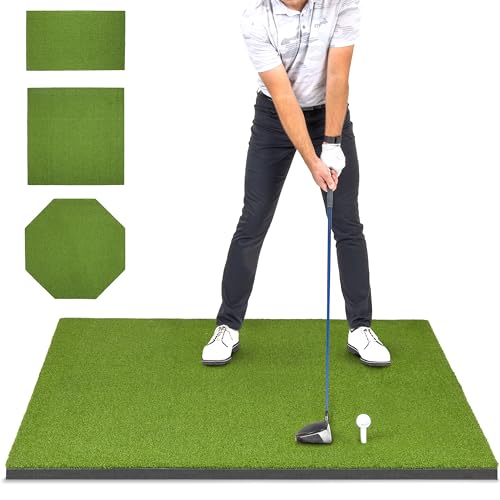
- Non-slip backing works well on concrete floors
- EVA foam base adds cushioning for repeated practice
- Includes six tee holes and three rubber tees
Best For: Durable full-swing practice on concrete
Roll-Out Practice Area
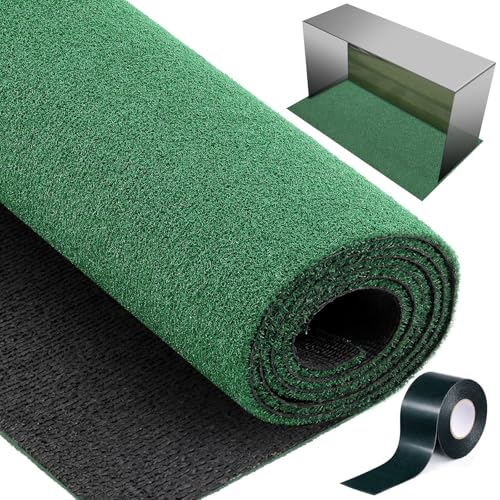
- 6x10 ft surface for indoor putting and drills
- 15mm PE turf with non-slip SBR rubber backing
- Includes double-sided tape and can be trimmed to fit
Best For: Indoor practice setups on concrete floors
Commercial-Grade Simulator Base
- Made to sit under enclosures or hitting nets
- Includes carpet tape for concrete and other hard floors
- Available in 10, 12, or 15 ft widths
Best For: Simulator owners wanting a clean turf base on hard floors
Dual-Turf Training Station

- Dual fairway and rough turf for versatile practice
- Thick EVA foam base with anti-slip bottom
- Rolls up for portable indoor or outdoor use
Best For: Portable hitting and chipping practice on concrete
Premium floor-finish turf
GoSports 15 mm Elite Golf Simulator Turf
- Designed for concrete, wood, and low-pile carpet
- Includes carpet tape for easier hard-floor installation
- Commercial-grade look for a finished simulator bay
Best For: Home simulator builds needing a polished turf base
Stable grip-back mat
15mm Golf Simulator Turf Mat with Non-Slip Backing

- Non-slip backing helps it stay put on concrete
- Dense turf reduces ricochet and impact feel
- Weatherproof build works indoors or outdoors
Best For: Golfers needing a secure practice mat on hard floors
Custom-fit modular turf
Modular Golf Simulator Turf Mat for Indoor Outdoor Use

- Latex backing is made for concrete and other hard floors
- Can be cut and joined for a custom simulator layout
- Seam tape included for easier DIY installation
Best For: DIY builds that need a customizable turf layout
Simulator-Ready Turf Base – GoSports Elite Turf for Enclosures
If you’re shopping for golf simulator turf for concrete floors, this GoSports option is built to create a cleaner, more finished base under your enclosure or hitting net. The commercial-grade turf is designed for hard surfaces like concrete, and the included double-sided tape helps keep it in place while the turf also helps dampen rebounds for a safer practice area.
Best For: Home simulator setups that need a polished turf base over concrete or other hard flooring.
Pros:
- Designed for concrete, wood flooring, and low-pile carpet with included carpet tape
- Helps minimize ricochets by dampening ball rebounds on hard surfaces
- Commercial-grade 15 mm turf gives a professional simulator look
- Modular widths let you match 10, 12, or 15 ft enclosure setups
Cons:
- Built mainly as a turf base, not a dedicated hitting mat
- For direct full-swing use, a separate hitting mat is recommended to extend turf life
Overall, this is a practical choice if you want your simulator floor to look finished while also helping soften impact on concrete. It works best as part of a larger home golf studio build rather than as a standalone practice mat.
Tri-Turf Practice Mat – GAIARENA Foam-Backed Simulator Mat
This golf simulator turf for concrete floors is more of a true hitting mat than a room-covering turf base, and the GAIARENA design focuses on feel and cushioning. Its tri-turf layout gives you different grass textures for course grass, driving grass, and rough grass, while the EVA foam base helps protect both your floor and your joints during practice.
Best For: Golfers who want a cushioned, all-in-one practice mat for a flat concrete area.
Pros:
- Tri-turf surface supports full swings, chipping, pitching, and iron shots
- 8 mm 38D EVA foam base adds cushioning and floor protection
- Replaceable grass tiles can help extend usable life
- Foldable design makes it easier to move, store, and carry
Cons:
- Not a floor-covering turf solution for an entire simulator bay
- At 75.6″ x 45.6″, coverage is limited to the mat footprint
If you need a practice surface that can sit comfortably on concrete, this mat is built for that job. It’s a strong pick for golfers who want cushioning and multiple turf textures rather than a large enclosure base.
Modular Simulator Turf Flooring – DCQ Indoor Putting Turf
For golfers looking for golf simulator turf for concrete floors, this DCQ flooring is designed to go under a screen, net, or enclosure to create a more realistic home range feel. The commercial-grade turf is meant to reduce rebound on hard surfaces, and the included tape helps secure it to concrete or wood for a cleaner installation.
Best For: Building a modular simulator floor over concrete with a safer rebound profile.
Pros:
- Made to sit beneath sim screens, nets, cages, or enclosures
- Helps absorb ball impact and reduce ricochet on hard floors
- Includes double-sided tape for concrete or wood installation
- Can be combined into a modular layout to fit your space
Cons:
- Primarily a turf flooring layer, not a standalone full-swing mat
- Separate hitting mat is recommended for driver and full swings
This is a solid choice if your priority is simulator flooring rather than hitting performance alone. It’s especially useful when you want a more finished look and controlled ball rebound on concrete.
Heavy-Duty Hitting Mat – GoSports Elite Turf with Tees
If you need a golf simulator turf for concrete floors and plan to hit full shots, this GoSports mat is built more like a true practice surface than a room-wide turf layer. The EVA foam base adds shock absorption, the non-slip backing is made to stay put on concrete, and the commercial-grade turf is designed for repeated use with drivers, irons, and wedges.
Best For: Golfers who want a durable hitting mat that stays stable on concrete.
Pros:
- Non-slip backing helps the mat stay in place on concrete
- EVA foam base improves shock absorption and reduces joint strain
- Commercial-grade turf is built for high-volume practice
- Includes six tee holes and three rubber tees for versatile setup
Cons:
- Does not cover a large simulator bay floor
- Best suited to practice hitting rather than turf flooring under an enclosure
This is the most straightforward option here if your main goal is repeated ball striking on concrete. It’s a durable, simulator-friendly mat with enough stability and cushioning to support regular indoor practice.
Roll-Out Practice Area – 6×10 ft Indoor Turf
If you want golf simulator turf for concrete floors that feels straightforward to install and use, this Nuanchu mat is built around a large 6×10 ft practice area. The 15mm PE turf and non-slip SBR rubber backing are aimed at stable indoor putting and short-game work, while the included double-sided tape helps keep seams in place on hard floors. It’s a practical choice for a home simulator, basement, or garage setup where you want a roll-out surface that can be trimmed to fit.
Best For: Golfers building a dedicated indoor putting and simulator practice space on concrete.
Pros:
- Large 6×10 ft surface supports putting and short-game drills
- 15mm turf is designed for smooth roll and stable practice
- Non-slip SBR rubber backing helps it stay put on hard floors
- Includes double-sided tape for seam fixation during setup
Cons:
- Primarily a turf practice area, not a dedicated hitting mat
- May need trimming to fit some room layouts
- Best suited to indoor use rather than outdoor portability
Overall, this is a good fit if your priority is covering concrete with a large, rollable practice turf that installs easily and supports simulator-friendly indoor drills. It focuses more on stable putting and general practice than heavy-duty hitting.
Commercial-Grade Simulator Base – 15 mm Elite Turf
For golf simulator turf for concrete floors, this GoSports option is designed to create a finished-looking base under your enclosure or hitting net. The commercial-grade 15 mm turf is meant to sit on hard surfaces, and the included carpet tape helps secure it to concrete, wood, or low-pile carpet. With 10, 12, and 15 ft width options, it’s a flexible pick if you want a cleaner, more polished simulator floor layout.
Best For: Home simulator owners who want a clean, commercial-style turf base on concrete.
Pros:
- Commercial-grade turf gives a polished simulator look
- Included tape is made for hard floors like concrete
- Modular width options help match different enclosure sizes
- Can be used under a hitting mat to help extend turf life
Cons:
- Hitting mat is sold separately if you want a dedicated strike area
- 6 ft depth may not suit every room layout
- Not foldable, so storage is less convenient than roll-up mats
This is a strong choice if your main goal is to make a simulator room on concrete look and feel more complete, rather than adding a standalone hitting station. It’s especially appealing for users who want a durable base that can be taped down neatly.
Dual-Turf Training Station – 5×4 ft Thick Practice Mat
If you need golf simulator turf for concrete floors but also want a true hitting surface, the Fanshaw dual-turf mat is built for practice versatility. Its thick EVA foam base and anti-slip bottom are meant to add stability on hard surfaces, while the dual fairway and rough turf sections support both chipping and swing drills. Because it rolls up for storage, it works well for golfers who want a portable practice station they can move between indoor and outdoor spaces.
Best For: Golfers who want a portable dual-turf mat for hitting and chipping on concrete.
Pros:
- Dual-turf design supports both fairway and rough practice
- Thick EVA foam base adds shock absorption on hard floors
- Anti-slip bottom helps keep the mat stable during swings
- Rolls up for easier storage and transport
Cons:
- Smaller 5×4 ft size offers less coverage than larger simulator turf
- Not intended as a full-room simulator floor solution
- Best for practice station use rather than permanent install
This mat makes sense if your focus is skill work instead of flooring coverage. It’s a more hands-on training mat than a room-filling turf option, with the added benefit of a tee insertion design for more realistic driving practice.
Premium floor-finish turf – GoSports 15 mm Elite Golf Simulator Turf
If you’re building a golf simulator turf for concrete floors, this GoSports option is made to create a cleaner, more finished practice area under an enclosure or hitting net. The 15 mm commercial-grade turf is designed to sit on hard surfaces like concrete, wood flooring, and low-pile carpet, while the included double-sided tape helps keep it in place.
Best For: Home simulator owners who want a professional-looking turf base under an enclosure on concrete floors.
Pros:
- Commercial-grade 15 mm synthetic turf gives the setup a polished, studio-style look.
- Included carpet tape is made for hard surfaces, including concrete floors.
- Helps dampen rebounds for smoother, safer practice.
- Modular 10, 12, or 15 ft widths make it easier to match your enclosure.
Cons:
- Hitting mat is sold separately if you want to extend turf life.
- Best suited to stationary simulator builds rather than quick portable setups.
- At 6 ft deep, it may not suit every room layout.
Overall, this is a strong pick if your priority is a clean, professional turf base that installs well on concrete and supports a simulator-focused practice space.
Stable grip-back mat – 15mm Golf Simulator Turf Mat with Non-Slip Backing
This golf simulator turf for concrete floors is built for setups that need extra stability, thanks to its non-slip backing and included adhesive tape. The 15 mm synthetic turf is meant to mimic fairway grass for driving, chipping, and putting, while the durable backing helps it stay anchored on concrete and other hard surfaces.
Best For: Golfers who want a stable, low-maintenance simulator turf mat for garages, home studios, or outdoor practice areas.
Pros:
- Non-slip backing is designed to anchor firmly on concrete, wood, and low-pile carpet.
- Dense turf helps reduce ricochets and impact feel on hard floors.
- Multiple widths and modular layout make it easier to customize a simulator area.
- Weatherproof, UV-resistant, and tear-resistant for indoor or outdoor use.
Cons:
- Listed size is 10 x 6 ft, so it may be small for larger simulator enclosures.
- More of a practice turf mat than a full room-covering flooring solution.
- May require cutting or joining pieces for a tailored fit.
In short, this is a practical choice if you need a stable turf mat that handles hard floors well and can stand up to frequent indoor or outdoor practice.
Custom-fit modular turf – Modular Golf Simulator Turf Mat for Indoor Outdoor Use
If you want golf simulator turf for concrete floors that can be adapted to your room, this modular turf mat is built to be cut, connected, and secured where you need it. Its non-slip latex backing is meant to hold on concrete and other common surfaces, while the dense turf is intended to soften impact and create a more realistic practice area.
Best For: DIY simulator setups that need a customizable turf layout on concrete, in a garage, or in a backyard.
Pros:
- Latex backing is designed to anchor on concrete, wood, or carpet.
- Modular design lets you connect sections and cut cable holes as needed.
- Included seam tape supports a more tailored installation.
- Built for indoor or outdoor use with UV-resistant, tear-resistant materials.
Cons:
- At 10 x 4.8 ft, it may need multiple pieces for larger simulator bays.
- More setup work may be required if you want a precise fit.
- It is primarily a turf mat, not a complete flooring system.
Overall, this is a flexible option for builders who want to size their turf to the space and secure it on concrete without giving up a simulator-style look.
How We Picked the Best Golf Simulator Turf for Concrete Floors
For Golf Simulator Turf for Concrete Floors, the most important factors were base comfort, slip resistance, durability under repeated shots, and how easily the turf can be installed or repositioned. We also looked for products that work well in garages, basements, and multi-use rooms where concrete is common.
Quick Comparison
In general, thinner turf is better for putting and compact simulator rooms, while thicker mats with EVA or foam backing are better if you want more shock absorption on concrete. Larger rolls or modular pieces suit full-floor coverage, while smaller mats are better for hitting stations and portable setups.
Key Buying Factors for Golf Simulator Turf for Concrete Floors
Backing and Cushioning
Concrete is unforgiving, so backing matters as much as the turf surface. Look for foam, EVA, or padded bases if you want to reduce fatigue and protect joints during longer sessions. If the product has a low-profile backing, make sure it still includes enough grip or pairing it with an underlayment.
Traction and Stability
A good setup should stay put without shifting during swings, footwork, or repeated ball contact. Non-slip backing, double-sided tape compatibility, or enough mat weight can help keep Golf Simulator Turf for Concrete Floors stable and safe.
Use Case: Hitting, Putting, or Full Coverage
Choose based on your setup. Hitting mats need durability and impact support. Putting turf should roll consistently and lay flat. If you want a full simulator bay, prioritize seam quality, rollout behavior, and dimensions that match your room.
Thickness and Feel
Thicker is not always better. For hitting, you want enough cushion to soften impact without making the surface feel unstable. For putting, a flatter, more even surface usually performs better. Match thickness to your training goals rather than choosing the heaviest option automatically.
Who Should Buy Which Golf Simulator Turf for Concrete Floors?
If you have a concrete garage floor and want the most comfortable all-around setup, choose a thicker, cushioned mat or turf with a stable foam base. If your priority is putting practice or a cleaner simulator look, go with lower-pile turf designed to lie flat. Players building a larger home bay should favor modular or roll-out turf that can cover more area without excessive seams. For portable or budget-conscious buyers, a smaller hitting mat with solid backing is usually the smartest starting point.
In short, the best choice depends on whether you need more comfort, better putting performance, or broader floor coverage. The right Golf Simulator Turf for Concrete Floors should make the space feel finished while supporting consistent practice.