Setting up a garage golf bay starts with choosing a launch monitor that matches your space, goals, and budget. The right unit can turn a tight indoor area into a highly effective practice and simulator setup.
Below, we break down the best options for different types of golfers so you can find a monitor that delivers the data, portability, and software support you actually need.
Best 10 Launch Monitors for Garage Golf Picks for 2026
Best Portable Simulator Pick
Garmin Approach R10 Portable Launch Monitor
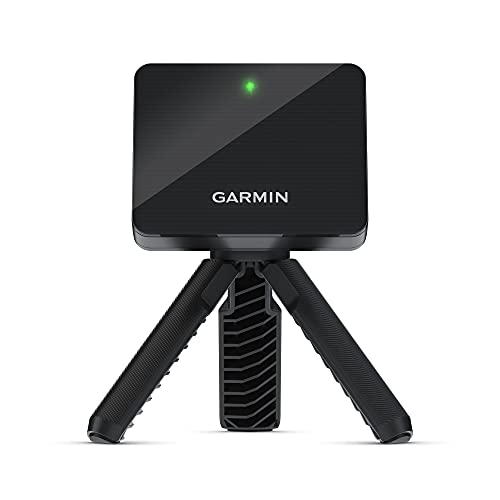
- Portable enough for garage, indoor, and range use
- Tracks key swing and ball data through Garmin Golf app
- Up to 10 hours of battery life for longer practice sessions
Best For: Golfers who want a flexible, app-connected launch monitor for garage practice and range sessions.
Best for Easy Setup
Complete Golf Simulator Enclosure Package

- Includes projector mount and frame poles in one package
- 4K-ready screen with near-full coverage and reduced light bleed
- Easy assembly and garage-friendly sizing options
Best For: Golfers who want a fast, tidy enclosure for a garage simulator build.
Best Budget Pick for Swing Speed
PRGR HS 130-A Portable Golf Launch Monitor

- Tracks club speed without a ball for training
- Measures ball speed, smash factor, carry, and total distance
- No app, Wi-Fi, or Bluetooth required
Best For: Golfers building a garage practice setup who want affordable speed feedback and simple, reliable data.
Best for Protected Practice
SkyTrak Golf Launch Monitor with Metal Case

- Measures ball speed, distance, launch angle, club speed, and spin
- Virtual driving range supports indoor practice sessions
- Metal protective case adds safety around a garage hitting area
Best For: Golfers who want a practice-focused launch monitor with extra protection for garage setups.
Best for iPhone Users

- iPhone/iPad-only launch monitor with easy app setup
- Tracks ball speed, club speed, launch angle, and distance
- Good fit for garage practice, swing video, and casual sim play
Best For: iPhone golfers who want a portable garage launch monitor with video feedback and core shot data.
Best for Speed Training

- Dual radar + photometric tracking for detailed indoor shot data
- GOLFTEC speed training adds structured swing-speed practice
- Protective shield makes it better suited to garage simulators
Best For: Golfers who want accurate indoor simulation plus built-in speed training in a protected garage setup.
Best for Advanced Garage Practice

- No annual app fees
- 13-metric shot tracking with spin and launch data
- 3D driving range and trajectory simulation
Best For: Garage golfers who want advanced data, 3D simulation, and a one-time purchase with no annual app fees.
Best for Data-Driven Improvement

- Built-in GOLFTEC Speed Training with guided drills
- Dual Doppler radar and photometric cameras for fuller data
- Simulator-ready practice modes like Bag Mapping and Wedge Matrix
Best For: Serious golfers building a garage practice setup around structured improvement and detailed swing data.
Best Premium Simulation
Rapsodo MLM2PRO Launch Monitor

- Dual-camera + Doppler radar shot tracking
- 15 metrics including spin, path, and carry
- 45-day premium trial with simulator access
Best For: Golfers building a serious garage simulator setup with advanced feedback.
Best for Full Garage Simulator Packages
SkyTrak ST MAX Ultimate Studio Package

- Dual radar and photometric tracking for detailed shot data
- Includes enclosure, screen, projector, mat, and ball tray
- Built-in speed training support for distance-focused practice
Best For: Golfers building a complete garage simulator bay with premium tracking and included accessories.
Best Portable Simulator Pick – Garmin Approach R10 Portable Launch Monitor
If you want one of the most flexible launch monitors for garage golf, the Garmin Approach R10 is built for home nets, indoor practice spaces, and range sessions. It gives you the core swing and ball data most golfers need, while pairing with the Garmin Golf app for video clips, training tools, and virtual course play.
Best For: Golfers who want a portable, app-connected launch monitor they can move between the garage, indoor setup, and driving range.
Pros:
- Tracks useful metrics like club head speed, ball speed, launch angle, spin, and tempo
- Works indoors or at the range with up to 10 hours of battery life
- Supports swing video capture and training mode through the Garmin Golf app
- Includes virtual rounds and tournament play with an active subscription
Cons:
- Some features depend on the Garmin Golf app and a compatible smartphone
- Virtual course play requires an active subscription
- Renewed unit may not appeal to buyers who want brand-new hardware
The R10 is a strong fit if you want launch monitors for garage golf without committing to a bulky, permanent simulator setup. It balances portability, data depth, and practice features well for golfers who want a practical home-to-range solution.
Best for Easy Setup – Complete Golf Simulator Enclosure Package
If you want a clean, safer hitting area for launch monitors for garage golf, this enclosure package gives you the core setup in one box. It’s aimed at golfers who want a fast path to a simulator bay with a projector mount, blackout-style cage, and a 4K-ready impact screen without piecing everything together.
Best For: Garage golfers and home simulator buyers who want an easy-to-build enclosure with strong visual coverage and room for a launch monitor setup.
Pros:
- Includes the frame poles and projector mount, saving time and extra purchases
- 4K-ready impact screen is sized for a tight, immersive fit with less light bleed
- Designed for indoor and garage use with straightforward assembly
- 12-month warranty plus U.S.-based support adds peace of mind
Cons:
- Turf and projector are not included
- Multiple sizes can make it harder to choose the right fit for your room
- Not a complete simulator bundle, so launch monitors and accessories are sold separately
For golfers building launch monitors for garage golf, this is a practical enclosure-first choice that focuses on safety, screen quality, and easy setup. It’s a strong fit if you want a tidy simulator bay without custom construction or a complicated install.
Best Budget Pick for Swing Speed – PRGR HS 130-A Portable Golf Launch Monitor
If you want one of the most practical launch monitors for garage golf without paying for a full simulator setup, the PRGR HS 130-A is a strong value choice. It focuses on the core numbers that matter for practice—club speed, ball speed, smash factor, and carry/total distance—while keeping setup simple and portable.
Best For: Golfers who want affordable swing-speed feedback in a garage or home practice space, especially for speed training without needing apps or subscriptions.
Pros:
- Measures club speed without a ball, making it useful for speed training
- Doppler radar provides ball speed, smash factor, carry, and total distance
- No Wi-Fi, Bluetooth, or app setup required
- Compact, battery-powered design works well in a garage bay
Cons:
- Does not offer the advanced shot data of higher-end launch monitors
- Display and features are more basic than premium units
The PRGR HS 130-A is a smart pick for launch monitors for garage golf if you care more about reliable speed training and straightforward feedback than simulator-style extras. It delivers the essentials at a much lower price point, which makes it especially appealing for practice-focused golfers.
Best for Protected Practice – SkyTrak Golf Launch Monitor with Metal Case
If you want launch monitors for garage golf that focus on data-driven practice, SkyTrak is built to help you work on the basics without overcomplicating the setup. It delivers key ball-flight metrics and a virtual driving range experience, making it a practical pick for golfers who want feedback on every swing.
Best For: Golfers who want a practice-focused launch monitor with a protective metal case for garage use.
Pros:
- Tracks core shot data like ball speed, distance, launch angle, club speed, and spin rate
- Virtual driving range functionality adds useful practice reps indoors
- Includes a metal protective case with leveling legs for added safety near a hitting mat
Cons:
- Not the most advanced option for golfers wanting premium simulator features
- Requires enough garage space for safe alignment and swing clearance
- Shipping requires a signature, so delivery timing matters
For golfers comparing launch monitors for garage golf, SkyTrak stands out as a straightforward improvement tool with added protection built in. It’s a solid match if you care more about useful practice data and a safer indoor setup than flashy extras.
Best for iPhone Users – Rapsodo Mobile Launch Monitor
For golfers comparing launch monitors for garage golf, the Rapsodo Mobile Launch Monitor stands out for its easy app-based setup, shot tracking, and simulator-style feedback without needing a bulky bay system. It gives you the core data most home golfers want—ball speed, club speed, launch angle, carry distance, and shot shape—in a portable package you can move from the garage to the range.
Best For: iPhone and iPad golfers who want a portable launch monitor for garage practice, swing video, and casual simulator play.
Pros:
- Tracks key metrics like ball speed, club speed, launch angle, and shot distance.
- GPS shot tracking and video playback help you review ball flight and swing mechanics.
- Works as a compact indoor/outdoor simulator solution for garage setups.
- Easy to carry and quick to set up for practice sessions.
Cons:
- iPhone and iPad only, so Android users need to look elsewhere.
- Not as feature-rich as higher-end radar units for serious sim golfers.
Overall, this is a smart pick if you want launch monitors for garage golf that prioritize portability, straightforward feedback, and reliable shot data over advanced pro-level simulation features.
Best for Speed Training – SkyTrak ST MAX Bundle
If you want one of the most capable launch monitors for garage golf, the SkyTrak ST MAX Bundle is built for players who care about both shot data and swing development. Its dual radar and photometric system is aimed at delivering tour-level accuracy indoors, while the included protective shield makes it a safer fit for home bays and tight garage setups.
Best For: Golfers who want accurate indoor simulation plus built-in speed training in a protected garage setup.
Pros:
- Combines dual Doppler radar and photometric cameras for detailed ball and club data.
- GOLFTEC-powered speed training helps you work on swing speed and distance gains.
- Protective HDPE shield adds impact resistance for garage and simulator use.
- Dual USB ports and modular design support stable, uninterrupted practice sessions.
Cons:
- Pricier than basic launch monitors geared only toward casual practice.
- More feature-rich than some users need if they only want simple carry readings.
- Best value depends on whether you’ll use both the simulator and training features.
For golfers comparing launch monitors for garage golf, this bundle stands out because it pairs serious data capture with a protective case and training tools in one purchase. It’s a strong choice if you want a simulator-ready monitor that can also support long-term improvement.
Best for Advanced Garage Practice – Swinora Golf Launch Monitor
If you want one of the more feature-rich launch monitors for garage golf, the Swinora GX-03 stands out for its no-subscription app, environmental sensors, and expanded shot metrics. It’s built for players who want realistic indoor data without paying ongoing fees, as long as you have enough space for the required ball flight.
Best For: Garage golfers who want advanced data, 3D simulation, and a one-time purchase with no annual app fees.
Pros:
- No annual fees; all app features are available after a one-time download.
- Tracks useful metrics like attack angle, launch angle, spin rate, and club data.
- Built-in sensors help adjust readings for temperature, humidity, and pressure.
- 3D driving range view and video record features make practice more engaging.
Cons:
- Indoor use needs at least 15 feet of total space for accurate readings.
- Bluetooth works best with the phone placed in front of the device.
- More advanced than a basic monitor, so it may be overkill for casual users.
For golfers building a serious home setup, this is a strong fit among launch monitors for garage golf because it combines simulation, calibration tools, and detailed shot feedback without recurring app costs.
Best for Data-Driven Improvement – SKYTRAK ST MAX Launch Monitor
If you want one of the more advanced launch monitors for garage golf, the SKYTRAK ST MAX stands out for golfers who care about both ball data and club data. Its dual Doppler radar and photometric cameras are aimed at delivering a fuller picture of each swing, while the built-in GOLFTEC Speed Training adds a structured practice path instead of raw numbers alone.
Best For: Serious golfers who want a premium garage setup with guided speed training, detailed metrics, and simulator-ready practice tools.
Pros:
- Built-in GOLFTEC Speed Training with guided drills and personalized swing insights
- Dual Doppler radar plus photometric cameras for detailed ball and club data
- Access to practice modes like Skills Assessments, Bag Mapping, and Wedge Matrix
- Dual USB-C ports support charging and data transfer during sessions
Cons:
- Priced like a premium training tool, not an entry-level monitor
- More features than casual golfers may need for simple range sessions
The ST MAX makes sense if you want launch monitors for garage golf that do more than track shots—they help build a practice routine. It is especially appealing for players who want tour-style data, simulator compatibility, and a system that keeps working as a long-term improvement tool.
Best Premium Simulation – Rapsodo MLM2PRO Launch Monitor
Rapsodo Golf Launch Monitor - Swing Analyzer, Spin Rate, Indoor/Outdoor, 3 Pro V1 Balls
Check Price On AmazonIf you want one of the most feature-rich launch monitors for garage golf, the Rapsodo MLM2PRO stands out with dual-camera capture, Doppler radar, and a deep metrics set that helps you practice with real feedback instead of guesswork. It’s built for players who want simulator-style practice, swing review, and shot tracking in one home-friendly package.
Best For: Golfers who want a high-end garage setup with simulator access, detailed swing data, and video-based feedback.
Pros:
- Doppler radar and dual cameras provide strong shot-tracking detail.
- Tracks 15 metrics, including spin rate, club path, launch angle, and carry.
- 45-day premium trial unlocks simulator courses and app integrations.
- Useful as both a launch monitor and swing-training aid.
Cons:
- Premium simulator features require an ongoing membership after the trial.
- More advanced than a basic budget monitor, so it may be overkill for casual users.
For golfers building a serious practice space, this is a strong fit among launch monitors for garage golf because it combines data, video, and simulator play in one system. The MLM2PRO is especially appealing if you want more than yardages and prefer a setup that can grow with your game.
Best for Full Garage Simulator Packages – SkyTrak ST MAX Ultimate Studio Package
If you want a more complete setup than a standalone unit, the SkyTrak ST MAX Ultimate Studio Package is one of the most capable launch monitors for garage golf. It combines dual radar and photometric tracking with a full enclosure, impact screen, projector, mat, and ball tray, so you can build a true simulator bay instead of piecing everything together separately.
Best For: Golfers who want an all-in-one garage simulator package with premium launch monitoring, speed training, and included hardware.
Pros:
- Dual Doppler radar plus photometric cameras for tour-level shot data
- Includes enclosure, screen, projector, mat, and ball tray for a ready-made bay
- GOLFTEC Speed Training support helps users work on clubhead speed and distance
- Multiple studio size options make it easier to match a garage footprint
Cons:
- Requires careful space measurement before buying to ensure safe swing clearance
- More expensive than a standalone launch monitor
- Garage installation will still take more planning than a basic practice net setup
For buyers comparing launch monitors for garage golf, this package stands out because it solves both the tracking and the simulator-bay setup in one purchase. It is a strong fit if you want a polished indoor practice space with realistic visuals and training tools, not just ball flight numbers.
How We Picked These Launch Monitors for Garage Golf
We focused on models that make sense for real garage setups: dependable ball data, usable indoor tracking, strong simulator compatibility, and a practical footprint for home spaces. We also considered whether each option is better for casual practice, serious game-improvement work, or full simulator builds.
Quick Comparison
In general, portable radar units are the easiest way to get started, while photometric and dual-sensor systems usually deliver stronger indoor consistency. Bundled packages can be the fastest path to a complete simulator bay, but they are less flexible if you already own an enclosure, projector, or impact screen.
Key Buying Factors for Launch Monitors for Garage Golf
Accuracy and Data Type
For indoor use, pay close attention to whether the monitor measures ball speed, club speed, launch angle, spin, carry distance, and apex reliably in a garage environment. Some units emphasize portability and basic feedback, while others are built for deeper simulator-grade data.
Space Requirements
Garage ceilings, hitting distance, and ball flight limits matter. Radar-based launch monitors often need enough room behind or in front of the ball, while camera-based systems can be more forgiving in tighter spaces. Check the minimum setup dimensions before buying.
Software and Simulator Compatibility
The best Launch Monitors for Garage Golf should work smoothly with your preferred simulator software, mobile app, or training platform. If you want virtual courses, swing replay, or practice-range tools, confirm those features in advance rather than assuming they are included.
Portability and Power
If you plan to move the unit between garage, range, and backyard, battery life and setup speed matter. Fixed studio packages make more sense for dedicated bays, while compact monitors are better for golfers who want flexibility.
Who Should Buy Which Launch Monitors for Garage Golf?
Choose a portable radar model if you want an affordable, move-anywhere practice tool. Pick a camera- or photometric-based monitor if indoor accuracy is your top priority. Go with a bundle package if you are building a full-time simulator room and want everything coordinated from the start. For golfers refining swing mechanics, models with stronger club data and training features are usually the smartest investment.
In short, the best choice depends on how serious your garage setup is, how much space you have, and how much detail you want from each shot.