If you want clearer feedback from every practice session, golf swing analyzers with wearable sensor technology can help you see what your swing is really doing. These tools are built for golfers who want measurable improvement, not guesswork.
In this roundup, we focus on options that combine wearable tracking, mobile app insight, and practical training features so you can choose the right setup for your budget and skill level.
Best 10 Golf Swing Analyzers with Wearable Sensor Picks for 2026
Wearable swing trainer
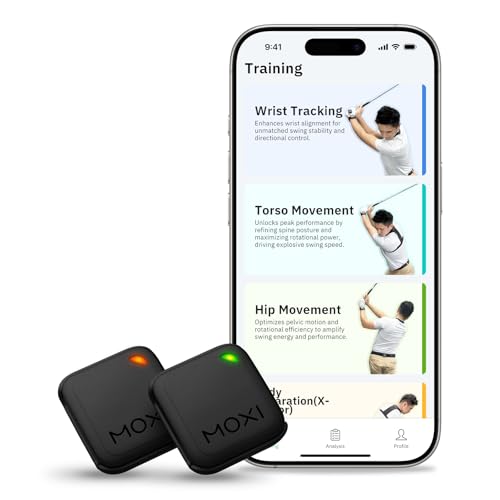
- Tracks wrist, torso, hip, and X-Factor motion
- Free app with 3D playback and graphs
- No subscription required for analytics
Best For: Golfers focused on swing mechanics and biofeedback training
Automatic game tracker

- 16 sensors track every club, including putter
- Hands-free shot tracking with app analytics
- AI rangefinder adjusts for playing conditions
Best For: Golfers who want automatic shot tracking and course strategy insights
Swing and stroke analyzer
Video-based real-time swing trainer
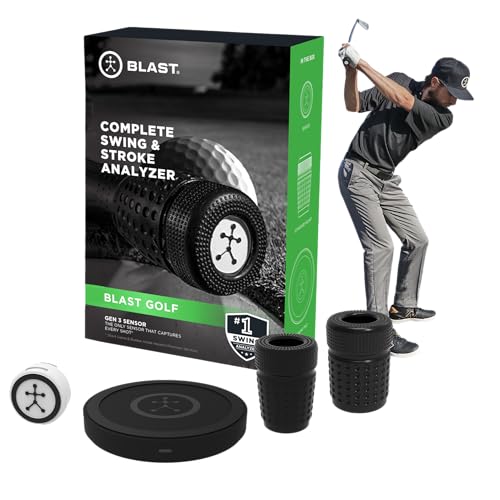
- Real-time feedback sent to the Blast app
- Auto-clipped video highlights with metrics overlay
- Air Swings mode supports practice without a ball
Best For: Golfers who want video review and real-time practice feedback
AI course companion
Smart distances and strokes-gained tracker

- 15 club sensors plus dedicated putter sensor
- Strokes gained analytics and AI caddie advice
- Automatic shot tracking with free first year
Best For: Golfers who want deep game analytics and strategy guidance
Radar-Driven Practice Lab
Golf Launch Monitor & Portable Swing Analyzer with 13 Metrics

- Tracks 13 metrics including attack angle, launch angle, and spin rate
- Built-in sensors adjust readings for temperature, humidity, and pressure
- No annual fees; app access is included after one-time download
Best For: Golfers wanting detailed portable launch data with no subscription
Grab-and-Go Distance Reader
Izzo Golf Swami Launch Master Golf Launch Simulator

- Measures carry distance, club head speed, and smash factor
- Pocket-sized design with included carry case for portability
- Simple AA-battery operation with no complicated setup
Best For: Players who want a compact, easy launch monitor for quick practice feedback
Speed-Only Swing Trainer
RYP Golf Radar Swing Speed Monitor and Radar for Rypstick

- Measures club head speed without needing to hit a ball
- Shows each swing speed and saves the last 10 swings
- Optional voice feedback supports speed-focused practice
Best For: Golfers focused on no-contact speed training and instant swing feedback
Launch Monitor Pick

- Measures club head speed, ball speed, smash factor, and carry distance
- Doppler radar provides instant feedback on each shot
- Compact design with carry case and audible distance read-out
Best For: Golfers who want a portable launch monitor for fast practice feedback
Swing Aid Pick

- Promotes a one-piece takeaway and arm-body sync
- Fits right- and left-handed golfers of all sizes
- Rolls up small for easy transport to the range
Best For: Golfers who want a simple wearable training aid for swing consistency
Real-Time Analyzer Pick

- Doppler radar with real-time LCD feedback and voice output
- Swing speed mode works without a ball
- Stores shot data and club statistics for later review
Best For: Golfers who want portable real-time shot data and swing-speed practice
Wearable swing trainer – Dual-sensor 3D swing analyzer
If you want golf swing analyzers with wearable sensor feedback that focuses on mechanics, the MOXI SwingMotion is built for detailed practice. Its two lightweight IMU sensors track wrist angles, torso rotation, hip movement, swing speed, and X-Factor separation, then show the results in a free app with 3D playback and graphs.
Best For: Golfers who want a hands-on swing trainer for analyzing wrist, torso, hip, and separation mechanics without a subscription.
Pros:
- Dual wearable 9-axis sensors provide real-time tracking of key swing positions and motion data.
- Free iOS/Android app includes 3D avatar playback, shot history, and progress graphs.
- Four training modes let you isolate wrist, torso, hip, or X-Factor work.
- Lightweight design is meant to stay comfortable and avoid interfering with natural swings.
Cons:
- Best suited to swing mechanics practice rather than full-round game tracking.
- Battery life is listed at 4+ hours, so longer sessions may require planning.
- Requires wearing and attaching multiple pieces for setup.
This is a strong pick if you want detailed swing feedback and training flexibility in a wearable format. The free app and dual-sensor setup make it especially practical for focused practice sessions.
Automatic game tracker – Full-bag smart sensor system
For golfers comparing golf swing analyzers with wearable sensor coverage across the whole bag, Arccos takes a broader game-tracking approach. This GEN 4 system includes 16 weather-resistant, ultra-light sensors and uses the Arccos app to automatically capture shots, calculate smart club distances, and provide GPS-based yardages.
Best For: Players who want automatic shot tracking, club-distance data, and app-based course strategy instead of a swing-mechanics trainer.
Pros:
- 16 sensors cover your full set, including a dedicated putter sensor.
- Automatic shot tracking captures data hands-free through the app.
- A.I. powered GPS rangefinder adjusts yardages for wind, elevation, temperature, humidity, and altitude.
- Includes a free first year of membership for new users after activation.
Cons:
- Membership is required after the first year.
- It is more of a game-tracking system than a swing technique analyzer.
- Best value depends on whether you want full-round analytics rather than practice feedback.
Arccos is designed for golfers who want a smarter scoring and strategy system built around automatic tracking. If your priority is understanding distances and decisions on the course, it offers a very different experience from a swing-only trainer.
Swing and stroke analyzer – Video-based real-time swing trainer
The Blast Motion Golf Swing & Stroke Analyzer is a practical option if you want wearable sensor feedback with built-in video review. The sensor sends real-time feedback to the Blast app, where you can capture highlights, overlay metrics, and practice anywhere with Air Swings mode when you do not have a ball.
Best For: Golfers who want a versatile swing and stroke trainer with app-based video capture and short-game improvement.
Pros:
- Real-time feedback is delivered automatically to the smartphone app.
- Video capture and auto-clipping make it easier to review swings and strokes.
- Air Swings mode lets you practice without a ball, indoors or outdoors.
- Membership is included for new users for the first month.
Cons:
- Membership is part of the setup experience after the included period.
- It is geared heavily toward app use for setup and management.
- Short-game and stroke improvement appear to be a major focus, which may not suit everyone.
Blast Motion stands out for golfers who like seeing performance data alongside video. It is a flexible training tool for year-round practice, especially if you value short-game work and immediate feedback.
AI course companion – Smart distances and strokes-gained tracker
If you want golf swing analyzers with wearable sensor support that also improve on-course decisions, Arccos GEN 4 is built around automatic data capture and strategy. With 15 smart sensors plus a smart putter sensor, it tracks shots, computes club distances, and provides A.I. caddie insights through the app.
Best For: Golfers who want strokes-gained analytics, precise club distances, and AI shot strategy help across the whole set.
Pros:
- Automatic shot tracking helps you collect data without manual entry.
- Strokes gained analytics show strengths and weaknesses by target handicap.
- AI caddie advice offers real-time strategy options and outcome predictions.
- Annual sensor renewal program adds replacement or extra sensors over time.
Cons:
- Free first-year membership applies only to new members.
- It is centered on game tracking and strategy rather than swing-motion training.
- Some key app features depend on ongoing membership after year one.
Arccos is best understood as a smart course companion, not a swing-mechanics coach. For players who care most about data-driven scoring, club gapping, and shot decisions, it is one of the most complete systems here.
Radar-Driven Practice Lab – Golf Launch Monitor & Portable Swing Analyzer with 13 Metrics
If you want golf swing analyzers with wearable sensor-style feedback in a portable setup, this launch monitor is built for golfers who want more than basic yardage. It tracks 13 metrics, adds multi-angle practice views, and uses built-in temperature, humidity, and barometric pressure sensors to adjust shot data to current conditions. That makes it a strong option for structured practice indoors or outdoors, especially if you want video review and shot-trajectory context alongside your numbers.
Best For: Golfers who want a feature-rich portable launch monitor with environmental adjustments and no subscription fee.
Pros:
- Zero annual fees and lifetime app access after one-time download
- Built-in environmental sensors adjust data for temperature, humidity, and pressure
- Tracks 13 metrics, including attack angle, launch angle, and spin rate
- Includes multi-angle practice views, shot trajectory display, and video recording
Cons:
- Indoor use requires at least 15 feet of total space
- You must place the device exactly 5 feet behind the ball for indoor setup
- Needs the correct club selected before each swing for more consistent data
Overall, this is the most analysis-heavy pick in the group, with smart app features and condition-aware measurements that help make practice data more useful. It is best suited to golfers who have the space and want detailed feedback without recurring software costs.
Grab-and-Go Distance Reader – Izzo Golf Swami Launch Master Golf Launch Simulator
For golfers comparing golf swing analyzers with wearable sensor convenience, this pocket-sized launch monitor keeps the setup simple and portable. It measures carry distance, club head speed, and smash factor, so you can get core practice data without carrying bulky gear. Because it runs on AA batteries and is easy to use at the range or on the go, it fits players who want quick feedback rather than a full-featured training ecosystem.
Best For: Golfers who want a small, easy-to-carry launch monitor for basic swing and distance feedback.
Pros:
- Measures carry distance, club head speed, and smash factor
- Pocket-sized design makes it easy to carry to indoor or outdoor ranges
- Includes a carry case for transport and storage
- Simple AA-battery operation with no complicated setup
Cons:
- Tracks fewer metrics than more advanced launch monitors
- Uses plastic construction rather than premium materials
- Not water resistant
This is a practical entry-level choice if your priority is portability and straightforward numbers. It is less about deep analysis and more about making swing and distance checks easy wherever you practice.
Speed-Only Swing Trainer – RYP Golf Radar Swing Speed Monitor and Radar for Rypstick
If you are shopping for golf swing analyzers with wearable sensor-style speed feedback, this radar focuses on one thing: club head speed. It does not require you to hit a ball, and it works with a Rypstick, driver, or iron, making it useful for repeatable speed training sessions. Real-time feedback, last-10-swing storage, and optional voice prompts give it a straightforward training feel for golfers who want to chase faster swings.
Best For: Golfers who want a no-contact swing speed monitor for speed training and real-time feedback.
Pros:
- Measures club head speed without requiring a ball
- Works with a Rypstick, driver, or iron
- Displays speed after each swing and stores the last 10 swings
- Optional voice feedback adds convenient in-session guidance
Cons:
- Focuses on speed only, not full launch or ball-flight data
- Requires 5 AA batteries, which are not included
- Does not provide the broader metric set of multi-function launch monitors
This is the most focused training tool of the three, and that narrow scope is its main strength. It is a good fit if you care more about building swing speed than tracking a full shot profile.
Launch Monitor Pick – Izzo Golf Swami Launch Master
Izzo Golf Swami Launch Master Golf Launch Simulator - Golf Training Aid, Standard
Check Price On AmazonIf you want golf swing analyzers with wearable sensor-style feedback for practice sessions, the Izzo Golf Swami Launch Master is a compact launch monitor that gives you key ball-striking data right away. It measures club head speed, ball speed, smash factor, and carry distance, making it useful for range work or hitting into a net at home.
Best For: Golfers who want a portable radar-based launch monitor for quick practice feedback and distance tracking.
Pros:
- Measures club head speed, ball speed, smash factor, and carry distance
- Uses Doppler radar technology for instant shot feedback
- Compact size makes it easy to store in a golf bag
- Includes an audible read-out option and a hard carry case
Cons:
- Not water resistant
- Requires 4 AA batteries
- Focused on launch and strike stats rather than body-swing motion tracking
Overall, this is a practical choice if you care most about immediate numbers that help you understand impact and distance. It is straightforward, portable, and built for repeatable practice sessions.
Swing Aid Pick – Swing Correcting Arm Band
For golfers looking for golf swing analyzers with wearable sensor-style training support, this Swing Correcting Arm Band is a simple tool that helps promote a one-piece takeaway and keeps the arms and body in sync. It is designed for range repetition and can be used by right- or left-handed golfers of all sizes.
Best For: Golfers who want a lightweight training aid to reinforce swing sync and a smoother takeaway.
Pros:
- Encourages a one-piece takeaway and better arm-body synchronization
- Works for both right- and left-handed golfers
- One-size, versatile design fits golfers of all sizes
- Rolls up small for easy transport to the range
Cons:
- Does not measure swing data or provide digital feedback
- More of a motion aid than a full analyzer
- Focused on training repetition rather than on-course diagnostics
This is a good pick if your priority is building a more consistent swing through simple physical feedback. It is portable, easy to use, and aimed at repeatable practice rather than tech-heavy analysis.
Real-Time Analyzer Pick – Voice Caddie SC200Plus
If you are comparing golf swing analyzers with wearable sensor-style convenience, the Voice Caddie SC200Plus stands out as a portable launch monitor with real-time shot data. It uses Doppler radar technology and atmospheric pressure sensors, and it can be used indoors or outdoors for swing speed work and club distance tracking.
Best For: Golfers who want a portable analyzer with real-time data, voice output, and long battery life.
Pros:
- Doppler radar technology for shot data collection
- Real-time LCD feedback plus voice output
- Swing speed mode lets you practice without a ball
- Stores shot data and club statistics for later review
Cons:
- Uses a remote-based setup rather than a wearable sensor
- Plastic construction may feel less premium
- Best suited to launch and swing metrics, not body-motion tracking
For golfers who want immediate performance numbers and a convenient practice tool, this model offers a strong mix of feedback and portability. The ability to track data, store club stats, and practice swing speed without a ball makes it especially versatile.
How We Picked These Golf Swing Analyzers with Wearable Sensor
We prioritized products that offer actionable swing data, easy setup, and useful feedback during practice. We also looked for strong app support, comfort, portability, and features that make it easier to turn numbers into better swings.
Because golfers train differently, we favored a mix of sensor-based analyzers, launch monitors, and swing training tools that can support different goals without overcomplicating the buying process.
Quick Comparison
Some models are better for real-time swing mechanics and tempo, while others lean into shot tracking, club distance insight, or launch and ball-flight data. If your goal is form improvement, choose a wearable sensor system with immediate feedback. If you care more about performance on the course, look for systems that track distances, trends, and shot outcomes.
Key Buying Factors for Golf Swing Analyzers with Wearable Sensor
Feedback Type
Decide whether you want instant swing correction, video-linked feedback, or post-session analysis. Real-time alerts help with drills, while deeper analytics are better for long-term improvement.
Sensor Setup and Comfort
Wearable sensors should stay secure without restricting motion. Check whether the system uses one sensor, dual sensors, or club-mounted tracking, and make sure the attachment method fits your routine.
App Quality and Data Depth
The best Golf Swing Analyzers with Wearable Sensor hardware pair with an intuitive app. Look for clear metrics, simple session summaries, and useful progress tracking rather than overloaded dashboards.
Training Versatility
Some products are built for full-swing analysis, while others are stronger for speed training, launch monitoring, or stroke feedback. Choose the feature set that matches how you practice most often.
Portability and Power
If you practice at the range or travel often, lightweight gear with dependable battery life is a major advantage. Compact devices are easier to use consistently, which matters more than having every possible metric.
Who Should Buy Which Golf Swing Analyzers with Wearable Sensor?
Beginners should look for straightforward feedback and simple app guidance. Mid-handicap golfers usually benefit from a balanced system with swing metrics and progress tracking. More advanced players may prefer deeper motion analysis or launch data to fine-tune mechanics and club performance.
If you want the easiest path to improvement, start with a wearable sensor model that gives immediate, understandable feedback. If you want broader performance insight, a launch monitor or smart tracking system may be the better fit.