The best lightweight sleeping pads balance low packed weight with enough insulation and cushioning for a comfortable night outdoors. The right choice depends on your sleeping style, season, terrain, and tolerance for extra bulk.
We compared these 10 options across pad type, insulation, inflation design, packed size, comfort features, and intended use to help you choose a practical sleeping pad for backpacking and camping.
Best 10 Lightweight Sleeping Pads Picks for 2026
Best Lightweight Foam Pad

- 14-ounce closed-cell foam design
- Accordion folding for easy packing
- R-value 1.7 with durable construction
Best For: Minimalist backpacking and dependable three-season ground insulation
Best Winter Insulation
Elevate X Inflatable Sleeping Pad

- ASTM R-value 7.5 for four-season warmth
- 1.4-pound packable inflatable design
- Water-resistant nylon and TPU construction
Best For: Winter camping and high-altitude backpacking
Best Built-In Comfort
Overmont Inflatable Pad with Pillow

- 4.7-inch thickness with integrated pillow
- Built-in foot pump for quick inflation
- Supports up to 300 pounds
Best For: Comfort-focused camping, travel, and car-based adventures
Best All-Season Value

- 7.2 R-value for year-round insulation
- 4-inch thick and 24 inches wide
- Supports up to 330 pounds
Best For: All-season backpacking and spacious inflatable comfort
Cold-Weather Comfort
FlexRest Pro Insulated Sleeping Pad

- ASTM R-value of 4.9 for four-season insulation
- 1.4-pound design with three-inch cushioning
- Vortex Valve enables quick inflation and adjustment
Best For: Cold-weather backpacking with a focus on warmth and low weight
Simple Ultralight Insulation
Foldable XPE Foam Sleeping Pad

- Weighs only 10.56 ounces
- Closed-cell foam will not deflate
- Folds compactly for easy carrying
Best For: Minimalist trips where low weight and dependable setup are priorities
Fast-Inflating Space Saver
Compact Air Sleeping Pad with Built-In Pillow
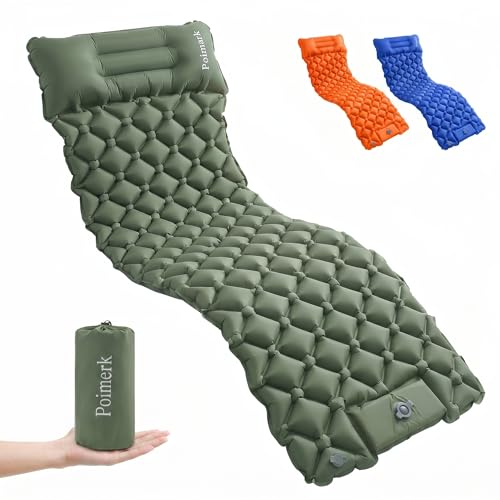
- Built-in foot pump inflates in about 50 seconds
- Integrated pillow and 2.3-inch air-cell cushioning
- Connects with a second pad for extra space
Best For: Convenience-focused camping and backpacking with quick setup
Wide Comfort Pick

- Roomy 78-by-27-inch design
- Built-in pillow and foot pump
- Connects to a second pad
Best For: Campers wanting extra width and convenient built-in features
Ultralight Backpacking Pick

- Weighs just 17.5 ounces
- Includes detachable foot pump sack
- 2-R insulation for spring and summer
Best For: Weight-conscious backpackers on warmer-weather trips
Extra-Thick Value Pick
AKSOUL 3.9-Inch Camping Sleeping Pad

- Nearly 4 inches thick
- Inflates with a built-in foot pump
- Supports up to 440 pounds
Best For: Campers who prioritize cushioning and easy setup
Best Lightweight Foam Pad – Therm-a-Rest Z Lite Original
For hikers seeking lightweight sleeping pads with simple, dependable construction, the Therm-a-Rest Z Lite Original is a proven closed-cell foam option. Its accordion fold makes it easy to pack, while the dimpled surface adds insulation and cushioning without relying on inflation.
Best For: Backpackers, mountaineers, and campers who prioritize durability, low weight, and straightforward setup.
Pros:
- Weighs just 14 ounces and folds compactly.
- Closed-cell foam works without inflation and resists water.
- R-value 1.7 and heat-trapping dimples provide basic insulation.
- Denser bottom foam adds durability and ground protection.
Cons:
- Its 0.75-inch thickness offers less cushioning than inflatable pads.
- R-value 1.7 is better suited to milder conditions than serious winter camping.
This is an economical, low-maintenance choice when reliability and minimal pack weight matter more than plush comfort or high cold-weather insulation.
Best Winter Insulation – Elevate X Inflatable Sleeping Pad
The Elevate X is one of the more insulated lightweight sleeping pads for cold-weather trips. Its ASTM R-value of 7.5, compact packed size, and integrated valve make it suitable for winter backpacking without the bulk of a traditional mattress.
Best For: Winter camping, snow camping, high-altitude adventures, and backpackers who need substantial ground insulation.
Pros:
- ASTM R-value 7.5 provides strong insulation for four-season use.
- Weighs about 1.4 pounds and packs to a 3.94-by-10.04-inch cylinder.
- 20D–40D nylon with TPU coating is water-resistant and durable.
- Integrated valve supports quick inflation and deflation.
Cons:
- Inflatable construction requires more care than a closed-cell foam pad.
- At 1.4 pounds, it is heavier than the lightest minimalist foam options.
With a 3.15-inch thickness and plush firmness, the Elevate X balances comfort and serious insulation, making it a strong choice when warmth is the primary concern.
Best Built-In Comfort – Overmont Inflatable Pad with Pillow
For campers who want lightweight sleeping pads with extra cushioning, the Overmont combines a 4.7-inch inflatable surface, integrated pillow, and built-in foot pump. It packs to roughly water-bottle size while providing a broad 27.5-inch sleeping area.
Best For: Campers, car travelers, RV users, and backpackers who value thickness and convenient inflation.
Pros:
- 4.7-inch thickness helps separate sleepers from uneven ground.
- Built-in foot pump inflates the pad in approximately 30–60 seconds.
- Integrated pillow adds head support without a separate item.
- 75D fabric and TPU construction support up to 300 pounds.
Cons:
- At 1.98 pounds, it is heavier than several backpacking-focused options.
- Its extra-thick design may be more comfort-oriented than ultralight-focused.
The Overmont is a practical comfort pick for users who want a tall, supportive mattress and easy setup, especially when a few additional ounces are acceptable.
Best All-Season Value – TREKOLOGY UL R7 Sleeping Pad
The TREKOLOGY UL R7 is a versatile option among lightweight sleeping pads, combining a 7.2 R-value with a 4-inch sleeping surface and a 2-pound packed weight. Its compact, water-resistant construction suits backpackers who want insulation and comfort across changing conditions.
Best For: Three- and four-season hikers, side sleepers, and campers who want a wide, supportive inflatable pad.
Pros:
- 7.2 R-value provides strong insulation for all-season use.
- 4-inch thickness and 24-inch width offer substantial support.
- 40D ripstop nylon with TPU coating is water-resistant and easy to clean.
- Supports up to 330 pounds while packing to about water-bottle size.
Cons:
- Weighs 2 pounds, making it heavier than some minimalist pads.
- Requires mouth inflation or a separate pump bag, which is not included.
- The 70.8-inch length may be less suitable for taller sleepers.
This pad is a well-rounded choice for hikers who want a generous sleeping surface and high insulation without moving to a much bulkier camping mattress.
Cold-Weather Comfort – FlexRest Pro Insulated Sleeping Pad
The FlexRest Pro is a strong choice among lightweight sleeping pads for backpackers who need more insulation without a bulky load. Its 1.4-pound weight, 3-inch thickness, tapered mummy-friendly shape, and ASTM R-value of 4.9 make it suited to colder camping conditions.
Best For: Four-season backpacking and campers prioritizing warmth, compact packing, and adjustable firmness.
Pros:
- ASTM R-value of 4.9 provides dependable cold-ground insulation.
- Weighs 1.4 pounds and packs with a stuff sack.
- Three-inch thickness adds cushioning on uneven ground.
- Vortex Valve supports fast inflation, deflation, and pressure adjustment.
Cons:
- The tapered mummy shape offers less usable space than a rectangular pad.
- Inflation still requires breath, a pump sack, or a pump.
Choose this pad when warmth is more important than achieving the absolute lowest pack weight. The included repair patch also adds practical value for backcountry trips.
Simple Ultralight Insulation – Foldable XPE Foam Sleeping Pad
This foldable foam mat is one of the most lightweight sleeping pads for hikers who prefer dependable simplicity over inflatable cushioning. It weighs just 10.56 ounces, folds compactly, and uses closed-cell XPE foam that will not deflate during the night.
Best For: Minimalist hiking, camping, and mountaineering where low weight, moisture resistance, and easy setup matter.
Pros:
- Very light at 0.7 pounds per pack.
- Closed-cell foam cannot lose air or deflate.
- Water-resistant XPE material helps block damp ground.
- Folding design packs to approximately 23.6 by 5.6 by 4.9 inches.
Cons:
- Its 0.36-inch thickness provides less cushioning than an air pad.
- The listed insulation rating of 2.1 is better suited to moderate conditions than severe cold.
This is a practical pick for weight-conscious campers who value instant setup and reliability. Its raised-node surface adds support, but comfort will be more basic than with a thicker inflatable model.
Fast-Inflating Space Saver – Compact Air Sleeping Pad with Built-In Pillow
This compact air mattress brings several convenience features to the lightweight sleeping pads category, including a built-in foot pump, integrated pillow, and quick-deflation valve. At about 1.42 pounds, it packs down small while providing a 2.3-inch sleeping surface for backpacking and general camping.
Best For: Campers who want quick inflation, built-in head support, and the option to connect two pads for more space.
Pros:
- Built-in foot pump inflates the pad in about 50 seconds.
- Integrated ergonomic pillow reduces the need for extra gear.
- 40D ripstop nylon with TPU coating is waterproof and puncture-resistant.
- Side fasteners allow two pads to connect into a wider sleeping surface.
Cons:
- The built-in pillow and rectangular design may not suit campers who prefer a separate pillow or mummy shape.
- Its 1.42-pound weight is higher than the supplied foam pad.
This pad stands out for convenience rather than minimum weight. The foot pump, compact packed size, and connectable sides make it especially useful for travelers who want a comfortable setup without carrying a separate pump or pillow.
Wide Comfort Pick – FUN PAC Camping Sleeping Pad
For campers who want lightweight sleeping pads without giving up width, the FUN PAC combines a roomy design with a built-in pillow and foot pump. Its 40D nylon and TPU construction is waterproof and designed for outdoor use.
Best For: Backpackers and campers who prioritize extra width, built-in cushioning, and fast setup.
Pros:
- Inflates in about 30–60 seconds with the built-in pump.
- Roomy design measures up to 78 by 27 inches and is about 3 inches thick.
- Built-in pillow and side buttons allow two pads to connect into a larger sleeping surface.
- Weighs approximately 1.5 pounds and packs compactly for travel.
Cons:
- The built-in pillow may not suit campers who prefer a separate pillow.
- The wider shape may take up more tent floor space than a narrower backpacking pad.
The FUN PAC is a practical choice when comfort and width matter as much as packability. Its integrated pump and pillow reduce extra gear, while the connectable design adds flexibility for paired camping trips.
Ultralight Backpacking Pick – Gear Doctors Ether 17.5oz
The Gear Doctors Ether stands out among lightweight sleeping pads for its 17.5-ounce weight and compact packed size. Its contoured design, detachable pump sack, and water-resistant TPU-coated nylon suit hikers focused on minimizing pack weight.
Best For: Ultralight backpackers and summer or spring campers who want a compact pad with ergonomic support.
Pros:
- Weighs 17.5 ounces and packs to about 8.6 by 3.1 inches.
- Detachable foot pump sack enables lung-free inflation in under 90 seconds.
- ErgoCushion contours support side and back sleepers and help reduce slipping.
- Includes a repair kit and lifetime replacement support.
Cons:
- Its 2-R-value insulation is intended for spring and summer use rather than colder conditions.
- The contoured tapered profile may feel less spacious than a wide rectangular pad.
With one of the lightest listed weights and a useful pump-sack setup, the Ether is especially appealing for weight-conscious trips. It is best matched with warmer-weather adventures where compactness and ergonomic comfort take priority.
Extra-Thick Value Pick – AKSOUL 3.9-Inch Camping Sleeping Pad
The AKSOUL offers a thick 3.9-inch airbed-style profile while remaining compact enough for camping and hiking. Its built-in foot pump, included pillow, and connectable snaps make it a convenient option among lightweight sleeping pads for campers who want added cushioning.
Best For: Campers seeking a plush, extra-thick pad with a high weight capacity and easy inflation.
Pros:
- 3.9-inch thickness provides substantial separation from uneven ground.
- Built-in foot pump inflates the pad in about 30–40 seconds.
- 40D nylon and TPU construction supports up to 440 pounds.
- Side snaps connect two pads to create a wider sleeping surface.
Cons:
- At approximately 850 grams, it is heavier than the ultralight Ether.
- The thicker airbed design may be less space-efficient for minimalist backpacking.
The AKSOUL is a comfort-focused choice that trades some weight for extra thickness and a plush feel. Its fast foot pump and connectable design make it particularly useful for relaxed camping and shared outdoor trips.
How We Picked These Lightweight Sleeping Pads
We focused on the features that matter most when carrying a sleeping pad outdoors: weight, packed size, insulation, sleeping comfort, durability, and setup time. The selection includes closed-cell foam pads, inflatable models, and thicker insulated designs so you can compare different approaches rather than choosing from one style alone.
We also considered useful details such as built-in pillows, integrated pumps, waterproof materials, four-season insulation, and folding or compact storage. Product specifications can vary by size, so check the listed dimensions and packed weight before ordering.
Quick Comparison
| Pad type | Best for | Main advantage | Potential trade-off |
|---|---|---|---|
| Closed-cell foam | Rugged trips and simple setups | Reliable, puncture-resistant insulation | Bulkier and usually less cushioned |
| Inflatable | Backpacking comfort | Compact packed size and adjustable firmness | Needs inflation and puncture care |
| Thick insulated inflatable | Cold-weather comfort | More cushioning and warmth | Often heavier or slower to pack |
Key Buying Factors for Lightweight Sleeping Pads
Weight and Packed Size
For long hikes, every ounce matters. Compare the complete packed weight, including the stuff sack, pump, and repair accessories when included. A foam pad may be light but bulky, while an inflatable pad often packs smaller.
Warmth and R-Value
R-value indicates how well a pad resists heat loss to the ground. Higher values are generally better for cold conditions, but your sleeping bag, clothing, tent, and campsite also affect warmth. For summer trips, a lower or moderate rating may be sufficient; colder conditions call for more insulation.
Comfort and Dimensions
Check the pad’s length, width, thickness, and shape. Side sleepers often benefit from a thicker inflatable model, while minimalist hikers may prefer a thinner foam pad. Integrated pillows can save space, though some campers prefer a separate pillow for better support.
Durability and Inflation
Closed-cell foam is the simplest and most resistant to punctures. Inflatable pads should be used on cleared ground and stored with basic repair supplies. Built-in foot pumps can reduce moisture from breath inflation and make setup easier, but they may add time or weight.
Who Should Buy Which Lightweight Sleeping Pads?
- Choose a closed-cell foam pad if you prioritize simplicity, durability, and dependable performance over maximum cushioning.
- Choose a compact inflatable pad if packability and sleeping comfort are your main priorities for backpacking.
- Choose a thicker insulated model if you sleep on your side, camp in cooler weather, or want more separation from hard ground.
- Choose a pad with a built-in pump or pillow if convenience and fewer separate accessories matter most.
Before buying, match the pad’s insulation rating and dimensions to your usual conditions. A lightweight sleeping pad that fits your season and sleeping style will usually be more useful than the absolute lightest option.