The best lightweight heart rate monitors make it easier to track training intensity without adding noticeable bulk. This roundup compares armbands and chest straps with Bluetooth, ANT+, long battery life, and broad app compatibility.
Whether you train with Peloton, Garmin, Wahoo, Zwift, Strava, or a phone, the right sensor should deliver a secure fit, dependable readings, and simple pairing. Use the guide below to narrow the options by workout style and priorities.
Best 10 Lightweight Heart Rate Monitors Picks for 2026
Best Connected Pick

- Bluetooth and ANT+ connectivity
- Tracks heart rate, calories, and time
- Includes small and large bands
Best For: Athletes using multiple training apps and devices
Best for Garmin Users

- Tracks heart rate and HRV
- Up to one year of battery life
- Machine-washable strap with 3 ATM rating
Best For: Garmin smartwatch and cycling computer owners
Best Battery Life

- Up to 110 hours per charge
- Bluetooth 5.1 and ANT+ support
- LED heart rate zone indicators
Best For: Long training sessions and multisport workouts
Best Value Multi-Device Pick
- Bluetooth and ANT+ connectivity
- Connects with up to three devices
- Automatic wear detection and 20 g design
Best For: Users sharing heart rate data across apps and devices
Long-Battery Chest Strap
- 15 g sensor with ±1 BPM accuracy claim
- Bluetooth and ANT+ connectivity
- Up to 300 hours; IP67 waterproof
Best For: Users wanting a lightweight, long-lasting chest strap for cycling, running, and app-based training
Comfortable Armband Option

- 10 g optical sensor with adjustable breathable band
- Heart-rate zones, HRV, and vibration alerts
- Bluetooth 5.0, ANT+, and up to 35-hour battery
Best For: Users who prefer an armband over a chest strap for comfortable, flexible training
Extended-Battery Chest Strap

- Up to 800 hours with replaceable CR2032 battery
- ANT+ and Bluetooth device compatibility
- IP67 design with automatic wake-up
Best For: Frequent exercisers who want a low-maintenance chest strap for connected training
Dual-Mode Training Pick
- Bluetooth and ANT+ connectivity
- Up to 300 hours of battery life
- Works with apps, watches and gym equipment
Best For: Connected cycling, gym and app-based workouts
Long-Battery Standout

- Up to 1,000 hours of stated battery life
- ANT+ and Bluetooth can work together
- IP67 protection for everyday training
Best For: Cyclists and indoor trainers seeking minimal battery maintenance
Comfort-Focused Everyday Pick

- Soft, adjustable chest strap
- Bluetooth and ANT+ support
- Suitable for runs, rides and gym sessions
Best For: Daily training with app-based heart rate tracking
Best Connected Pick – Wahoo TICKR FIT
The Wahoo TICKR FIT is a practical choice among lightweight heart rate monitors if you want an armband that works with both phones and GPS devices. Its optical sensor tracks heart rate, calories, and workout duration, while the included small and large bands help provide a secure fit.
Best For: Athletes who want reliable dual-band connectivity with training apps and compatible devices.
Pros:
- Bluetooth Smart and ANT+ support connects to smartphones, tablets, GPS devices, and compatible apps.
- Tracks heart rate, calorie burn, and workout duration in real time.
- Includes adjustable small and large bands for a more adaptable fit.
- Offers up to 35 hours of battery life.
Cons:
- Battery life is shorter than several competing armband models.
- The listed warranty is limited to one year.
The TICKR FIT stands out for straightforward app compatibility and a secure arm-based design. It is a sensible pick for users already training with Wahoo, Bluetooth, or ANT+ equipment.
Best for Garmin Users – Garmin HRM 200
The Garmin HRM 200 is a lightweight heart rate monitor designed to transmit real-time heart rate and heart rate variability data to compatible Garmin gear, fitness equipment, and apps. Its machine-washable strap and replaceable battery make it a convenient option for regular training.
Best For: Garmin smartwatch and cycling computer users who want long battery life and easy strap maintenance.
Pros:
- Transmits heart rate and heart rate variability data in real time.
- Compatible with Garmin smartwatches, cycling computers, fitness equipment, apps, and smartphones.
- Provides up to one year of battery life with a user-replaceable battery.
- Machine-washable strap and 3 ATM water rating support routine use.
Cons:
- Its listed size is M–XL, so it may be less suitable for smaller users.
- It weighs more than some of the listed armband alternatives.
For Garmin-focused training, the HRM 200 combines broad device compatibility with exceptionally long battery life. The washable strap is a useful advantage for frequent workouts.
Best Battery Life – CYCPLUS H1 Armband
The CYCPLUS H1 is one of the most convenient lightweight heart rate monitors for extended training sessions. This upper- or lower-arm armband uses Bluetooth 5.1 and ANT+, displays heart rate zones through colored LEDs, and offers a claimed 110-hour battery life with rapid magnetic charging.
Best For: Multisport users who prioritize long runtime, simple controls, and visible heart rate zones.
Pros:
- Offers up to 110 hours of battery life and charges fully in about 30 minutes.
- Supports both Bluetooth 5.1 and ANT+ connections.
- Colored LED indicators provide a quick view of heart rate zones.
- IP67-rated waterproof design and a two-year warranty add practical durability.
Cons:
- There is no display for viewing detailed workout data directly on the device.
- The listed weight is 50 g, making it heavier than some alternatives.
The H1 is particularly appealing when charging frequently is inconvenient. Its single-button operation, zone LEDs, and broad compatibility keep the experience simple while training.
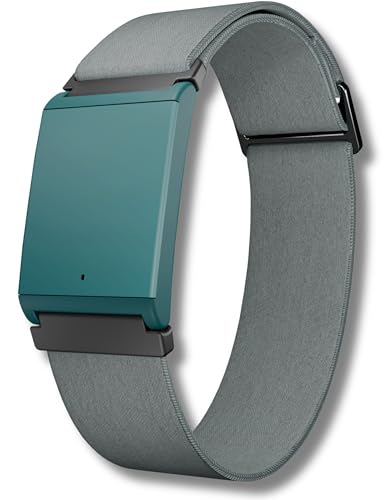
Best Value Multi-Device Pick – HW805 Heart Rate Armband
The HW805 is a lightweight heart rate monitor for users who want broad compatibility without a chest strap. Its optical sensor connects through Bluetooth and ANT+, can pair with up to three devices at once according to the supplied notes, and uses automatic wear detection to begin operation when placed against the skin.
Best For: Runners, cyclists, and fitness users connecting an armband to several apps or devices.
Pros:
- Supports Bluetooth and ANT+ connections with phones, watches, cycling computers, fitness equipment, and apps.
- Can connect to up to three devices simultaneously.
- Automatic wear detection avoids manual power-on steps.
- Compact 20 g design with IPX67 sweat and water protection.
Cons:
- Battery life is listed at up to 60 hours, below the CYCPLUS H1’s stated runtime.
- The product notes do not specify a replaceable battery.
- It includes a one-year warranty.
The HW805 makes a strong case for multi-device workouts, especially if you use services such as Peloton, Wahoo, Strava, or Zwift. Its automatic activation and light build help reduce setup friction.
Long-Battery Chest Strap – COOSPO H808S
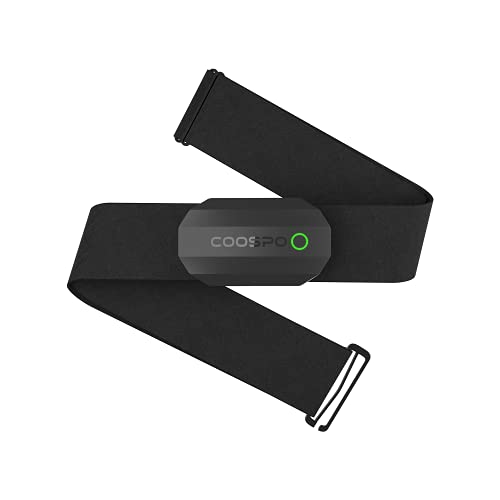
For shoppers comparing lightweight heart rate monitors, the COOSPO H808S is a compact chest strap built for dependable exercise tracking. It supports both Bluetooth and ANT+ connections, works with many popular fitness apps and devices, and uses a replaceable CR2032 battery rated for up to 300 hours.
Best For: Cyclists, runners, and indoor-training users who want a lightweight chest strap with broad device compatibility and long battery life.
Pros:
- Lightweight 15-gram sensor with ±1 BPM accuracy claim.
- Bluetooth 4.0 and ANT+ support can connect to multiple compatible devices.
- IP67 waterproof construction and up to 300 hours of battery life.
- LED and beep indicators help confirm operating status.
Cons:
- Electrode zones need to be moistened before use.
- The chest strap is recommended for replacement after six months or 300 washes.
- It does not include a built-in display for viewing heart rate directly.
The H808S is a practical choice when low weight, dual connectivity, and minimal battery maintenance matter more than smartwatch-style features. Its chest-strap design may require a little more setup, but the replaceable battery and wide app support suit regular training.
Comfortable Armband Option – COOSPO HW9
The COOSPO HW9 offers a less restrictive alternative to chest straps for shoppers seeking lightweight heart rate monitors. Its optical sensor sits on an adjustable, breathable armband and provides heart-rate zones, HRV support, vibration alerts, and Bluetooth 5.0 and ANT+ connectivity.
Best For: Athletes who prefer an adjustable upper-arm monitor for running, cycling, fitness classes, and other training where chest straps feel uncomfortable.
Pros:
- Lightweight 10-gram sensor with an adjustable, breathable band.
- Optical monitoring includes heart-rate zones, HRV, and calorie data.
- Bluetooth 5.0 supports two simultaneous Bluetooth connections, alongside ANT+.
- Rechargeable battery provides up to 35 hours and includes a magnetic charger.
Cons:
- Battery life is much shorter than the replaceable-battery chest-strap models.
- It requires charging rather than a quick CR2032 battery replacement.
- The default maximum heart-rate setting is 200 BPM unless customized in the app.
Choose the HW9 if wearing comfort and freedom of movement are priorities. The zone LEDs and vibration warning add useful training feedback, while broad app compatibility makes it flexible; however, frequent users will need to plan around its 35-hour rechargeable battery.
Extended-Battery Chest Strap – GEOID HS500
The GEOID HS500 stands out among lightweight heart rate monitors for its extended battery rating and dual ANT+/Bluetooth support. Its thinner sensor is designed to reduce movement and sweat interference, while IP67 protection and automatic wake-up make it suitable for varied workouts.
Best For: Frequent runners, cyclists, and multi-device users who want a low-maintenance chest strap with exceptionally long battery life.
Pros:
- Up to 800 hours of battery life from a replaceable CR2032 cell.
- ANT+ and Bluetooth compatibility covers phones, watches, bike computers, and fitness equipment.
- IP67 waterproof design is suitable for exercise, though swimming is not recommended.
- Automatic wake-up and a flashing LED confirm readiness and connection.
Cons:
- The supplied notes do not specify the sensor’s exact standalone weight.
- Swimming is not recommended despite the IP67 rating.
- Bluetooth pairing should be completed through the fitness app rather than directly through phone settings.
The HS500 is a strong fit for users who want to minimize charging and battery changes. Its broad protocol support and low-energy design are especially useful for connected training setups, while the app-based Bluetooth pairing process is worth noting before the first workout.
Dual-Mode Training Pick – COOSPO H6 Chest Strap
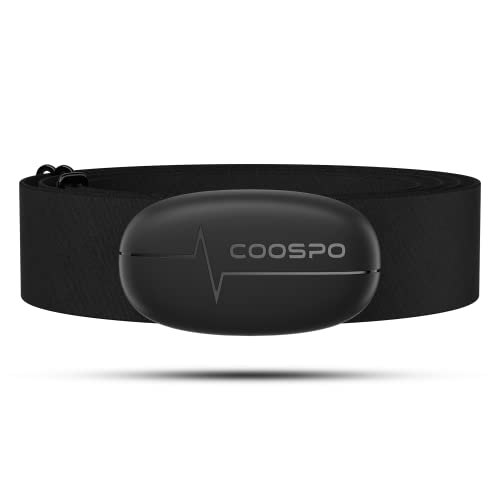
The COOSPO H6 is a practical choice among lightweight heart rate monitors for athletes who want real-time readings without wearing a watch. Its chest-strap design supports Bluetooth and ANT+ connections, making it suitable for phones, sports watches, bike computers, gym equipment and compatible training apps.
Best For: Cycling, Peloton workouts, running, gym sessions and app-based training that requires Bluetooth or ANT+ connectivity.
Pros:
- Bluetooth and ANT+ support enables connection to multiple compatible devices.
- Works with apps including Strava, Wahoo Fitness, Polar Beat, Zwift and CoospoRide.
- Offers up to 300 hours of battery life with a replaceable CR2032 battery.
- IP67 protection supports sweaty workouts and rainy-day training.
Cons:
- Requires moistening the electrode areas for reliable contact.
- Not intended for swimming or soaking.
- Phone pairing must generally be completed through the fitness app rather than the phone’s Bluetooth settings.
Choose the H6 if broad device compatibility is more important than built-in display features. Detaching the sensor after exercise and keeping the strap dry can help simplify routine care.
Long-Battery Standout – Magene H64 Chest Strap
The Magene H64 stands out among lightweight heart rate monitors for its stated 1,000-hour battery life and dual-protocol connectivity. It is designed to send heart rate data to compatible apps, watches, bike computers and fitness equipment during regular training.
Best For: Cyclists and indoor-training users who want long battery life, ANT+/Bluetooth support and simultaneous connections.
Pros:
- Provides a stated battery life of up to 1,000 hours under laboratory-test conditions.
- Supports ANT+ and Bluetooth, including recording through an ANT+ device and Bluetooth app at the same time.
- Compatible with apps such as Zwift, Strava, Wahoo Fitness, TrainerRoad and Kinomap.
- IP67 dustproof and waterproof protection suits everyday sweat and rain exposure.
Cons:
- Actual battery life may vary from the laboratory estimate.
- The electrode area must be moistened and positioned correctly for detection.
- It enters sleep mode after the strap is removed, so setup details matter when pairing.
The H64 is a strong fit for athletes who prefer infrequent battery changes and use more than one compatible training device. Its chest-strap format keeps the sensor compact while preserving flexible connection options.
Comfort-Focused Everyday Pick – COOSPO H6M Monitor
The COOSPO H6M is one of the lightweight heart rate monitors suited to daily running, cycling and gym training. Its soft adjustable chest strap and compact sensor are designed to sit beneath workout clothing while sending real-time data to compatible apps and devices.
Best For: Everyday runners, cyclists and fitness users who want a compact strap with zone, interval and recovery guidance through a compatible app.
Pros:
- Bluetooth and ANT+ connectivity supports compatible phones, watches, bike computers and fitness equipment.
- Soft, adjustable strap is designed for a snug fit during longer sessions.
- Works with compatible services including Zwift, Wahoo Fitness, Polar Beat and CoospoRide.
- IP67 resistance supports sweat and rainy outdoor workouts.
Cons:
- Its 300-hour battery life is shorter than the Magene H64’s stated rating.
- Requires moistening the electrodes and pairing through the app’s sensor settings.
- Not intended for swimming or prolonged soaking.
The H6M makes sense for users who prioritize a comfortable, unobtrusive strap for repeat workouts. Its broad compatibility also makes it easier to bring heart rate tracking into different types of training.
How We Picked the Best Lightweight Heart Rate Monitors
We focused on the features that matter during real workouts: sensor design, comfort, connectivity, water resistance, battery life, and compatibility. The selection includes both optical armbands and chest straps because each approach suits different athletes. We also considered support for Bluetooth and ANT+, which lets a monitor connect with phones, watches, bike computers, gym equipment, and training platforms.
Long battery claims can vary with usage and storage, so they should be treated as manufacturer estimates. Fit and skin contact are equally important: even an accurate sensor may produce inconsistent data if it shifts, is worn too loosely, or is used in conditions outside its intended design.
Quick Comparison
- Armbands: Usually quick to put on and comfortable for users who dislike chest straps. They can be a practical choice for running, gym sessions, and general fitness.
- Chest straps: Typically provide a close-to-the-heart measurement and are popular for interval training, cycling, and performance-focused workouts.
- Bluetooth: Best for phones, tablets, and many fitness apps.
- ANT+: Useful for compatible watches, bike computers, and gym equipment, especially when connecting to multiple devices.
- IP67 protection: Helps guard against dust and temporary water exposure, but it does not automatically mean a device is designed for swimming.
Key Buying Factors for Lightweight Heart Rate Monitors
Sensor Type and Comfort
Choose an armband if convenience and easy placement are your priorities. Choose a chest strap if you want a secure, low-profile fit and generally prefer heart-rate data collected from the torso. Adjustable bands and soft contact materials can make a major difference during long sessions.
Connectivity and Device Support
Check the requirements of your watch, phone, bike computer, or training app before buying. Dual Bluetooth and ANT+ support offers the most flexibility, while Bluetooth-only models may be sufficient for smartphone-based workouts. Some devices can pair with more than one receiver, but verify the product’s specifications if that feature matters.
Battery and Maintenance
Rechargeable models reduce the need for replacement batteries, while coin-cell designs can offer very long standby or operating times. Consider charging habits, battery access, and whether the sensor can tolerate sweat and rain. Remove and clean a chest strap after demanding workouts to help preserve the electrodes and elastic.
Who Should Buy Which Lightweight Heart Rate Monitors?
Choose an armband if you want quick setup, no chest compression, and a comfortable option for everyday training. It is especially appealing for runners, gym users, and people who mainly use a phone or smartwatch.
Choose a chest strap if workout intensity, interval accuracy, and a stable fit matter most. Cyclists, structured-training athletes, and users of ANT+-compatible equipment may benefit from this design.
Choose dual-protocol connectivity if you switch between apps and dedicated fitness devices. Before checkout, confirm the monitor’s supported platforms, fit range, charging or battery requirements, and water-resistance limits. Those details will determine whether a lightweight heart rate monitor works reliably with your existing training setup.