Frequent charging can interrupt an otherwise consistent training routine. The best heart rate monitors with long battery life deliver dependable tracking while reducing the need to recharge between workouts.
This roundup compares 10 options, including chest straps, armbands, and a full-featured fitness band, so you can choose the right balance of accuracy, comfort, connectivity, durability, and battery endurance.
Best 10 Heart Rate Monitors with Long Battery Life Picks for 2026
Long-Life Smart Band

- 21-day battery life
- AMOLED display up to 1500 nits
- Heart rate, sleep, blood oxygen, and sport tracking
Best For: Everyday wellness tracking with minimal charging
Performance Chest Strap

- Up to 2 months of rechargeable battery life
- Real-time heart rate and HRV data
- Records workouts when a watch cannot be worn
Best For: Garmin users and data-driven training
Ultra-Long Battery Sensor
GEOID HS500 Heart Rate Monitor

- Up to 800 hours of battery life
- Replaceable CR2032 battery
- ANT+ and Bluetooth connectivity
Best For: Long-duration cycling and indoor training
Year-Long Training Strap

- Up to 1 year of battery life
- ANT+ and Bluetooth heart-rate transmission
- Running dynamics and swim-data storage
Best For: Garmin-based running and multisport training
Best Ultra-Long Battery

- Up to 500 hours from a CR2032 battery
- ECG-based heart rate and HRV tracking
- Bluetooth and ANT+ connectivity
Best For: Data-focused athletes who want minimal battery maintenance
Best Garmin-Compatible Pick

- Up to one year of replaceable-battery life
- Captures heart rate and HRV data
- Machine-washable strap with 3 ATM water rating
Best For: Garmin users wanting a durable, low-maintenance monitor
Best Rechargeable Armband

- Up to 110 hours with 30-minute magnetic charging
- Wrist-free optical armband design
- Bluetooth 5.1 and ANT+ connectivity
Best For: Multisport users who prefer quick charging and arm placement
Long-Range Training Pick
Wahoo TRACKR Heart Rate Monitor

- Up to 200 hours of active battery life
- ANT+ and Bluetooth connectivity
- Slim, secure chest-strap fit
Best For: Extended training and rechargeable convenience
Maximum Battery Value
COOSPO H808S Heart Rate Monitor
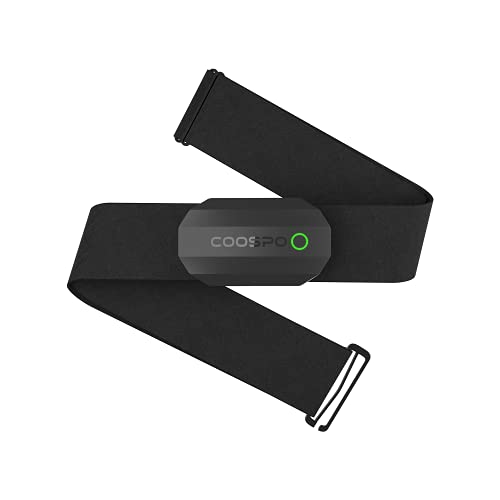
- Up to 300 hours of battery life
- Replaceable CR2032 battery
- Bluetooth and ANT+ connectivity
Best For: Long-running cycling and fitness sessions
Precision All-Rounder
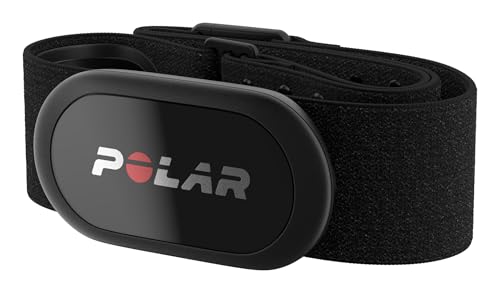
- Up to 400 hours of battery life
- Bluetooth, ANT+, and 5 kHz connectivity
- Waterproof with internal memory
Best For: Accurate, versatile multi-device training
Long-Life Smart Band – Xiaomi Mi Smart Band 10
The Xiaomi Mi Smart Band 10 is a strong option for shoppers seeking heart rate monitors with long battery life in a compact fitness-band format. It combines heart-rate tracking with sleep, blood-oxygen, activity, and multi-sport features, while its stated 21-day battery life reduces charging interruptions.
Best For: Everyday activity, sleep, and heart-rate tracking with a bright display and extended battery life.
Pros:
- Up to 21 days of battery life on one charge.
- Large 1.72-inch AMOLED display with up to 1500 nits HBM brightness.
- Tracks heart rate, sleep duration, blood oxygen, and multiple sports.
- Water resistance rated to 50 meters.
Cons:
- No built-in GPS is listed.
- The Xiaomi Fit app supports the metric system; imperial measurements require a third-party Google Fit connection.
Choose this band if you want an all-day wearable rather than a dedicated chest strap. Its long runtime and broad wellness tracking make it convenient, while the lack of built-in GPS may matter to runners who want phone-free route tracking.
Performance Chest Strap – Garmin HRM 600
The Garmin HRM 600 is designed for athletes who want heart rate monitors with long battery life and detailed workout data. It sends real-time heart-rate and HRV data to compatible devices and can record activities when a watch cannot be worn, with up to two months of rechargeable-battery life.
Best For: Data-focused runners, cyclists, and athletes who use Garmin devices or compatible fitness apps.
Pros:
- Up to two months of battery life with a rechargeable battery.
- Provides real-time heart rate and HRV data.
- Supports running dynamics, including stride length and ground contact time balance, with a compatible smartwatch.
- Machine-washable strap available in two sizes.
Cons:
- Advanced running metrics require a compatible smartwatch.
- It is a chest strap rather than a standalone watch with a display.
The HRM 600 is a versatile choice for structured training, especially if you already use Garmin Connect. Its onboard workout recording and swim-data support add flexibility beyond basic live heart-rate transmission.
Ultra-Long Battery Sensor – GEOID HS500 Heart Rate Monitor
The GEOID HS500 stands out among heart rate monitors with long battery life by offering up to 800 hours from a replaceable CR2032 battery. This ANT+ and Bluetooth chest-strap sensor is built for exercise sessions and connects with compatible phones, watches, bike computers, treadmills, and fitness apps.
Best For: Cyclists, runners, and indoor-training users who prioritize very long battery life and broad connectivity.
Pros:
- Up to 800 hours of battery life, with a replaceable CR2032 cell.
- Supports both ANT+ and Bluetooth connections.
- IP67 waterproof rating and a quick wake-up time of less than one second.
- Compatible with a range of fitness apps and equipment.
Cons:
- Swimming is not recommended.
- Bluetooth should be connected through the app rather than directly through the phone’s Bluetooth settings.
- It requires a compatible phone, watch, app, or fitness device for viewing data.
This is a practical pick when replacing or recharging batteries frequently is inconvenient. Its extensive compatibility is useful for indoor training and cycling, though the sensor is less suitable for swimmers and users wanting a standalone display.
Year-Long Training Strap – Garmin HRM Pro Plus
The Garmin HRM Pro Plus is a compelling choice among heart rate monitors with long battery life, using a replaceable battery rated for up to one year. It delivers real-time heart rate and HRV data while adding running dynamics, indoor pace and distance, swim-data storage, and activity tracking for compatible Garmin devices.
Best For: Garmin users who want advanced running and workout data without frequent battery changes.
Pros:
- Up to one year of battery life.
- Transmits heart rate and HRV over ANT+ and Bluetooth Low Energy.
- Captures running dynamics and supports treadmill or indoor-track pace and distance.
- Stores heart-rate data during swimming or when outside watch range.
Cons:
- Many advanced features depend on compatible Garmin watches or apps.
- It is a chest strap without a built-in viewing screen.
The HRM Pro Plus is best suited to athletes already invested in Garmin’s ecosystem. Its year-long battery rating is particularly convenient, while its running, swimming, and activity-tracking features provide more training detail than a basic heart-rate sensor.
Best Ultra-Long Battery – CYCPLUS H2Pro Chest Strap
For athletes seeking heart rate monitors with long battery life, the CYCPLUS H2Pro stands out with up to 500 hours of operation from a CR2032 coin-cell battery. Its ECG algorithm, Bluetooth and ANT+ connectivity, and HRV support make it a practical option for data-focused training.
Best For: Cyclists, runners, and fitness enthusiasts who want extended battery life, chest-strap accuracy, and HRV data.
Pros:
- Up to 500 hours of battery life from a built-in CR2032 coin cell.
- ECG-based tracking is designed to provide stable real-time heart rate and HRV data.
- Supports Bluetooth and ANT+ connections with phones, watches, cycling computers, and fitness equipment.
- Lightweight, breathable, adjustable strap with IPX7 water and dust resistance.
Cons:
- Chest-strap design may be less convenient than an armband for some users.
- Listed weight and product details may vary from typical chest-strap expectations.
The H2Pro is especially compelling when battery maintenance is a priority. Its combination of long runtime, dual wireless compatibility, and ECG-based HRV tracking makes it well suited to consistent, structured training.
Best Garmin-Compatible Pick – Garmin HRM 200
The Garmin HRM 200 is a straightforward choice for shoppers comparing heart rate monitors with long battery life, offering up to one year on a user-replaceable battery. It transmits real-time heart rate and HRV data to compatible Garmin devices, apps, fitness equipment, and smartphones.
Best For: Garmin users who want a durable, low-maintenance heart rate monitor with a washable strap.
Pros:
- Provides up to one year of battery life with a replaceable battery.
- Transmits heart rate and HRV data to compatible Garmin devices and apps.
- Available in two strap sizes for a more suitable fit.
- 3 ATM water rating and machine-washable strap simplify regular use and cleaning.
Cons:
- Compatibility is described as being with compatible devices, apps, and equipment rather than all fitness platforms.
- Battery life is shorter than the 500-hour-rated CYCPLUS H2Pro when measured in continuous operating hours.
With a replaceable battery, washable strap, and Garmin-focused connectivity, the HRM 200 is a practical everyday monitor for users already invested in the Garmin ecosystem.
Best Rechargeable Armband – CYCPLUS H1
The CYCPLUS H1 offers a wrist-free alternative for shoppers seeking heart rate monitors with long battery life. This optical armband runs for up to 110 hours, recharges magnetically in about 30 minutes, and uses Bluetooth 5.1 and ANT+ to connect with phones, cycling computers, sports watches, and compatible fitness equipment.
Best For: Multisport users who prefer an adjustable upper- or lower-arm band and quick magnetic charging.
Pros:
- Up to 110 hours of battery life with a roughly 30-minute full charge.
- Optical sensor is rated for continuous heart rate readings within ±1 BPM during exercise.
- Bluetooth 5.1 and ANT+ support connections to multiple compatible devices.
- LED colors provide a quick visual indication of heart rate zones.
Cons:
- 110-hour battery life is lower than the H2Pro’s 500-hour rating.
- Has no display, so readings require a connected device.
- Requires charging rather than a simple coin-cell battery replacement.
The H1 is a strong fit for users who value comfort and fast charging over maximum battery longevity. Its simple one-button operation, wrist-free placement, and dual-mode connectivity make it convenient for varied workouts.
Long-Range Training Pick – Wahoo TRACKR Heart Rate Monitor
If you want heart rate monitors with long battery life, the Wahoo TRACKR stands out with a rechargeable battery rated for up to 200 hours of active use. It also provides ANT+ and Bluetooth connectivity for phones, fitness equipment, training apps, and accessories.
Best For: Athletes who want a rechargeable chest strap for extended training blocks and broad device compatibility.
Pros:
- Up to 200 hours of active battery life.
- ANT+ and Bluetooth connectivity support multiple training setups.
- Slim, soft, secure strap designed for comfortable use during intense exercise.
- LED indicators communicate heart rate detection, battery status, and connection status.
Cons:
- Charging is required instead of replacing a standard coin-cell battery.
- The supplied details list compatibility with smartphones, but do not specify every supported app or device.
The TRACKR is a strong choice when minimizing charging interruptions matters most. Its rechargeable design, long rated runtime, and dual wireless connectivity make it particularly practical for frequent or extended workouts.
Maximum Battery Value – COOSPO H808S Heart Rate Monitor
Among heart rate monitors with long battery life, the COOSPO H808S offers up to 300 hours from a replaceable CR2032 battery. Its Bluetooth and ANT+ connections work with smartphones, sports watches, bike computers, and listed training platforms.
Best For: Budget-conscious cyclists and fitness users who prioritize long runtime and replaceable batteries.
Pros:
- Up to 300 hours of battery life.
- Replaceable CR2032 battery avoids rechargeable charging cycles.
- Bluetooth 4.0 and ANT+ support simultaneous multi-device use.
- IP67 waterproof construction and ±1 BPM stated accuracy.
Cons:
- The electrode zones should be moistened before use.
- The chest strap is recommended for replacement every six months or 300 washes.
- Pairing should be completed in the app rather than through the phone’s general Bluetooth settings.
The H808S is compelling for users who want a low-maintenance sensor with exceptionally long coin-cell life. Its replaceable battery and broad app compatibility are useful for regular cycling and fitness sessions.
Precision All-Rounder – Polar H10 Heart Rate Monitor
The Polar H10 combines a stated 400-hour battery life with broad connectivity, making it a versatile option among heart rate monitors with long battery life. It supports Bluetooth, ANT+, and 5 kHz connections, while its waterproof sensor includes internal memory for multiple hours.
Best For: Users seeking a highly accurate, waterproof chest strap for varied compatible equipment and training applications.
Pros:
- Up to 400 hours of battery life.
- Supports Bluetooth, ANT+, and 5 kHz connectivity.
- Can use Bluetooth and ANT+ simultaneously, plus two Bluetooth connections simultaneously.
- Waterproof sensor with internal memory for multiple hours.
Cons:
- Uses a CR2025 battery, and the supplied notes caution against other battery sizes.
- The listed size is M-XXL, which may not suit every user without checking fit.
The H10 is the strongest fit for buyers who value maximum stated battery life alongside connectivity flexibility and measurement precision. Its waterproof design and internal memory add versatility beyond basic phone-connected workouts.
How We Picked the Best Heart Rate Monitors with Long Battery Life
We focused on battery endurance, heart rate measurement design, connectivity, comfort, water resistance, and compatibility with popular phones, watches, bike computers, and training apps. The selection includes chest straps for responsive workout data, optical armbands for a less restrictive fit, and a fitness band for users who want broader activity tracking.
Battery claims vary by model and usage. Broadcast time, workout frequency, connected features, storage, and temperature can all affect real-world performance, so treat published figures as estimates rather than guarantees.
Quick Comparison
- Longest stated battery life: GEOID HS500 offers up to 800 hours, making it well suited to frequent training and minimal maintenance.
- Best-known chest-strap option: Polar H10 is a strong choice for users prioritizing established accuracy and broad compatibility.
- Advanced Garmin ecosystem picks: HRM 600 and HRM Pro Plus add useful training and running features for compatible Garmin users.
- Value-focused options: CYCPLUS, COOSPO, and Garmin HRM 200 provide straightforward heart rate broadcasting without the cost of premium multisport features.
- Wrist-free comfort alternative: The CYCPLUS H1 armband avoids the tighter feel of a chest strap while retaining extended battery life.
- Broader everyday tracking: Xiaomi Mi Smart Band 10 combines heart rate monitoring with a display, activity tracking, and up to 21 days of stated battery life.
Key Buying Factors for Long-Battery Heart Rate Monitors
Chest Strap Versus Optical Sensor
Chest straps typically respond quickly to intensity changes and are often preferred for intervals, racing, and structured training. Armbands can be easier to put on and may feel more comfortable for casual exercise, though fit and skin contact strongly affect optical readings.
Connectivity and Compatibility
Check whether the monitor supports ANT+, Bluetooth, or both. ANT+ is useful with many bike computers and gym devices, while Bluetooth is common with phones and training apps. Also confirm whether the sensor can connect to multiple devices simultaneously if you plan to use a watch and phone together.
Battery Type and Charging
Replaceable-cell sensors can be convenient for very long use because you can restore them quickly with a spare battery. Rechargeable models avoid disposable batteries but require access to a charging cable or dock. Consider standby drain as well as advertised active-use hours.
Fit, Durability, and Maintenance
A secure strap or adjustable armband is essential for reliable readings. Look for water resistance appropriate to sweat, rain, or swimming, and follow the manufacturer’s cleaning instructions. Detaching a chest sensor from its strap after use can help preserve the strap and reduce battery drain.
Who Should Buy Which Heart Rate Monitors with Long Battery Life?
Choose a chest strap if training accuracy and rapid response matter most. Polar, Garmin, GEOID, CYCPLUS, COOSPO, and Wahoo models suit runners, cyclists, indoor training users, and athletes who already own a compatible display.
Choose an armband if you dislike chest straps or want a simpler fit. The CYCPLUS H1 is the relevant style in this selection.
Choose the Xiaomi band if you want an on-device screen and everyday activity features in addition to heart rate tracking. It is more suitable for general fitness and convenience than for buyers seeking a dedicated broadcast-only sensor.