Golf swing analyzers with club attachment can turn every practice session into usable feedback, helping you see tempo, speed, path, and contact patterns with far less guesswork.
In this roundup, we focus on options that are practical, easy to attach, and useful for golfers who want measurable improvement at the range, indoors, or during short home practice sessions.
Best 10 Golf Swing Analyzers with Club Attachment Picks for 2026
All-around sensor trainer
Real-time swing and stroke feedback
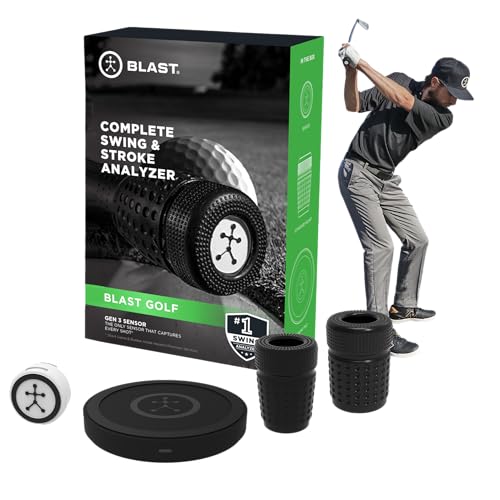
- Real-time feedback through the app
- Captures auto-clipped video highlights
- Supports putting, full swings, and air swings
Best For: Players who want one sensor for full-course practice and video review
Speed-only training monitor

- Measures club head speed without hitting a ball
- Works with Rypstick, driver, or iron
- Stores the last 10 swings with optional voice feedback
Best For: Golfers prioritizing easy swing speed measurement
Clip-on video setup
Bag-mounted swing video holder
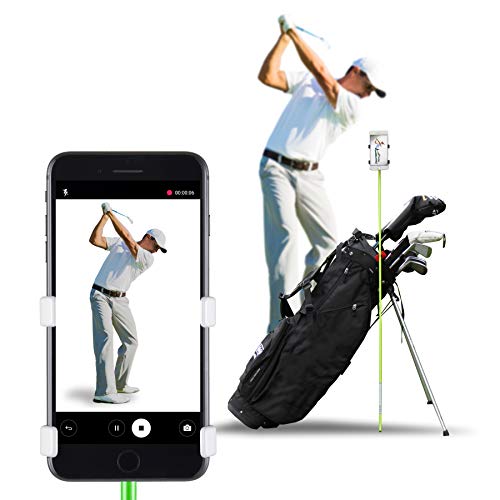
- Fast clip-on setup for swing recording
- Works with alignment rods, clubs, and golf bags
- Fits all smartphone sizes
Best For: Golfers who mainly want easy swing video capture
Data-rich launch monitor
13-metric practice and video tool

- Tracks 13 swing and shot metrics
- No annual fees required
- Includes environmental sensors and video views
Best For: Golfers who want detailed launch data and practice review
Instant Feedback Swing Trainer
5-in-1 Retractable Golf Swing Trainer

- Click feedback helps confirm swing mechanics in real time.
- Built-in grip trainer supports hand placement and muscle memory.
- Compact, lightweight design works indoors or outdoors.
Best For: Golfers focused on tempo, grip, and consistent practice
Portable Simulator Analysis
Home Golf Simulator with Motion Sensor

- Sensor can be used with the swing stick or your own clubs.
- Access to 38,000+ courses adds a strong simulator angle.
- Portable, no-net indoor setup is easy to move and store.
Best For: Players who want swing analysis plus a full simulator experience
Visual-Lock Plane Trainer
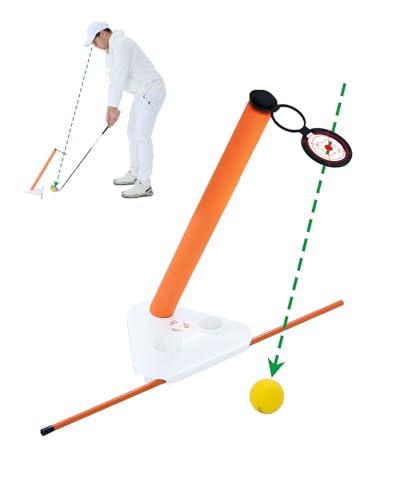
- Visual ring gives immediate feedback on head position.
- Aims to reduce swaying, reverse pivoting, and slices.
- Compact and simple for range or backyard practice.
Best For: Golfers fixing head movement and swing-plane consistency
Portable Data Tracker
Voice Caddie SC200Plus Swing Analyzer

- Doppler radar shot tracking
- LCD display with voice output
- Stores club statistics and distances
Best For: Portable indoor/outdoor shot data tracking
Weighted Tempo Trainer

- Hand-shaped grip for right-handers
- Adjustable weighted club head
- Low-impact practice for tempo and flexibility
Best For: Right-handed players focused on tempo and grip practice
Click-Feedback Trainer
Retractable Golf Swing Trainer
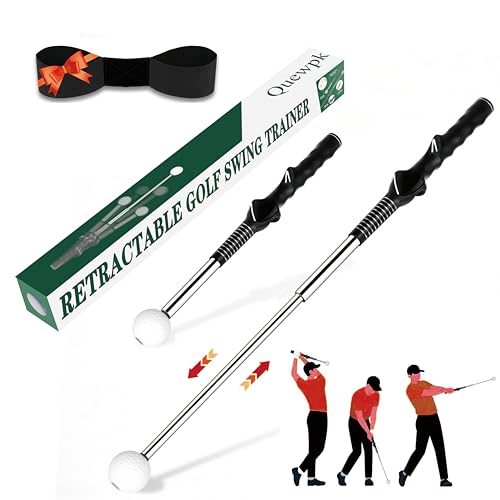
- Click feedback for swing mechanics
- Retractable and travel-friendly
- Includes arm band and grip correction
Best For: Right-handed golfers wanting portable grip and tempo feedback
All-around sensor trainer – Real-time swing and stroke feedback
If you want a golf swing analyzer with club attachment that also helps with putting and full-swing work, Blast Motion is built for all-around practice. It delivers real-time feedback through the app, captures video highlights, and supports air swings so you can train even without a ball.
Best For: Golfers who want one sensor for tee-to-green practice, including short game and video review.
Pros:
- Real-time feedback is sent automatically to the Blast app.
- Works from tee to green, including putting and full-swing sessions.
- Air Swings mode lets you practice without a ball.
- App can auto-clip swing and stroke video with metrics overlaid.
Cons:
- Requires app-based setup and membership management.
- Included membership is only 1 month for new users.
This is a strong fit if you want a sensor-based trainer that combines feedback, video, and short-game coverage in one system. The emphasis on app-guided analysis makes it practical for players who like reviewing each rep after practice.
Speed-only training monitor – No-ball club speed tracking
For golfers looking for golf swing analyzers with club attachment focused purely on speed, the RYP Radar measures club head speed without needing to hit a ball. It works with a Rypstick, driver, or iron and gives instant readouts after each swing.
Best For: Golfers who want simple, no-contact swing speed training with real-time feedback.
Pros:
- Measures swing speed without ball contact.
- Works with a Rypstick, driver, or iron.
- Displays speed in MPH and KPH.
- Saves data from the last 10 swings and offers optional voice feedback.
Cons:
- Runs on 5 AA batteries, which are not included.
- Focuses on speed tracking rather than broader swing metrics.
This is a straightforward option if your main goal is to build club speed and monitor it swing by swing. It is less of an all-in-one analyzer, but that focus can be an advantage for speed-specific training.
Clip-on video setup – Bag-mounted swing video holder
If you need golf swing analyzers with club attachment mainly for video capture, SelfieGOLF is a practical recording accessory. It clips to standard alignment rods and works with any golf bag, making it easy to set up a phone for swing or putting videos.
Best For: Golfers who want a simple phone holder for recording swing videos on the range or course.
Pros:
- Easy clip system sets up and adjusts in seconds.
- Works with standard alignment rods and golf clubs.
- Fits all cell phone sizes with a clip-on design.
- Designed to be sturdy and stable across different ground surfaces and wind.
Cons:
- Alignment stick is not included.
- It is a video holder accessory, not a sensor-based analyzer.
This is a good buy if your training style depends on self-recorded swing footage rather than swing metrics. It is especially useful for golfers who want a stable, portable way to film without needing another person.
Data-rich launch monitor – 13-metric practice and video tool
Among golf swing analyzers with club attachment, the GX-03 stands out for combining launch-monitor data with video views and no annual fees. It tracks 13 metrics, adjusts for environmental conditions, and supports both indoor and outdoor practice when you have enough space.
Best For: Golfers who want detailed shot data and video feedback without subscription fees.
Pros:
- Tracks 13 metrics, including attack angle, launch angle, and spin rate.
- No annual fees; features are available through a one-time app download.
- Includes environmental sensors for temperature, humidity, and barometric pressure.
- Offers multi-angle practice views, shot trajectory display, and video recording.
Cons:
- Indoor use requires at least 15 feet of total space.
- Bluetooth connection works best with your phone placed in front of the device.
- You must select the correct club before each swing for best consistency.
This is the most data-heavy option in the group and suits golfers who want deeper practice feedback. If you have the room and want a long-term training tool with no recurring fees, it offers a lot of value.
Instant Feedback Swing Trainer – 5-in-1 Retractable Golf Swing Trainer
If you want golf swing analyzers with club attachment-style feedback without needing a ball, this retractable trainer is built for simple, repeatable practice. The click response helps you notice timing and mechanics during full swings, while the compact design makes it easy to use at home, indoors, or on the range.
Best For: Golfers who want a portable trainer for tempo, grip, and swing consistency practice.
Pros:
- Retractable shaft gives instant click feedback when swing mechanics are correct.
- Includes an ergonomic grip trainer to support proper hand and finger placement.
- Works for indoor and outdoor practice, with no ball required.
- Lightweight and compact enough to fit in a golf bag or backpack.
Cons:
- Right-handed grip trainer design may not suit every golfer.
- Focused more on mechanics and tempo than full ball-striking feedback.
- Best results depend on consistent practice rather than one-off use.
This is a practical option for golfers who want a simple training aid that reinforces grip, rhythm, and swing control through immediate feedback. It is especially appealing if you need something durable and easy to carry for regular practice sessions.
Portable Simulator Analysis – Home Golf Simulator with Motion Sensor
This option blends practice and entertainment for golfers comparing golf swing analyzers with club attachment features. The included motion sensor can be attached to a swing stick or your own club, giving you a portable way to practice at home, play simulated rounds, and view swing analysis through the app.
Best For: Golfers who want a portable simulator that supports swing analysis and club-based practice.
Pros:
- Sensor attaches to the swing stick or your personal clubs.
- Works with 38,000+ courses and includes app-based golf game options.
- Compact, travel-friendly setup with no net or ball required for indoor play.
- Supports Android, iOS, Bluetooth pairing, and E6 Connect.
Cons:
- Setup requires following the manual and app pairing steps.
- Outdoor use with your own clubs still calls for a net for safe practice.
- More simulator-focused than a simple swing-only trainer.
For golfers who want feedback plus a full home simulator experience, this is the most feature-rich choice in the group. It suits players who value variety, portability, and the ability to use real clubs as part of practice.
Visual-Lock Plane Trainer – Head Stability Swing Aid
If your priority is fixing sway and improving swing path, this is a focused tool in the golf swing analyzers with club attachment category. The Visual-Lock ring gives immediate visual feedback on head position, helping you stay centered and work on a more repeatable swing plane during range or backyard practice.
Best For: Golfers who want a simple visual trainer to improve head stability and reduce slices.
Pros:
- Visual-Lock ring provides instant confirmation of head position.
- Designed to help reduce swaying, reverse pivoting, and over-the-top moves.
- Soft foam rod is intended to reduce the risk of club damage during contact.
- Compact setup is easy to carry and use in different practice locations.
Cons:
- Targets a specific swing issue rather than overall training.
- Works best for players who respond well to visual feedback cues.
- Not a simulator or full swing tracker.
This is a straightforward pick for golfers who want to sharpen a key part of the motion rather than add a lot of tech. It is best suited to repeatable drill work when you need clear visual guidance and quick setup.
Portable Data Tracker – Voice Caddie SC200Plus Swing Analyzer
If you’re comparing golf swing analyzers with club attachment alternatives, the Voice Caddie SC200Plus stands out for golfers who want instant feedback without setting up a full simulator. It uses Doppler radar technology, adds voice output and an LCD display, and can track shot data indoors or outdoors with up to 20 hours of battery life.
Best For: Golfers who want a portable swing analyzer for real-time shot tracking, indoor practice, and outdoor range sessions.
Pros:
- Uses Doppler radar technology for shot data collection.
- Provides instant feedback through LCD display and voice output.
- Supports swing speed mode, including no-ball practice.
- Stores shot data and club statistics for later review.
Cons:
- It is a launch monitor style trainer, not a club-mounted sensor.
- Best suited to golfers who want data feedback rather than grip correction.
Overall, this is a practical choice if your priority is measuring performance and reviewing distances over time. It fits golfers who want a portable training tool that can work in a living room, at home, or on the course.
Weighted Tempo Trainer – Golf Swing Grip Trainer Aid
For golfers looking at golf swing analyzers with club attachment-style training tools, this weighted swing aid is aimed more at tempo and hand position than electronics. The hand-shaped grip, adjustable head weight, and low-impact flex are designed to help right-handed players rehearse swing mechanics at home or away from the course.
Best For: Right-handed golfers who want a simple weighted trainer for tempo work, grip positioning, and repetitive practice.
Pros:
- Hand-shaped design helps guide hand and finger position.
- Adjustable club head offers multiple weight modes.
- Built for iron and wood swing training.
- Compact enough for indoor practice and travel-friendly use.
Cons:
- Designed for right-handed golfers only.
- No digital feedback or shot-tracking features.
This is a straightforward practice tool if you want to work on tempo, flexibility, and repeatable mechanics without needing a monitor. It is especially useful for golfers who prefer a physical training aid they can use regularly at home.
Click-Feedback Trainer – Retractable Golf Swing Trainer
If you want golf swing analyzers with club attachment features that focus on mechanics, this retractable trainer emphasizes click feedback and grip correction. It is built for right-handed golfers, includes an arm band, and is meant to help users refine rhythm, speed, power, and hand placement during indoor or outdoor practice.
Best For: Right-handed golfers who want a lightweight, portable swing and grip trainer with feedback for mechanics work.
Pros:
- Click feedback helps confirm precise swing mechanics.
- Retractable design makes it easy to pack in a golf bag or backpack.
- Includes an arm band and grip correction support.
- Uses durable materials and a non-slip ergonomic grip.
Cons:
- Designed exclusively for right-handed golfers.
- Does not provide electronic shot data or launch metrics.
For golfers who want a compact trainer that reinforces rhythm and grip habits, this is a strong practical option. Its lightweight build and click cue make it convenient for warm-ups, travel, and frequent practice.
How We Picked the Best Golf Swing Analyzers with Club Attachment
We prioritized Golf Swing Analyzers with Club Attachment that offer clear feedback, simple setup, and repeatable training value. The best options in this category should feel secure on the club, deliver data or visual cues you can act on quickly, and support consistent practice without slowing your routine.
We also favored products that suit different skill levels, from beginners working on grip and tempo to more advanced players looking for speed, launch, and swing-path insights.
Quick Comparison
Not every golfer needs full shot data. Some club-mounted tools are built for swing-speed or tempo work, while others focus on video capture, alignment, or motion feedback. If you want measurable performance data, look for monitors and analyzers. If your goal is mechanics and consistency, training aids with attachment-based feedback can be the better fit.
Key Buying Factors for Golf Swing Analyzers with Club Attachment
Attachment Security and Fit
A good analyzer should stay put without interfering with your grip or swing. Check whether it fits your club type, whether it works with multiple shafts, and how much setup time it requires.
Feedback Type
Some golfers learn best from numbers such as club speed, tempo, or shot metrics. Others need visual or physical feedback, like a click, alignment cue, or motion correction. Choose the feedback style that matches how you practice.
Training Goal
If you are trying to increase distance, focus on speed and launch feedback. If you are fixing slices, swaying, or early wrist release, choose a device that reinforces path, head position, or tempo. The best Golf Swing Analyzers with Club Attachment are the ones that solve your specific problem.
Portability and Ease of Use
Many golfers use these tools at home, on the range, or before a round. Lightweight, durable, and easy-to-store models are usually more practical than complicated systems that take too long to deploy.
Who Should Buy Which Golf Swing Analyzers with Club Attachment?
Beginners should look for simple swing trainers that build grip, tempo, and repeatable motion. Intermediate golfers may benefit most from analyzers that combine swing feedback with video or speed tracking. Advanced players and data-driven golfers will usually get the most from launch monitors and shot-data tools that help fine-tune performance.
If you want one clear rule, buy the tool that matches your main practice goal. For many golfers, the right club attachment is less about having the most features and more about getting feedback you will actually use every session.