Choosing the right golf shaft extractor tools can make club repairs safer, cleaner, and far less stressful. The best models help protect graphite and steel shafts while giving you better control during clubhead removal.
In this roundup, we focus on practical options for home builders, repair shops, and serious golfers who want dependable performance without overpaying for features they will not use.
Best 10 Golf Shaft Extractor Tools Picks for 2026
Precision Lift
Adjustable Golf Shaft Puller for Steel & Graphite

- Precision screw mechanism for controlled extraction
- Fits 8.5 mm, 9.5 mm, and 10.5 mm hosels
- Includes wrench and masking tape
Best For: DIY golfers who want a lightweight, adjustable puller
Universal Saver
Aluminium Alloy Golf Shaft Extractor

- Universal fit for steel and graphite clubs
- Precision screw aims for non-destructive removal
- Lightweight, corrosion-resistant aluminum alloy
Best For: Budget buyers needing a simple repair-and-upgrade tool
Grip Control
Heavy-Duty Double-Sided Shaft Extractor

- Double-sided clamp reduces slip during extraction
- Rubber pad and tape help limit surface damage
- Works with 8.5 mm, 9.5 mm, and 10.5 mm shafts
Best For: DIY users who want a vise-based tool with strong grip
Workshop Simple
Three-Size Golf Club Shaft Puller
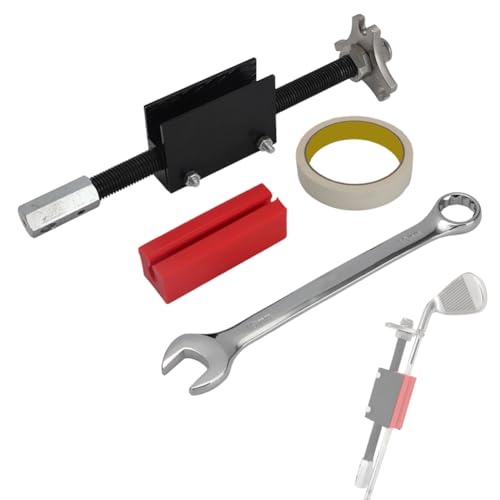
- Three size settings: 8.5 mm, 9.5 mm, 10.5 mm
- Precision screw helps avoid bending or deformation
- Includes wrench and masking tape
Best For: Home repair users who want a simple all-round puller
Premium Bench-Grade Puller
CNC Aluminum Golf Shaft Extractor

- CNC aluminum alloy body
- Protects graphite and steel shafts
- Compact but heavy for stability
Best For: DIY clubmakers needing a stable, scratch-conscious puller
Manual Vise-Style Extractor

- Works with steel and graphite shafts
- Bench or vise mounting options
- Includes clamp, T-handle, and protector
Best For: Hobbyists wanting a lightweight manual puller
Stable Workshop Separator

- Dual spiral lever pulling action
- Rubber jaws protect shaft finish
- Rigid CNC aluminum with reinforced base
Best For: Home builders and repair shops needing controlled clubhead removal
Hydraulic Shop-Ready Puller

- 2-ton bottle jack for controlled extraction
- Includes clamp, hosel protectors, and accessories
- Built for graphite and steel shafts
Best For: Workshop repairs and serious club builders
Lightweight CNC Repair Tool

- CNC aluminum alloy construction
- Uses a precision screw mechanism
- Includes adjustable clamp with rubber pads
Best For: DIY repairs and compact home workshops
Manual Screw Extractor

- Manual screw-type extractor for clubs and adapters
- Thickened threaded rod adds stability under torque
- Can be bench-mounted or used in a vise
Best For: Hands-on users who prefer a manual vise-mounted tool
Precision Lift – Adjustable Golf Shaft Puller for Steel & Graphite
If you’re comparing golf shaft extractor tools for home club repair, this adjustable puller offers a practical way to remove steel or graphite shafts with controlled pressure. The precision screw design helps keep extraction steady, while the included wrench and masking tape make setup a little easier and help protect the club head during the process.
Best For: Golfers and DIY repairers who want a lightweight, adjustable extractor for common hosel sizes.
Pros:
- Precision screw mechanism applies even pressure for safer shaft removal.
- Adjusts to 8.5 mm, 9.5 mm, and 10.5 mm hosel sizes.
- Aluminum construction keeps it lightweight, sturdy, and corrosion-resistant.
- Includes a wrench and masking tape for easier setup and protection.
Cons:
- Only covers three common hosel sizes.
- Designed for repair use, so it’s not the most heavy-duty workshop system.
This is a straightforward, beginner-friendly option if you want a shaft puller that balances compatibility, protection, and ease of use. The 90-day warranty and responsive support also add some reassurance for first-time buyers.
Universal Saver – Aluminium Alloy Golf Shaft Extractor
For buyers looking at golf shaft extractor tools on a budget, this aluminum-alloy puller focuses on the essentials: safe removal, simple operation, and broad compatibility with steel and graphite clubs. Its precision screw setup is meant to apply even pressure, which is useful when you want to remove a broken shaft without damaging the club head.
Best For: Budget-conscious golfers who want a simple extractor for repair or shaft upgrades.
Pros:
- Works with both steel and graphite clubs.
- Precision screw mechanism helps reduce deformation during removal.
- Aluminum alloy build is lightweight, strong, and corrosion-resistant.
- Useful for repairs, restorations, and shaft upgrades at home.
Cons:
- Listing provides fewer accessory details than some competing kits.
- No specific size-adjustment range is called out in the notes.
This model keeps things simple and cost-focused, making it a solid choice if you mainly want a dependable extractor for occasional club work. The material quality and universal compatibility are its biggest strengths.
Grip Control – Heavy-Duty Double-Sided Shaft Extractor
If slipping has been your main frustration with golf shaft extractor tools, this heavy-duty clamp system is built to address that problem. The double-sided clamp design, rubber friction pad, and optional masking tape layer are all aimed at improving grip and helping reduce surface damage while removing graphite or steel shafts.
Best For: DIY golfers who want extra clamping stability and protection during shaft extraction.
Pros:
- Double-sided clamp system is designed to reduce slipping and misalignment.
- Rubber friction pad and masking tape help protect shaft surfaces.
- Fits 8.5 mm, 9.5 mm, and 10.5 mm shaft diameters.
- Heavy-duty aluminum alloy body is made for repeated vise-assisted use.
Cons:
- Designed around a bench vise setup, so it is less portable.
- Bulkier than simpler puller designs.
This is the most workshop-oriented option in the group, especially if you want more control over grip and alignment. The tradeoff is size and setup complexity, but the added stability may be worth it for stubborn shafts.
Workshop Simple – Three-Size Golf Club Shaft Puller
This golf shaft puller is a clean, practical pick if you want one of the more straightforward golf shaft extractor tools for home repairs. It uses a precision screw mechanism to apply controlled pressure, and the included wrench plus masking tape make it easier to protect the club head while switching between the three common size settings.
Best For: Home repair users who want a simple three-size shaft puller with useful extras.
Pros:
- Three adjustment sizes cover 8.5 mm, 9.5 mm, and 10.5 mm.
- Precision screw mechanism helps prevent shaft bending or deformation.
- Aluminum alloy construction is lightweight and corrosion-resistant.
- Includes a wrench and masking tape for adjustment and protection.
Cons:
- Does not list a heavy-duty clamp system like some alternatives.
- Best suited to common shaft sizes rather than broader specialized repair needs.
Overall, this is a sensible all-round option for golfers who want a tool that does the basics well. The combination of size flexibility, simple operation, and included accessories makes it easy to recommend for regular DIY shaft swaps.
Premium Bench-Grade Puller – CNC Aluminum Golf Shaft Extractor
If you want golf shaft extractor tools that prioritize shaft preservation, this wosofe unit is built for careful clubhead separation with high-torque control. Its CNC-machined all-aluminum body is aimed at protecting graphite shafts and premium steel heads while keeping the tool stable on a compact workbench.
Best For: DIY clubmakers and home repair setups that need a stable, scratch-conscious puller for reshafting and clubhead removal.
Pros:
- CNC aluminum alloy construction is designed for wear resistance and long-term use.
- High-torque separation helps remove clubheads without crushing or scratching.
- Compact 9.84″ x 6.69″ footprint suits smaller benches and mobile repair spaces.
- Heavy 7.1 lb build adds stability during pulling work.
Cons:
- No accessory list beyond the machine itself is provided in the notes.
- More of a workshop tool than a lightweight carry option.
Overall, this is a solid pick if your priority is a rigid, corrosion-resistant extractor for repeated club repair work. It leans toward durability and safe separation rather than portability.
Manual Vise-Style Extractor – Screw Type Shaft Puller
This manual option is a practical choice among golf shaft extractor tools if you want a simple screw-type puller for steel or graphite shafts. It’s made from durable aluminum, can be secured to a bench or vise, and includes the basic accessories needed to start pulling adapters with a heat source.
Best For: Golfers and hobbyists who want a lightweight manual puller for bench- or vise-mounted shaft removal.
Pros:
- Compatible with both steel and graphite shafts.
- Can be secured to a bench or clamped in a vise for horizontal or vertical use.
- Includes a rubber shaft clamp, T-handle, and hosel protector.
- Lightweight aluminum build can reduce hand fatigue during longer sessions.
Cons:
- Requires a heat source to loosen the clubhead connection.
- Adapter screws are not included.
If you mainly need a straightforward extractor for standard repair tasks, this model keeps the process simple and space-efficient. It is best suited to users who already have the basic heat and wrench setup for shaft work.
Stable Workshop Separator – CNC Clubhead Removal Tool
For buyers comparing golf shaft extractor tools, this clubhead removal machine stands out for its dual spiral lever design and reinforced base. It’s made for controlled clubhead detachment with inner rubber jaws that grip the shaft securely while you heat the connection and work through the pull.
Best For: Home builders and repair shops that want a rigid, easy-to-operate tool for clean clubhead separation.
Pros:
- Dual spiral lever design supports smooth, controlled pulling.
- Inner rubber jaws help prevent scratching, crushing, or twisting.
- CNC-machined aluminum alloy body adds rigidity under pressure.
- Reinforced base improves stability for precise repair work.
Cons:
- Requires a heat gun to soften the adhesive before detaching the clubhead.
- Setup involves a few steps before removal begins.
This is a strong choice if you want a more workshop-style extractor with an emphasis on stability and shaft protection. The process is still manual, but the clamp and lever design should make repeat repairs more controlled.
Hydraulic Shop-Ready Puller – Golf Club Shaft Puller, 2-Ton
If you need golf shaft extractor tools for regular club repair, this hydraulic puller is built for controlled, shop-style shaft removal. It’s designed for graphite and steel shafts and uses straight axial pressure to help separate club heads without twisting or stressing the shaft.
Best For: Club builders, repair shops, and advanced DIY users who want a complete, heavy-duty extraction setup.
Pros:
- Includes a 2-ton bottle jack plus shaft clamp, hosel protectors, and accessories.
- Precision alignment and straight pressure are designed to reduce the risk of bending or snapping shafts.
- Dual collet locking system aims for secure grip without crushing the shaft surface.
- Heavy-duty steel construction is made for repeated workshop use.
Cons:
- Bulkier setup than simpler manual pullers.
- Best suited to users comfortable with more involved repair work.
For users who want a more complete and powerful repair kit, this extractor stands out for its controlled force and damage-prevention features. The .335 to .370 hosel protection is a practical touch, though additional adapter plates are available separately on request for some shaft applications.
Lightweight CNC Repair Tool – Golf Shaft Puller Extractor
Among golf shaft extractor tools, this CNC aluminum puller is a practical choice for users who want a compact, non-destructive way to remove shafts from clubheads. It’s designed for both steel and graphite clubs and uses a precision screw mechanism to apply uniform pressure during removal.
Best For: DIY golfers, clubmakers, and small repair setups that want a lighter, more affordable extractor.
Pros:
- Works with both steel and graphite golf clubs.
- Precision screw action is designed for smooth, even shaft removal.
- CNC aluminum alloy body is lightweight, corrosion-resistant, and wear-resistant.
- Includes an adjustable clamp with rubber pads to help prevent twisting and scratches.
Cons:
- Not as heavy-duty as hydraulic pullers for stubborn extractions.
- More compact format may be less ideal for frequent high-volume shop use.
This is a sensible option if you want a straightforward repair tool that focuses on protection and ease of use. It aims to save time and money versus professional services, while still offering the compatibility and clamping support needed for careful shaft removal.
Manual Screw Extractor – Golf Shaft Puller, Upgraded
This manual screw-type option is one of the more straightforward golf shaft extractor tools for pulling adapters and shaft components on steel and graphite clubs. It can be bench-mounted or clamped in a vise, and the upgraded threaded rod is meant to handle higher torque with better stability.
Best For: Users who want a manual, vise-mounted extractor for adapter removal and general shaft work.
Pros:
- Compatible with steel and graphite golf shafts.
- Thickened threaded rod is designed to resist bending under high torque.
- Can be secured to benches or used in horizontal and vertical vise positions.
- Anti-slip setup uses masking tape for better grip and scratch protection.
Cons:
- Requires a heat source for removal from the rod head.
- Adapter screws are not included.
- May need a T-handle or 1/2-inch ratchet wrench to use effectively.
If you want a simple manual tool rather than a hydraulic setup, this extractor keeps the process focused on stability and control. Its upgraded rod and added fixing screws should help with stubborn adapters, but it does ask for a bit more hands-on setup and the right supporting tools.
How We Picked These Golf Shaft Extractor Tools
We looked for tools that balance shaft safety, clamp stability, adjustment range, and overall ease of use. Priority went to models that clearly support both graphite and steel shafts, since versatility matters for most repair setups. We also favored designs with solid aluminum or alloy construction, secure vise interfaces, and protective contact points that help reduce marring or slippage.
Quick Comparison
Manual screw-type pullers are usually the simplest and most affordable choice. Hydraulic extractors can offer smoother force and better control for frequent work. Double-sided clamp systems are useful when you want extra grip during removal. If you need a general-purpose solution, look for a well-built extractor with adjustable hosel compatibility and padded clamping surfaces.
Key Buying Factors for Golf Shaft Extractor Tools
1. Shaft Compatibility
Make sure the tool supports both steel and graphite shafts if you work on mixed sets. Graphite-safe design is especially important because excessive pressure or poor alignment can damage the shaft.
2. Clamp Security
A stable clamp or vise interface is essential. Anti-slip pads, rubber friction surfaces, and a firm hold reduce movement during extraction and help you work more precisely.
3. Adjustment Range
Check the hosel and shaft diameter range the tool can handle. Wider adjustment range gives you more flexibility across different club types and builds.
4. Build Quality
Aluminum alloy and CNC-machined parts tend to offer better durability and alignment than lightweight, loosely finished alternatives. Stiffer construction also helps when applying sustained force.
5. Your Repair Volume
If you only do occasional repairs, a manual screw puller may be enough. Frequent builders or shop users may prefer a hydraulic or heavy-duty clamp-based model for comfort and consistency.
Who Should Buy Which Golf Shaft Extractor Tools?
Choose a manual extractor if you want a straightforward, budget-friendly option for occasional clubhead removal. Pick a hydraulic model if you value smoother operation and plan to do more frequent repairs. If your priority is maximum grip and stability, a heavy-duty clamp design is often the safer fit. For mixed graphite-and-steel work, choose Golf Shaft Extractor Tools that clearly advertise compatibility with both shaft types and include protective padding or a shaft-safe clamp.
For most buyers, the best option is the one that matches your repair frequency, shaft mix, and workspace setup. A tool that fits your workflow will save time and lower the risk of costly mistakes.