A balance board can make weight-shift mistakes easier to notice during practice. The right choice depends on whether you want to feel your pressure move, hear a cue, or work on a specific part of your swing.
These 10 listings cover pressure plates, balance boards, and more specialized aids. Use the guide below to narrow them down by feedback style, stability, and where you plan to practice.
Best 10 Golf Balance Boards for Swing Training Picks for 2026
Best for At-Home Practice
Large Wood Golf Pressure Plate

- Large stance-based training format
- Textured top and plastic base layer
- For weight-shift and tempo drills
Best For: At-home weight-transfer practice
Best Flame-Pattern Option
Large Flame Golf Pressure Plate

- Distinctive flame-pattern design
- Textured top for grip
- Made for weight-transfer drills
Best For: Golfers wanting a patterned full-size board
Best Compact Split Design

- Small split-design format
- 14.25-inch listed package length
- Textured surface and plastic base layer
Best For: Space-conscious weight-shift practice
Best for Indoor and Outdoor Drills

- Listed for indoor and outdoor use
- Solid wood with grip-oriented layers
- Supports weight-shift and tempo drills
Best For: Home and driving-range practice
Most Versatile Stance Trainer
DownUnder Board 2.0 Tour Edition

- Adjusts from 14 to 18 inches
- Packs down for a golf or travel bag
- Supports practice with multiple clubs
Best For: Golfers working on stance and steadier footwork
Best Audible Weight-Shift Cue

- Clicks during the lead-side shift
- Wedge targets trail-instep pressure
- Built-in carrying handle
Best For: Golfers drilling pressure transfer and transition timing
Best for Chipping Practice

- Focuses on keeping weight forward
- Suitable for indoor or outdoor practice
- Includes access to instructional videos
Best For: Golfers practicing weight-forward chipping
Best for Simple Weight-Shift Drills

- Wood board for trail-to-lead pressure drills
- Supports slow, half, and full swings
- Portable for home or range practice
Best For: Straightforward weight-transfer and tempo practice
Best for Audible Transition Feedback

- Angled wedge cues trail-foot loading
- Click marks a lead-side pressure shift
- Built-in carrying handle
Best For: Practicing backswing stability and transition timing
Best for Adjustable Resistance
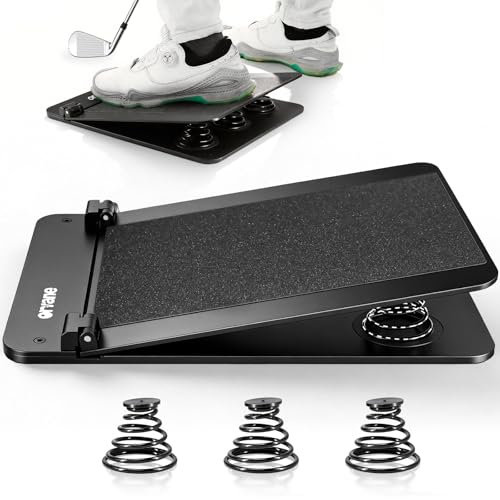
- Three springs adjust counterforce
- Aluminum alloy board
- Suitable for indoor or range drills
Best For: Weight-shift practice with adjustable resistance
Best for At-Home Practice – Large Wood Golf Pressure Plate
Among golf balance boards for swing training, this large wood pressure plate is a practical option for rehearsing weight transfer at home or the driving range. Its textured surface and plastic base layer are designed to reduce slipping while you work on swing sequence and tempo.
Best For: Golfers who want a full-size board for repeated weight-shift drills.
Pros:
- Provides physical feedback as weight shifts during the swing.
- Textured top and plastic base layer add grip.
- Wood construction and large format suit stance-based practice.
Cons:
- The 28.75-inch package length makes it less compact to store or carry.
- It is a practice aid, not a device that measures or displays pressure data.
The appeal is straightforward: a grippy, full-size platform for feeling the timing of your weight shift. Treat speed and distance gains as training goals rather than guaranteed results.
Best Flame-Pattern Option – Large Flame Golf Pressure Plate
If you want golf balance boards for swing training with a more distinctive look, this large flame-patterned wood plate offers a visual alternative. It is intended to help you feel weight distribution and practice the rhythm of your swing.
Best For: Golfers who want a full-size weight-shift trainer with a flame-pattern design.
Pros:
- Flame pattern distinguishes it from plain training boards.
- Textured wood surface and plastic base layer are designed for grip.
- Supports weight-transfer and core-stability drills.
Cons:
- At a listed package weight of 2 kg, it is not the lightest option here.
- No electronic readout is described despite the listing’s reference to real-time feedback.
Choose this model if the graphic appeals to you and you want a conventional large plate. Its feedback is best understood as the physical sensation of shifting your weight, not a numerical measurement.
Best Compact Split Design – Small Golf Pressure Plate
This small split-design model stands out among golf balance boards for swing training when storage space matters. The supplied package dimensions are 14.25 by 4 by 1.7 inches, and the board is intended for practicing center-of-gravity control and swing consistency.
Best For: Golfers interested in a smaller split-design aid for weight-shift drills.
Pros:
- Split design offers a different format from a full-length plate.
- Small listed size is easier to accommodate in limited storage space.
- Textured wood surface and plastic base layer are designed to resist slipping.
Cons:
- The small format may not suit golfers seeking one broad platform for their stance.
- The listing does not explain exactly how the split design should be positioned for drills.
Its compact format is the main reason to consider it. Check that a small, split-style trainer matches the drills you plan to do before choosing it over a large board.
Best for Indoor and Outdoor Drills – Solid Wood Weight-Shift Board
For shoppers comparing golf balance boards for swing training, this solid wood pressure plate is specifically described for both indoor and outdoor practice. It targets weight-shift timing and balance, including drills for chipping and hitting.
Best For: Golfers who want one board for home sessions and driving-range drills.
Pros:
- Listed for indoor and outdoor use.
- Solid wood construction with a textured top and plastic base layer.
- Designed for weight-shift, tempo, and balance practice.
Cons:
- Its 30.14-inch package length and 2.57 kg package weight make it relatively bulky.
- No sensor or measured pressure display is specified.
This is a sensible pick if you value a substantial practice board you can use in more than one setting. Expect tactile feedback during drills rather than quantified swing data.
Most Versatile Stance Trainer – DownUnder Board 2.0 Tour Edition
Among golf balance boards for swing training, the DownUnder Board 2.0 is a stance-focused option for practicing steadier footwork across the bag. Its adjustable length lets golfers tailor the setup to their stance.
Best For: Golfers who want to work on stance, footwork, and lower-body stability with multiple clubs.
Pros:
- Adjusts from 14 to 18 inches long and packs down to 10 by 10.5 inches.
- Designed for practice from driver and mid-irons through chipping and putting.
- Includes access to instructional videos from coach Bradley Hughes.
Cons:
- Does not offer the audible transition cue found on some pressure trainers.
- Golfers seeking a dedicated chipping plate may prefer a more specialized aid.
Choose this board if your priority is a portable, adjustable stance aid rather than a device that signals precisely when to shift pressure.
Best Audible Weight-Shift Cue – SYNC Plate PRO
For golfers comparing golf balance boards for swing training, the SYNC Plate PRO stands out for pairing a trail-foot wedge with an audible cue during the shift toward the lead side. It is built around a specific load, shift, and hip-turn drill rather than general stance setup.
Best For: Golfers practicing pressure transfer and downswing sequencing who want an audible timing cue.
Pros:
- Angled wedge is designed to keep pressure toward the trail instep during the backswing.
- Spring-loaded mechanism clicks as pressure shifts to the lead side.
- Built-in handle and low-profile design make it easier to take to the range.
Cons:
- Its roughly 25-by-14-inch package is less compact than smaller training plates.
- Focuses on a weight-shift drill rather than offering an adjustable stance width.
The click makes this a practical pick if you find it hard to tell when you have shifted pressure, though the drill still needs to be carried over into your regular swing.
Best for Chipping Practice – WHYGOLF Chipping Plate
The WHYGOLF Chipping Plate is the short-game specialist among these golf balance boards for swing training. It combines a pressure plate and balance-board approach to help golfers practice keeping weight forward during chips.
Best For: Golfers who want a dedicated aid for forward-weight chipping practice.
Pros:
- Targets weight-forward movement for chipping rather than trying to cover every full-swing drill.
- Can be used indoors or outdoors for year-round practice.
- Training videos featuring two-time PGA winner Brian Henninger are available through the WhyGolf Amazon Storefront.
Cons:
- Its chipping emphasis makes it less versatile for golfers primarily practicing driver or iron swings.
- The supplied product notes do not describe an audible weight-shift cue.
If inconsistent weight placement is your main chipping concern, this focused plate makes more sense than a broader full-swing trainer.
Best for Simple Weight-Shift Drills – Rocalt Golf Pressure Plate
Among golf balance boards for swing training, the Rocalt plate is a straightforward option for feeling pressure move from your trail foot to your lead foot. Its wood construction and portable design suit practice at home or on the range.
Best For: Golfers who want a simple board for weight-transfer, balance, and tempo drills.
Pros:
- Supports slow, half, and full-swing practice.
- Works for indoor and outdoor club drills, even without a ball.
- Includes a three-year warranty.
Cons:
- The supplied details do not describe adjustable resistance or audible feedback.
Choose this one if you prefer an uncomplicated way to practice foot-pressure awareness rather than a board with extra feedback features.
Best for Audible Transition Feedback – SYNC Plate PRO
If you want clearer cues from golf balance boards for swing training, the SYNC Plate PRO combines an angled Power Wedge with a spring-loaded click. The wedge is designed to help keep pressure toward the trail-foot instep, while the click marks a shift onto the lead side.
Best For: Golfers practicing a less swaying backswing and a more deliberate downswing transition.
Pros:
- Angled wedge gives a physical cue for trail-side loading.
- Audible click signals lead-side pressure during the transition.
- Built-in handle makes it easier to carry to the range.
Cons:
- The supplied details do not list adjustable spring resistance.
- Plastic construction may not appeal to buyers seeking a wood or metal board.
This is the most feedback-focused choice here if you want to hear when your pressure shifts, though the click alone cannot verify every part of your swing sequence.
Best for Adjustable Resistance – Orvane Golf Pressure Plate
The Orvane plate stands out among golf balance boards for swing training because its three springs let you adjust the counterforce. That gives you a way to vary the feel of weight-shift and balance drills as you practice.
Best For: Golfers who want adjustable resistance while working on pressure transfer, balance, and swing tempo.
Pros:
- Three adjustable springs provide customizable counterforce.
- Aluminum alloy board is listed for indoor and outdoor practice.
- Compact size suits garage or driving-range drills.
Cons:
- The supplied details do not mention an audible shift cue.
- Spring adjustments add a setup step compared with a fixed board.
Consider this model if being able to change drill resistance matters more to you than getting a click at the moment of transition.
How We Picked the Best Golf Balance Boards for Swing Training
We compared the selected listings by their stated training purpose, feedback method, adjustability, and likely practice use. The lineup includes general weight-shift boards, a chipping-focused plate, an adjustable board, and a trainer with an audible cue. We did not treat product claims as measured improvements in speed or ball striking. Several listings have identical or repeated names, so verify the seller, dimensions, included parts, and current specifications before ordering.
Quick Comparison: Which Style Fits Your Practice?
- General pressure plates and transfer boards: A starting point if your main goal is to notice when pressure shifts during the backswing and downswing.
- Audible-feedback trainer: Consider the SYNC Plate PRO if a click would help you recognize a movement without looking down. Check how its angled wedge fits your intended drill.
- Chipping-focused plate: The WHYGOLF Chipping Plate is the more targeted option for short-game practice rather than a default choice for full swings.
- Adjustable board: Worth a look if you want to vary the setup as drills change; check exactly what adjusts and whether it locks securely.
- DownUnder Board 2.0 Tour Edition: Compare its intended swing-training method with your goals rather than assuming it works like a conventional rocking pressure plate.
Key Buying Factors for Golf Balance Boards for Swing Training
Feedback You Can Use
Some aids create a physical rocking sensation; others add an audible signal. Choose the cue you can interpret while maintaining posture. A board that draws your eyes to your feet throughout the swing may be less useful than one that lets you focus on the motion.
Stability, Footing, and Space
Look for a suitable standing area, secure contact with your shoes, and a base that works on your practice surface. Check the board’s dimensions against your stance width and confirm any stated weight limit. For indoor sessions, allow enough room for the club, your body, and the board’s movement. Start with slow rehearsals before attempting faster swings.
Drill Compatibility
Decide whether you need help with transition timing, pressure transfer through impact, or chipping setup. Not every aid is meant for every shot. Review the maker’s instructions to see whether the board is designed for full swings, short swings, or no-ball movement drills, and whether it is intended for both right- and left-handed players.
Who Should Buy Which Golf Balance Boards for Swing Training?
New to pressure-shift training? Start with a straightforward board whose movement you can understand at slow speed. Prefer an unmistakable cue? Compare audible-feedback designs, but make sure the cue matches the movement you want to practice. Working mainly on chips? Choose a short-game-specific aid. Following a coach’s drill? Buy the board style that drill calls for, especially if it requires a particular stance or wedge angle.
Whichever you choose, treat the board as a feedback tool, not a substitute for sound swing instruction. If its cues are confusing, ask a coach to check that you are responding with the intended movement.