Golf practice gets a lot more effective when you can see what your shots are really doing. The best home tracking systems help you measure distance, path, speed, and consistency without guessing.
Whether you want a simple swing analyzer or a more advanced launch monitor and simulator setup, this roundup focuses on practical options for different spaces, budgets, and practice goals.
Best 10 Golf Ball Tracking Systems for Home Picks for 2026
Portable Home Launch Monitor
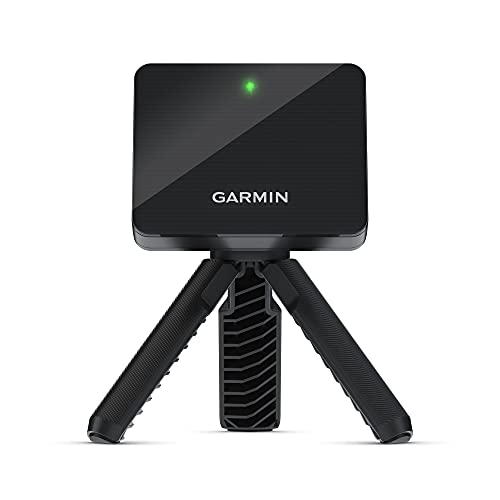
- Tracks 12+ swing and shot metrics.
- Records swing clips in the Garmin Golf app.
- Works indoors, at home, or on the range.
Best For: Golfers wanting portable home practice with detailed shot data.
Automatic Game Tracking

- Automatic tracking with 15 sensors plus a putter sensor.
- AI rangefinder adjusts for conditions like wind and slope.
- Strokes gained analytics show where to improve.
Best For: Golfers who want automatic shot tracking and performance analytics.
Indoor Simulator Tracker

- Tracks 15 metrics with radar and dual cameras.
- Offers slow-motion swing video and impact review.
- Supports 30,000+ simulator courses at home.
Best For: Golfers building an indoor practice and simulator setup.
Ball Recovery Helper

- Blue lenses help white balls stand out.
- Lightweight design for comfortable course use.
- Includes microfiber cloth and protective pouch.
Best For: Golfers who want help spotting lost balls quickly.
Portable Swing Simulator
Home Golf Simulator with 3D Analysis

- Portable sensor-based simulator for indoor use
- No net or ball required for basic play
- Access to 38,000+ courses and multiplayer
Best For: Indoor golfers wanting portable swing practice and virtual courses
Data-Focused Launch Monitor
SkyTrak Golf Launch Monitor with Protective Case

- Tracks ball speed, distance, launch angle, club speed, and spin
- Virtual driving range practice with real data
- Includes metal protective case with leveling legs
Best For: Home users who want detailed shot metrics and practice feedback
Automatic Practice Feeder
Automatic Golf Ball Dispenser with 60-Ball Capacity

- Feeds a new ball about every 3 seconds
- Holds up to 60 golf balls for longer sessions
- Mechanical, portable design for indoor or outdoor use
Best For: Coaches and players who want continuous tee-up practice
Portable shot-tracking monitor
Rapsodo MLM iPhone/iPad Launch Monitor

- Measures ball speed, club speed, launch angle, carry distance.
- Shot tracer and video replay help review each swing.
- Portable for backyard, range, or indoor net practice.
Best For: iPhone/iPad golfers practicing at home or on the range
No-ball home swing trainer
Golf at Home AI Swing Analyzer

- AI feedback predicts ball flight and swing results.
- No-ball training works in small indoor spaces.
- Quick phone-and-tripod setup supports daily practice.
Best For: Golfers who want simple indoor swing practice without balls
Advanced home launch monitor
Rapsodo MLM2PRO Launch Monitor

- Tracks 13 core metrics, including spin rate and spin axis.
- Dual cameras add deeper swing analysis.
- Includes tripod, case, and 3 Callaway RPT balls.
Best For: Golfers who want detailed home launch-monitor data
Portable Home Launch Monitor – Garmin Approach R10
If you want golf ball tracking systems for home that do more than just show where the ball went, the Garmin Approach R10 is built for practice sessions indoors, in the garage, or at the driving range. It tracks 12+ metrics through the Garmin Golf app, records swing video clips, and can even support virtual rounds with an active subscription.
Best For: Golfers who want a portable launch monitor with detailed shot data and app-based practice at home.
Pros:
- Tracks key metrics like club head speed, ball speed, launch angle, launch direction, spin, and tempo.
- Automatically records video clips tied to swing metrics when paired with a compatible smartphone.
- Supports training mode with shot dispersion charts and virtual rounds through the Garmin Golf app.
- Up to 10 hours of battery life for longer practice sessions.
Cons:
- Needs a compatible smartphone and the Garmin Golf app for full functionality.
- Virtual rounds require an active subscription.
- Best suited to shot analysis and practice, not ball tracking in the visual sense.
This is a strong choice for golfers who want a portable, data-driven setup that can move between home and the range. Its mix of metric tracking, video, and app features makes it especially useful for structured improvement sessions.
Automatic Game Tracking – Arccos Smart Sensors
For golfers looking at golf ball tracking systems for home that focus on automatic stat capture, Arccos Smart Sensors are designed to track your game with minimal manual input. The system uses 15 smart sensors, an AI-powered GPS rangefinder, and strokes gained analytics to help you understand club distances and where your game needs work.
Best For: Players who want automatic game tracking, smart distances, and analytics to improve scoring.
Pros:
- Includes 15 smart sensors plus 1 smart putter sensor.
- AI-powered GPS rangefinder adjusts yardages for wind, elevation, temperature, humidity, and altitude.
- Strokes gained analytics help identify strengths and weaknesses by target handicap.
- First year membership is included for new members, with annual sensor renewal benefits.
Cons:
- Membership is required after the first year.
- Requires setup across multiple clubs to use fully.
- Focused on game tracking and distances rather than launch monitor-style swing metrics.
Arccos is a solid fit if you want a mostly hands-off system that builds a detailed picture of your on-course performance. It is less about indoor simulator practice and more about turning shot data into actionable scoring insights.
Indoor Simulator Tracker – Rapsodo MLM2PRO
If your priority is golf ball tracking systems for home that double as an indoor simulator setup, the Rapsodo MLM2PRO is built for detailed shot capture and swing review. It uses Doppler radar and dual cameras to track 15 metrics, and it works with iOS and Android for indoor practice, range sessions, and home simulation.
Best For: Golfers who want a home simulator-capable launch monitor with video and shot data.
Pros:
- Tracks 15 metrics including spin rate, spin axis, ball speed, club speed, club path, launch angle, and carry distance.
- Works with iOS and Android via Bluetooth for quick setup.
- Includes video swing capture and slow-motion review to spot contact issues.
- Comes with a 45-day free Premium trial and access to 30,000+ simulator courses.
Cons:
- Full experience depends on Premium features after the trial.
- Designed around app use, so it is not a standalone display unit.
- Primarily a training and simulator device rather than a simple ball finder.
The MLM2PRO stands out for golfers who want both data and a true at-home simulator feel. Its combination of radar, cameras, and course access makes it especially appealing for serious practice indoors or at the range.
Ball Recovery Helper – E1 Golf Ball Finder Glasses
For golfers who want a simple aid rather than a launch monitor, these golf ball tracking systems for home are really about speeding up ball searches on the course. The E1 Golf Ball Finder Glasses use blue lenses to help white golf balls stand out against grass, leaves, and fairway backgrounds, especially in bright sunlight.
Best For: Golfers who want a lightweight visual aid to find lost balls faster on the course.
Pros:
- Blue lenses are designed to make white golf balls easier to spot.
- Lightweight PC material construction for comfortable course use.
- Includes a microfiber cloth and protective pouch for storage.
- Helps reduce time spent searching for lost balls.
Cons:
- For ball search use only, not for driving or regular sunglasses.
- Does not provide shot data, swing metrics, or simulator features.
- Limited to visual ball finding rather than training analysis.
This is the most basic option in the group, aimed at convenience rather than performance data. It can be useful if your main goal is simply cutting down ball-search time during play.
Portable Swing Simulator – Home Golf Simulator with 3D Analysis
If you want one of the more flexible golf ball tracking systems for home, this portable Phigolf setup focuses on swing analysis and virtual play without needing a net or real ball. It pairs a lightweight USB-C sensor with your swing stick or own club, and the app opens access to thousands of courses plus multiplayer play for casual practice.
Best For: Golfers who want a compact indoor simulator for swing training, virtual rounds, and family fun.
Pros:
- Portable, space-saving design fits easily in a suitcase for travel or small rooms.
- Works with a swing stick or your own clubs for flexible practice options.
- Includes access to 38,000+ courses in the app, plus multiplayer support for up to 4 players.
- Designed for indoor use with minimal space and no net or ball required for simulator play.
Cons:
- Setup may require following the manual, app download, Bluetooth pairing, and tutorial videos.
- For real-ball outdoor practice with your own clubs, the notes recommend setting up a net for safety.
Overall, this is a strong choice if your priority is convenience and variety rather than a full hardware-heavy simulator. It leans more toward portable swing training and app-based play than traditional ball-tracking practice stations.
Data-Focused Launch Monitor – SkyTrak Golf Launch Monitor with Protective Case
For golfers comparing golf ball tracking systems for home, SkyTrak is built around measured ball-flight data and virtual driving range practice. It is positioned as a game-improvement tool that records key shot parameters, making it useful when you want more feedback from every session.
Best For: Golfers who want a data-focused launch monitor for home practice and simulator use.
Pros:
- Measures ball speed, distance, launch angle, club speed, and spin rates.
- Driving range functionality lets you practice with real data in a virtual setting.
- Includes a metal protective case with leveling legs for added setup protection.
- Designed as a game-improvement tool for practice sessions.
Cons:
- The product notes do not mention portability or compact storage.
- Shipping requires a signature, so someone must be home to receive it.
SkyTrak fits golfers who care more about measurable shot feedback than app-based entertainment. If your home setup is meant to improve practice quality with tracked ball data, this is the most analytical option in the group.
Automatic Practice Feeder – Automatic Golf Ball Dispenser with 60-Ball Capacity
Among golf ball tracking systems for home, this automatic tee-up machine is aimed at repeat practice rather than shot analytics. It feeds balls every few seconds, helping you keep a steady rhythm for high-repetition swings in a garage, backyard, or simulator space.
Best For: Golfers and coaches who want an easy-feeding ball dispenser for continuous practice sessions.
Pros:
- Dispenses a new ball about every 3 seconds for uninterrupted practice.
- Holds up to 60 balls, reducing refills and repeated bending.
- Portable and compact enough for indoor simulators, garages, backyards, and driving ranges.
- Mechanical, no-electricity design is built for all-weather use.
Cons:
- It does not provide ball-flight tracking or swing analytics.
- Best suited to repetitive teeing practice, not shot measurement.
This is the right pick if your main goal is smooth, high-volume practice and less setup hassle. It complements a simulator or hitting area well, but it is not a substitute for a true launch monitor.
Portable shot-tracking monitor – Rapsodo MLM iPhone/iPad Launch Monitor
If you’re comparing golf ball tracking systems for home, the Rapsodo MLM is a straightforward way to get real shot data without setting up a full simulator bay. It works at the range, in the backyard, or into an indoor net, and the companion app turns every swing into usable numbers you can act on right away.
Best For: iPhone and iPad golfers who want portable swing and ball-flight feedback for home practice.
Pros:
- Tracks ball speed, club speed, launch angle, carry distance, and shot shape.
- Records video replay with shot tracer so you can review swing mechanics.
- Works for backyard, range, and indoor net sessions.
- Lightweight design is easy to pack and move.
Cons:
- iOS only, so it won’t work for Android users.
- Premium simulator courses and game modes are separate from the base app.
For golfers who want a compact, data-driven practice tool at home, the MLM delivers practical feedback without a complicated setup. It is especially appealing if you want to track improvement over time and see exactly what each swing is doing.
No-ball home swing trainer – Golf at Home AI Swing Analyzer
For golfers looking at golf ball tracking systems for home but wanting a safer, simpler setup, this AI swing analyzer focuses on practice without hitting balls. It uses real-time feedback to predict ball flight and help you work on consistency in apartments, garages, offices, or other tight spaces.
Best For: Golfers who want a low-friction indoor training option with no-ball practice and instant swing feedback.
Pros:
- AI-powered analysis gives real-time swing feedback and predicted ball flight.
- No-ball design helps reduce space and safety concerns indoors.
- Fast setup with a phone and tripod makes daily training easy.
- Portable enough for indoor or outdoor practice.
Cons:
- Does not provide the same ball-strike data as a launch monitor.
- Best suited to swing training rather than full shot tracking.
This is a practical pick if your priority is building better swing habits at home without expensive equipment or a lot of room. It is less about full launch data and more about making consistent practice easy to repeat.
Advanced home launch monitor – Rapsodo MLM2PRO Launch Monitor
If you want golf ball tracking systems for home with more advanced data, the Rapsodo MLM2PRO is built for deeper swing analysis. It pairs with a smartphone or tablet, adds dual-camera support, and measures a wide set of metrics for golfers who want a more complete picture of each shot.
Best For: Golfers who want a feature-rich launch monitor for home simulation and detailed swing tracking.
Pros:
- Measures 13 core metrics, including spin rate, spin axis, and swing speed.
- Works as a mobile launch monitor for home or driving-range use.
- Includes three Callaway RPT Chrome Soft X golf balls, plus tripod and carrying case.
- Dual-camera setup supports more detailed golf swing analysis.
Cons:
- Android-compatible setup may not fit every device preference.
- Requires a smartphone or tablet to use the full experience.
This model is the most data-heavy option in the group and makes sense if you want more than basic shot feedback. It is a strong fit for home practice setups where detailed metrics matter as much as convenience.
How We Picked the Best Golf Ball Tracking Systems for Home
We focused on Golf Ball Tracking Systems for Home that offer useful feedback, reliable setup, and clear value for indoor or backyard practice. Priority went to products that can help golfers improve real swing outcomes, not just add novelty. We also considered portability, app support, simulator compatibility, and whether the system works well in tighter home spaces.
Quick Comparison
The options here fall into a few main categories: portable launch monitors, smart sensor systems, golf simulator-style trainers, and practice accessories. Launch monitors are best for shot data and distance tracking, while sensor-based systems are better for long-term game trends. Simulator-style products are usually the most immersive, but they often need more room and setup.
Key Buying Factors for Golf Ball Tracking Systems for Home
Space and Setup
Start by measuring your practice area. Some systems need room behind and in front of the ball, while others are designed for compact indoor use. If you plan to move the setup often, portability matters as much as performance.
Data Depth
Decide how much feedback you need. Basic systems may track distance and club performance, while higher-end options can provide ball speed, launch angle, spin estimates, and shot shape. More data is helpful only if you will actually use it.
Indoor Vs. Outdoor Use
Many Golf Ball Tracking Systems for Home work in both settings, but performance can vary based on lighting, ball type, and available space. If you want year-round practice, choose a model that stays accurate indoors and outdoors.
App Quality and Compatibility
Good software makes a major difference. Look for easy pairing, clean visuals, useful practice modes, and compatibility with your phone, tablet, or simulator setup. Subscription requirements may also affect long-term value.
Who Should Buy Which Golf Ball Tracking Systems for Home?
Choose a portable launch monitor if you want the most versatile all-around practice tool. Pick a smart sensor system if you mainly want to track long-term performance and course stats. Go with a simulator-style trainer if your priority is a more engaging indoor practice experience. If you only need support tools for practice sessions, simpler home golf accessories may be enough.
For most buyers, the best choice comes down to balancing accuracy, space, and how often you’ll use the system. A well-matched setup can make home practice more measurable, more consistent, and far more productive.