Choosing among golf launch monitors for beginners can feel overwhelming fast. Some models focus on simple distance and speed readings, while others add simulator features, shot tracking, and coaching tools.
This roundup narrows the field to beginner-friendly options that balance ease of use, portability, and useful feedback so you can practice with more confidence.
Best 10 Golf Launch Monitors for Beginners Picks for 2026
Portable Practice Pick
Garmin Approach R10 Launch Monitor
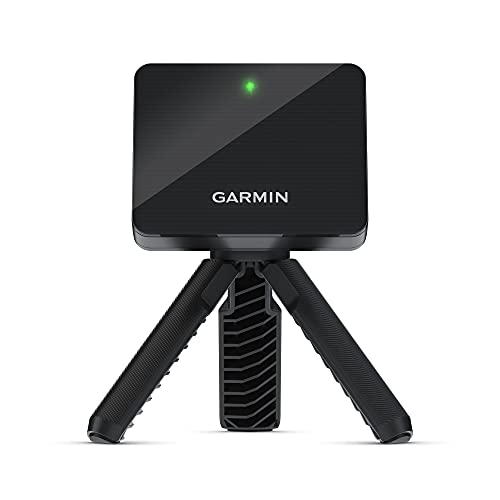
- Tracks 12+ metrics through the Garmin Golf app
- Records swing video clips with attached metrics
- Up to 10 hours battery life for practice sessions
Best For: Beginners who want app-based feedback and portable practice tools
iPhone Range Trainer

- Shows ball speed, club speed, launch angle, and carry distance
- Video replay includes shot tracer for each swing
- Portable and designed for iPhone/iPad use
Best For: iPhone and iPad users who want clear visual feedback
Renewed Value Choice
- Tracks club head speed, ball speed, swing tempo, and launch angle
- Records swing video clips with metrics in the Garmin app
- Renewed listing with a 90-day limited warranty
Best For: Budget-minded beginners who want the Garmin R10 features
Affordable Speed Training Pick
PRGR HS 130-A Portable Golf Launch Monitor

- Measures club speed with or without a ball
- No app, Wi-Fi, or Bluetooth setup needed
- Tracks carry, total distance, smash factor
Best For: Beginners who want simple, budget-friendly swing feedback
Feature-Rich App-Connected Pick
Rapsodo MLM2PRO Mobile Launch Monitor

- Tracks 15 metrics with radar and dual cameras
- Includes video swing capture and slow motion
- Works with iOS/Android and offers simulator courses
Best For: Beginners who want deep data and video feedback
No-Subscription Value Pick
Shot Scope LM1 Portable Golf Launch Monitor

- No monthly fees and lifetime app subscription
- Color screen with simple button controls
- Tracks club speed, ball speed, smash factor
Best For: Beginners who want straightforward launch data with no subscription
App-Based Feature Pick
Golf Launch Monitor & Portable Swing Analyzer

- 13 metrics with launch, spin, and attack angle data
- No annual fees after the one-time app download
- Multi-angle views plus video recording for swing review
Best For: Beginners who want detailed app feedback and no subscription fees
Simple No-App Pick
BLACK T SHOT5 Portable Doppler Radar

- Measures carry distance, ball speed, club speed, and smash factor
- No app or Bluetooth setup needed
- Large 5-inch display for quick at-a-glance reading
Best For: Beginners who want fast setup and only the core numbers
Feedback + Practice Pick
Voice Caddie SC200Plus Swing Analyzer

- Doppler radar with voice output and LCD feedback
- Swing speed mode works without a ball
- Stores shot data and club statistics for review
Best For: Beginners focused on tempo practice and instant feedback
Portable Practice Pick – Garmin Approach R10 Launch Monitor
If you’re comparing golf launch monitors for beginners, the Garmin Approach R10 is a practical all-around option for practicing at home, indoors, or on the range. It gives you access to key swing and ball-flight data through the Garmin Golf app, along with video clips and shot dispersion charts that can make improvement easier to understand.
Best For: Beginners who want a portable launch monitor with app-based stats, video replay, and virtual rounds.
Pros:
- Tracks 12+ metrics when paired with a compatible smartphone and the Garmin Golf app
- Automatically records swing video clips with the swing’s metrics attached
- Training mode shows stats for each club plus a shot dispersion chart
- Up to 10 hours of battery life for longer range sessions
Cons:
- Requires a compatible smartphone and Garmin Golf app for core features
- Virtual rounds need an active subscription
- Best experience depends on pairing and app use rather than standalone simplicity
The R10 is a strong fit if you want a feature-rich portable monitor that helps turn practice into useful feedback. Its combination of metrics, video, and training tools makes it especially approachable for newer golfers who want clear data without a bulky setup.
IPhone Range Trainer – Rapsodo MLM Launch Monitor
The Rapsodo Mobile Launch Monitor is a good pick for golfers who want straightforward feedback from golf launch monitors for beginners, especially if they already use an iPhone or iPad. It delivers ball speed, club speed, launch angle, carry distance, and shot shape, then pairs that data with video replay and shot tracer views.
Best For: iPhone and iPad users who want simple, visual shot feedback for range or backyard practice.
Pros:
- Returns ball speed, club speed, launch angle, carry distance, and shot shape
- Video replay includes an on-screen shot tracer for each swing
- Works at the range, in the backyard, or into an indoor net
- Lightweight and portable, with a free iOS app and optional premium game modes
Cons:
- Works with iPhone and iPad only
- Some simulator courses and game modes require Premium unlocks
- Not the most flexible option if you use Android
For beginners who want immediate, easy-to-read swing feedback, the Rapsodo stands out for its visual approach. The shot tracer and video replay can make it easier to connect what you felt with what the ball actually did.
Simple Speed Tracker – Shot Scope LM1 Mini Monitor
The Shot Scope LM1 is a compact choice among golf launch monitors for beginners who mainly want the basics without a lot of setup. It focuses on ball and club speed, smash factor, total and carry distance, and it works indoors or outdoors with speed training mode and app-based session history.
Best For: Beginners who want a small, easy practice monitor focused on speed and distance basics.
Pros:
- Tracks ball speed, club speed, smash factor, total distance, and carry distance
- Works indoors and outdoors
- Includes speed training mode for practice sessions
- Lifetime session history in the app helps you review progress over time
Cons:
- Feature set is more focused on core numbers than advanced simulator tools
- No detailed app ecosystem or virtual rounds are listed in the supplied notes
- Less comprehensive than higher-feature launch monitors
If you want a compact monitor that sticks to the essentials, the LM1 keeps things simple. That makes it a sensible entry point for beginners who care most about tracking speed and distance consistently.
Renewed Value Choice – Garmin Approach R10 Renewed
If you’re shopping for golf launch monitors for beginners and want to save money, this renewed Garmin Approach R10 keeps the same practical practice features as the original model. It works at home, indoors, or on the range, and pairs with the Garmin Golf app to show metrics, swing video clips, and training data.
Best For: Budget-minded beginners who want the Garmin R10 feature set in a renewed listing.
Pros:
- Tracks key metrics through the Garmin Golf app, including club head speed, ball speed, swing tempo, and launch angle
- Automatically records video clips tied to swing metrics
- Training mode shows club-by-club stats and shot dispersion
- Includes up to 10 hours of battery life for practice sessions
Cons:
- Renewed unit includes a 90-day limited warranty rather than the original warranty length
- Requires app pairing for the main feature set
- Virtual rounds still depend on an active subscription
This renewed version is appealing if you want the R10’s feature mix at a lower-entry option. It is still best suited to golfers who are comfortable using a smartphone app to get the most out of practice.
Affordable Speed Training Pick – PRGR HS 130-A Portable Golf Launch Monitor
If you want golf launch monitors for beginners that keep things simple, the PRGR HS 130-A is a practical place to start. It uses Doppler radar to measure club head speed, ball speed, smash factor, carry distance, and total distance, and it works without Wi-Fi, Bluetooth, or app setup.
Best For: Beginners who mainly want an easy, budget-friendly way to track swing speed and basic shot data.
Pros:
- Measures club speed with or without a ball, which is useful for swing speed training.
- No apps, Wi-Fi, or Bluetooth required; runs on AAA batteries.
- Tracks club head speed, ball speed, smash factor, carry distance, and total distance.
- Stores up to 500 past swings in memory.
Cons:
- Does not include connected app features or simulator-style extras.
- Fewer training and shot-review tools than camera-based units.
The PRGR keeps the buying decision straightforward: it focuses on core numbers and easy portability rather than a full tech ecosystem. For beginners who want feedback without complexity, that simplicity is a real advantage.
Feature-Rich App-Connected Pick – Rapsodo MLM2PRO Mobile Launch Monitor
Rapsodo Golf Launch Monitor - Swing Analyzer, Spin Rate, Indoor/Outdoor, 3 Pro V1 Balls
Check Price On AmazonAmong golf launch monitors for beginners, the Rapsodo MLM2PRO stands out if you want more than just distance numbers. It combines Doppler radar with dual-camera capture to track 15 metrics, and it connects to iOS or Android over Bluetooth for practice sessions at home or on the range.
Best For: Beginners who want detailed shot data, video feedback, and simulator-style practice from a phone or tablet.
Pros:
- Tracks 15 metrics, including spin rate, spin axis, club path, launch angle, and carry distance.
- Works with iOS and Android via Bluetooth for easy screen viewing and shot storage.
- Includes video swing capture and slow motion for contact review.
- Comes with 45 days of Premium free, plus access to simulator courses and practice tools.
Cons:
- More feature-heavy than a basic launch monitor, so setup and learning may take more time.
- Some premium simulator and training features depend on the included trial and app ecosystem.
This is the most complete option here for a beginner who wants to learn from numbers and video together. If you value depth and don’t mind a more involved setup, it offers a lot of room to grow.
No-Subscription Value Pick – Shot Scope LM1 Portable Golf Launch Monitor
If you’re comparing golf launch monitors for beginners and want a no-fuss option, the Shot Scope LM1 is worth a look. It uses Doppler radar to measure club speed, ball speed, smash factor, carry distance, and total distance, while keeping the experience simple with a color screen and push-button control.
Best For: Beginners who want launch data without monthly fees and prefer a straightforward standalone monitor.
Pros:
- No subscription required, plus a free lifetime app subscription for session history.
- Measures club speed, ball speed, smash factor, carry distance, and total distance.
- 3.5-inch color screen makes data easy to read during practice.
- Built for indoor and outdoor use, with IPX3 water resistance.
Cons:
- Battery life is listed at about 5 hours, so longer sessions may need charging support.
- Uses buttons instead of touch control, which may feel less modern than app-first units.
The LM1 is a strong middle-ground choice for beginners who want reliable numbers without ongoing costs. Its included charger bundle also makes it a convenient pick for home practice sessions.
App-Based Feature Pick – Golf Launch Monitor & Portable Swing Analyzer
If you want one of the more feature-rich golf launch monitors for beginners, this model makes it easier to learn from each swing without adding subscription costs. It tracks 13 metrics, shows multi-angle practice views, and includes video recording, so you can connect your numbers to what your swing is actually doing.
Best For: Beginners who want detailed feedback, app-based coaching tools, and no annual fees.
Pros:
- Zero annual fees and full feature access after the one-time app download
- Tracks 13 metrics, including attack angle, launch angle, and spin rate
- Multi-angle practice views and shot trajectory display help with swing review
- Built-in environmental sensors adjust data for temperature, humidity, and barometric pressure
Cons:
- Indoor use needs at least 15 feet of total space
- You need to place the phone in front of the device for the best Bluetooth connection
- Learning all the metrics may feel overwhelming for absolute beginners
This is a strong pick if you want more than basic distance numbers and like the idea of using your phone for deeper practice feedback. The calibration tools and voice feedback make it practical, but the space requirement matters before you set it up indoors.
Simple No-App Pick – BLACK T SHOT5 Portable Doppler Radar
For golfers comparing golf launch monitors for beginners, this one stands out for keeping things simple. It focuses on the core numbers that matter most—carry distance, ball speed, club head speed, smash factor, and total distance—so you can practice without getting buried in extra data.
Best For: Beginners who want a quick, no-app launch monitor with easy-to-read basics.
Pros:
- Ready to use in about 3 seconds with no app, Bluetooth, or setup
- Displays the core data golfers need for practical improvement
- Large 5-inch screen is easy to read at a glance
- Lightweight design makes it easy to carry in a golf bag
Cons:
- Only tracks 5 essential data points, so it is less detailed than some rivals
- No phone app or Bluetooth features for deeper analysis
- Does not add the training extras some beginners may want later
This is a straightforward choice if you mainly want reliable shot feedback without a learning curve. It is especially appealing for casual practice sessions where speed, portability, and simplicity matter more than advanced analytics.
Feedback + Practice Pick – Voice Caddie SC200Plus Swing Analyzer
If you are shopping golf launch monitors for beginners and want a model that helps you build rhythm as well as distance awareness, this Voice Caddie unit is a solid middle-ground option. It uses Doppler radar, gives instant feedback with voice output, and even includes a swing speed mode you can use without a ball.
Best For: Beginners who want real-time feedback, swing-speed practice, and easy distance tracking.
Pros:
- Doppler radar technology provides reliable data collection
- Voice output and LCD display give instant shot feedback
- Swing speed mode lets you practice tempo without a ball
- Stores shot data and club statistics for later review
Cons:
- Uses a more basic interface than app-heavy launch monitors
- Included components are minimal, so it is less of an all-in-one kit
- Model year is older than some newer beginner-friendly options
This is a practical pick if you want a launch monitor that emphasizes feedback and repetition over deep app features. The stored averages and adjustable loft angles make it useful for learning how different clubs perform over time.
How We Picked These Golf Launch Monitors for Beginners
We prioritized models that are easy to set up, simple to read, and practical for range sessions or home practice. For Golf Launch Monitors for Beginners, the best choices deliver helpful data without forcing you to learn a complicated interface first.
We also looked at portability, battery life, app compatibility, indoor and outdoor use, and whether the unit provides enough feedback to support real improvement.
Quick Comparison
In general, radar-based monitors are strong for ball speed, club speed, and carry distance, while camera- and app-driven models can offer richer practice features and simulator integration. Basic units are usually best if you want straightforward numbers. Feature-rich models make more sense if you plan to practice indoors or build a home setup later.
Key Buying Factors for Golf Launch Monitors for Beginners
Ease of Use
Look for clear displays, straightforward setup, and apps that make the data easy to understand. Beginners usually benefit more from a monitor that is simple and consistent than one packed with advanced metrics they will not use yet.
Accuracy and Data Type
Decide which numbers matter most to you. If you mainly want swing feedback, club speed and smash factor may be enough. If you care about distance gaps and on-course transfer, carry distance and ball speed are more useful. Some monitors also provide shot shape, trajectory, or video feedback.
Indoor and Outdoor Flexibility
Many golfers want one device for the range and home practice. Check space requirements, lighting needs, and whether the monitor works well in tight indoor setups. This matters a lot if you plan to practice year-round.
App, Simulator, and Device Compatibility
Some Golf Launch Monitors for Beginners work best with a companion app, while others are more standalone. Verify phone compatibility, subscription costs, and whether simulator or swing-tracking features are included or require extra purchases.
Portability and Battery Life
If you want to carry it to the driving range, size and battery life matter. A compact unit with long runtime is usually easier for beginners to use consistently.
Who Should Buy Which Golf Launch Monitors for Beginners?
If you want the simplest learning tool, choose a basic radar monitor with core swing and distance metrics. If you want more feedback and home-practice flexibility, pick a midrange model with app support and better visualization. If you plan to build a simulator setup, invest in a feature-rich monitor that supports indoor use, shot tracking, and more detailed analysis.
For most beginners, the best choice is the monitor you will actually use often. The right balance of clarity, portability, and useful data will help you improve faster than chasing the most advanced spec sheet.