The best infrared saunas for athletes make post-workout heat sessions easier to use consistently, whether you want a dedicated cabin, a compact tent, or a model with red-light features.
This roundup compares 10 options across heating performance, capacity, portability, comfort, and recovery-oriented extras so you can choose a setup that fits your training space and routine.
Best 10 Infrared Saunas for Athletes Picks for 2026
Best for Customizable Recovery

- Heats in about 10–15 minutes
- 60°F–140°F temperature range
- Natural hemlock one-person cabin
Best For: Customizable post-workout sessions at home
Best for Connected Recovery
DYNAMIC SAUNAS Elite with Red Light

- Includes red light and chromotherapy
- Four ultra-low-EMF heating panels
- Bluetooth speaker system and cedar cabin
Best For: Athletes wanting a feature-rich one-person sauna
Best Portable Steam Option
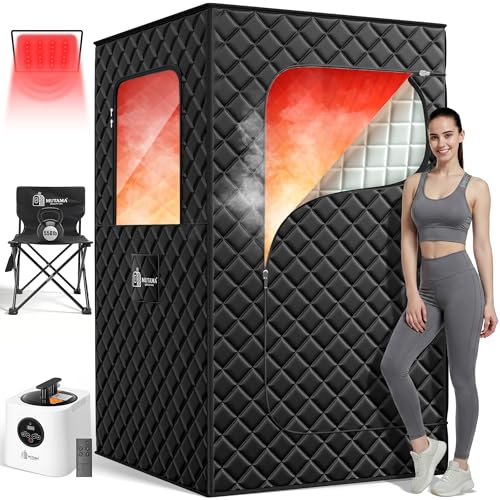
- 71-inch one-person portable design
- 15 heat levels and 99-minute timer
- Built-in 660nm red light panel
Best For: Flexible steam sessions in a home setting
Best for Home Entertainment

- 1050W far infrared carbon heating
- Seven-color lighting and built-in speakers
- Multiple automatic safety protections
Best For: Feature-rich recovery in a dedicated indoor space
Best Full-Size Recovery Sauna
Cedarluma Infrared Sauna with Red Light Therapy

- 1170W heating system reaches up to 149°F
- 660nm and 850nm red/NIR light panel
- Solid hemlock cabin with 1.4–2.6mG EMF rating
Best For: Permanent home recovery setups
Best Portable Budget Pick
ZONEMEL Portable Infrared Sauna Tent

- Foldable 19.76-pound one-person design
- 1050W heat with a separate foot pad
- Includes chair and 60-minute timer control
Best For: Small spaces and portable recovery
Best Spacious Steam-and-Light Combo

- 71-inch portable tent for sitting or standing
- 660nm, 850nm, and 470nm light modes
- 1300W steamer with 3-liter capacity
Best For: Athletes wanting steam and light-therapy versatility
Spacious Home Recovery

- Four-person indoor layout
- 1960W low-EMF heating to 145°F
- Chromotherapy, speakers, and ventilation
Best For: Families, training partners, and dedicated home gyms
Portable Training Recovery

- Foldable 27.4-pound design
- Dual 3L steam generators
- 660nm red and 850nm near-infrared light
Best For: Renters, apartments, and portable home or gym setups
Connected Solo Sessions
X-Vcak 1-2 Person Infrared Sauna

- Six heating panels and 1450W power
- Up to 150°F with a 1-99 minute timer
- Bluetooth, seven-color lighting, and storage features
Best For: Solo athletes or couples wanting a compact connected cabin
Best for Customizable Recovery – DWKWE Far Infrared Sauna Room
For athletes comparing infrared saunas for athletes, this DWKWE home sauna emphasizes quick setup, adjustable sessions, and a traditional wooden-room format. Its far infrared carbon-fiber panels heat the one-person cabin in about 10–15 minutes, while the temperature and timer controls support tailored post-workout use.
Best For: Athletes who want a permanent, one-person indoor sauna with customizable heat and session settings.
Pros:
- Far infrared heating is designed to help with circulation and muscle tension.
- Natural hemlock construction offers a durable, spa-like indoor setup.
- Temperature adjusts from 60°F to 140°F, with a 1–90-minute timer.
- Pre-drilled panels simplify DIY assembly.
Cons:
- Its 35.4 x 29.7 x 67-inch footprint requires dedicated indoor space.
- Designed for one person only.
This is a practical pick if recovery customization matters more than portability. The fast heating and broad timer range are useful after training, while the wood cabin suits buyers building a consistent home wellness routine.
Best for Connected Recovery – DYNAMIC SAUNAS Elite with Red Light
This DYNAMIC SAUNAS Elite is a compact option for athletes seeking infrared saunas for athletes with added relaxation features. The one-person cedar cabin uses four ultra-low-EMF Carbon PureTech panels, includes red light therapy and chromotherapy lighting, and adds Bluetooth audio for calmer recovery sessions.
Best For: Athletes who want a polished indoor sauna with red light, lighting customization, and built-in audio.
Pros:
- Far infrared heat supports a compact home recovery setup.
- Four Carbon PureTech ultra-low-EMF heating panels provide heat circulation.
- Red light therapy and chromotherapy add configurable interior lighting.
- Pacific clear cedar construction and clasp-together assembly simplify installation.
Cons:
- Temperature is listed around 118°F–132°F, with heating up to 140°F.
- Only accommodates one person.
- Bluetooth system includes a speaker but no radio.
Choose this model if the recovery environment matters as much as the heat. Its cedar construction, lighting options, and music system make it better suited to athletes who prefer a more comfortable, entertainment-friendly routine.
Best Portable Steam Option – 1400W Infrared Sauna Box
Although it uses steam rather than a dry infrared cabin, this portable sauna box is worth considering alongside infrared saunas for athletes who prioritize flexibility and full-body sweating. It folds into a one-person setup, reaches operating heat in roughly 10–15 minutes, and combines a 3-liter steamer with a built-in 660nm red light panel.
Best For: Athletes who need a portable, seated home sauna with adjustable controls and a steam-based session.
Pros:
- Large 71-inch design accommodates taller users.
- 15 heat levels and a 99-minute timer allow detailed session control.
- Five-layer insulating fabric helps retain heat and steam.
- Includes a steel frame, folding chair, panoramic window, and boil-dry protection.
Cons:
- This is a steam sauna tent, not a far infrared dry sauna.
- Requires water for its 3-liter steamer and space for a 71-inch-tall setup.
- Portable fabric construction provides a different feel from a wooden sauna room.
This model makes the most sense for athletes who value storage and adjustable steam sessions over a permanent infrared cabin. The red light panel and safety shutoff add convenience, but buyers specifically seeking dry far infrared heat should look elsewhere.
Best for Home Entertainment – OUTEXER Chilean Pine Sauna
The OUTEXER sauna combines far infrared heating with a more feature-heavy cabin for athletes comparing infrared saunas for athletes. Its one-person Chilean pine enclosure includes ultra-low-EMF carbon panels, seven-color starry-sky lighting, speakers, an oxygen bar, and controls for temperature and session timing.
Best For: Athletes who want a permanent indoor sauna with entertainment features and multiple safety controls.
Pros:
- Far infrared carbon panels surround the body for energy-efficient heating.
- Chilean pine construction and tempered glass create a substantial indoor cabin.
- Includes speakers, seven-color lighting, and a multifunctional door handle.
- Features dry-burn protection, automatic shutoff, leak protection, and a timer.
Cons:
- At 150 pounds, it is less convenient to reposition than a portable tent.
- The 30.7 x 30.7 x 62.2-inch interior is limited to one person.
- Some advertised wellness features, such as the oxygen bar, may not be priorities for every buyer.
This is a strong fit for a dedicated home gym, bedroom, basement, or bathroom where comfort and entertainment are important. Its safety systems and seven-year after-sales service add reassurance, while the compact footprint keeps the cabin suitable for one user.
Best Full-Size Recovery Sauna – Cedarluma Infrared Sauna with Red Light Therapy
For athletes seeking infrared saunas for athletes at home, this Cedarluma model combines full-body far-infrared heat with built-in 660nm and 850nm red and near-infrared light. Its solid hemlock construction and low-EMF design make it a substantial option for regular recovery and relaxation sessions.
Best For: Athletes who want a permanent, full-size home sauna with red-light functionality and even heat coverage.
Pros:
- Seven carbon-fiber heating panels deliver 1170W of evenly distributed heat.
- Reaches up to 149°F in approximately 45–50 minutes.
- Includes 660nm and 850nm light therapy, protective goggles, and a 30-month warranty.
- Solid Canadian hemlock construction and reported EMF levels of 1.4–2.6mG.
Cons:
- At 188 pounds, it is not designed for frequent relocation.
- Requires a dedicated floor area measuring approximately 31.5 by 31.5 inches.
- Reaching maximum temperature takes longer than the portable sauna options in this roundup.
This is the most substantial choice for athletes prioritizing a traditional cabin-style setup, consistent warmth, and integrated red-light features. Plan for a fixed location and a longer warm-up period.
Best Portable Budget Pick – ZONEMEL Portable Infrared Sauna Tent
Among infrared saunas for athletes, the ZONEMEL stands out for portability and simple storage. This one-person tent includes a heating foot pad, foldable chair, and three carbon heating panels, making it practical for smaller homes or occasional post-training relaxation.
Best For: Athletes who need an affordable, foldable sauna that can be stored or transported between uses.
Pros:
- Lightweight 19.76-pound design folds for transport and storage.
- Includes a heating foot pad and foldable chair.
- Three carbon heating panels provide 1050W of far-infrared heat.
- Controller supports heating and timer settings up to 60 minutes.
Cons:
- Maximum temperature is listed at 140°F, below the full-size cabin’s rating.
- The seated tent format offers less room to stretch or stand.
- It does not include the red- and near-infrared light therapy featured by some alternatives.
The ZONEMEL is a convenient entry point for athletes who value flexibility over cabin-style construction. Its foldable format and included accessories make it especially suitable for apartments, recovery rooms, and occasional use.
Best Spacious Steam-and-Light Combo – ISIDO Infrared Steam Sauna
For athletes comparing infrared saunas for athletes with more than dry heat, this ISIDO model combines infrared heat, steam, and red, near-infrared, and blue light modes. Its 71-inch height and 3-liter steamer provide a more spacious, feature-rich portable setup than a basic sauna tent.
Best For: Athletes who want a portable sauna with steam, multiple light modes, and enough height to sit or stand.
Pros:
- 71-inch-tall design accommodates users up to 6 feet 7 inches and allows sitting or standing.
- Includes 660nm red, 850nm near-infrared, and 470nm blue light modes.
- 1300W steamer with a 3-liter capacity and nine temperature settings.
- Reported heat-up time is approximately 6–10 minutes, depending on conditions.
Cons:
- Maximum listed temperature is 130°F, lower than the dry infrared cabin option.
- Steam adds setup, cleaning, and moisture-management considerations.
- Remote control batteries are not included.
This model is a versatile choice for athletes who want steam and light-therapy options in a portable package. Its quick heat-up and tall tent are useful, though the lower maximum temperature may not suit buyers seeking hotter dry-heat sessions.
Spacious Home Recovery – 3-4 Person Far Infrared Sauna
For athletes who want infrared saunas for athletes in a dedicated home gym or wellness room, this roomy four-person model offers a more permanent setup. Its 1960W low-EMF heating system reaches up to 145°F, while the seating capacity suits solo sessions or shared use.
Best For: Families, training partners, and athletes with space for a full-size indoor sauna.
Pros:
- Spacious design accommodates up to four people.
- 1960W/120V low-EMF infrared panels heat up to 145°F.
- Includes chromotherapy lighting, ventilation, reading light, and HI-FI speakers.
Cons:
- At 527 pounds, it is difficult to move after assembly.
- Its 59-by-35-inch footprint requires substantial indoor space.
- Warranty coverage excludes commercial and rental applications.
This is the strongest choice of the three for a dedicated recovery area where capacity and built-in comfort features matter more than portability. Confirm the available floor space and intended personal-use setup before buying.
Portable Training Recovery – KASUE 2 Person Infrared Sauna
Athletes seeking infrared saunas for athletes without committing to a heavy cabin may prefer this portable two-person design. It combines a collapsible enclosure with two 3L steam generators, 660nm red light, and 850nm near-infrared output for an adaptable indoor setup.
Best For: Apartment dwellers, renters, and athletes who need a foldable sauna for home or gym use.
Pros:
- Portable 27.4-pound design includes two folding chairs.
- Dual 3L steamers provide multiple outlets for warm distribution.
- Offers 660nm red light and 850nm near-infrared light.
- Remote control, dual zippers, storage pouch, and a zippered window improve convenience.
Cons:
- Requires a dry, level, properly ventilated indoor area.
- The tent-style design is less permanent than a hard-sided sauna.
- Its steam-based setup differs from a traditional dry infrared cabin.
This model prioritizes storage and mobility, making it practical when space is limited or the sauna needs to be put away between sessions. Choose it over a cabin if portability is more important than a fixed-room experience.
Connected Solo Sessions – X-Vcak 1-2 Person Infrared Sauna
For athletes looking for infrared saunas for athletes with a compact hard-sided footprint, this X-Vcak model provides six heating panels and 1450W of power in a one- to two-person cabin. Its adjustable timer, lighting options, and audio features support structured sessions at home.
Best For: Solo users or couples who want a compact indoor sauna with entertainment and storage features.
Pros:
- Six heating panels are designed for balanced room temperature.
- 1450W system reaches up to 150°F with a 1- to 99-minute timer.
- Includes seven-color therapy lighting and Bluetooth, MP3, and radio functions.
- Bookshelf, towel rack, cup holder, ventilation hole, and tempered glass door add convenience.
Cons:
- 231-pound weight makes relocation difficult.
- One- to two-person capacity is smaller than the four-person cabin.
- The recommended session length is 10 to 15 minutes, so users should plan accordingly.
This is a balanced option for athletes who want a permanent but relatively compact cabin with a higher maximum temperature and connected entertainment. Its 40-by-36-inch footprint is easier to place than the larger model, though it still needs dedicated indoor floor space.
How We Picked the Best Infrared Saunas for Athletes
We focused on the factors that matter most after hard training: usable heat, setup time, interior space, seating comfort, controls, and overall practicality. The selection includes compact portable tents, one-person wooden cabins, larger home saunas, and models that add red- or blue-light therapy features.
We also considered power requirements, construction materials, heating-zone design, included accessories, and whether each sauna is better suited to occasional use or frequent sessions. Product claims about recovery or light therapy should be treated as supplemental features, not substitutes for medical care, hydration, sleep, or an appropriate training plan.
Quick Comparison
| Type | Best for | Main advantage | Trade-off |
|---|---|---|---|
| Portable tent | Small spaces and renters | Easy storage and lower commitment | Less room and a less polished setup |
| One-person cabin | Regular solo sessions | More stable, comfortable experience | Requires permanent floor space |
| Two-person sauna | Couples or extra room | More interior capacity | Higher power and space needs |
| Three- to four-person sauna | Families or shared fitness rooms | Group capacity | Largest footprint and installation demands |
Key Buying Factors for Infrared Saunas for Athletes
Heat Control and Warm-Up Time
Look for adjustable temperature settings, clearly placed controls, and heating elements that distribute warmth evenly. A fast warm-up is useful when you want a short post-training session, while stable control matters for longer, lower-intensity use.
Size, Seating, and Portability
Measure the available floor area, doorway, and ceiling clearance before buying a cabin. Portable models are easier to store, but confirm that the chair, foot pad, steam unit, and controller fit comfortably. A cramped sauna may be less appealing to use consistently.
Power and Ventilation
Check wattage, voltage, outlet requirements, and whether the circuit can handle the sauna safely. Place any model in a dry, well-ventilated area and follow the manufacturer’s clearance and cleaning instructions.
Red-Light and Convenience Features
Red- or blue-light systems, Bluetooth audio, chromotherapy, foot heating, and interior lighting can improve convenience, but they should not outweigh construction quality or dependable heat control. Verify the included accessories and the exact light wavelengths before purchase.
Who Should Buy Which Infrared Saunas for Athletes?
Choose a portable infrared sauna tent if you live in a small home, rent, or want the simplest way to test regular heat sessions. A one-person wooden cabin is the better choice for athletes who expect frequent solo use and have dedicated space. Select a two-person model when you want extra room, shared sessions, or a more relaxed seated position. Larger three- or four-person units make sense for families, training facilities, or spacious home gyms.
Before using any sauna after exercise, replace fluids, allow your heart rate to settle, and start with conservative session lengths. Heat exposure can be strenuous; stop if you feel dizzy, nauseated, unusually weak, or unwell, and consult a healthcare professional if you have a medical condition or take medications affected by heat.