Finding the right distance tool can make every round easier when you need larger, clearer feedback and dependable target confirmation. The best golf rangefinders for low vision prioritize readable displays, strong vibration feedback, and simple controls.
Below, we break down 10 buyer-friendly options that can help golfers get faster reads, reduce guesswork, and choose a model that fits their vision needs and playing style.
Best 10 Golf Rangefinders for Low Vision Picks for 2026
Best Talking Pick
GOLFBUDDY Voice 2S+ Talking GPS Rangefinder

- Talking GPS readouts are easier to follow than small screens
- Clip-on hat design supports hands-free use
- Slope mode, long battery life, and preloaded courses boost convenience
Best For: Golfers with low vision who want audible yardages and simple, hands-free course navigation.
Best for Audible-Visual Confirmation
Bushnell Golf Tour V5 Patriot Pack
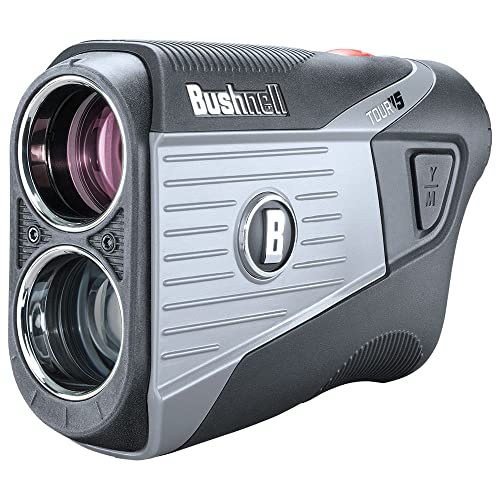
- Visual JOLT gives both vibration and a flashing red ring
- Clear optics and vivid color improve target visibility
- Magnetic cart mount and app support add convenience
Best For: Golfers who need both visual confirmation and vibration feedback for confident pin locking.
Best for Slope Readability
Callaway 300 Pro Laser Rangefinder

- 6x magnification for easier target acquisition
- Pin-lock and pulse confirmation help verify the flag
- Slope mode can be turned off for tournament play
Best For: Golfers who want a straightforward rangefinder with slope and pin-lock feedback.
Best for Shaky Hands
Acer Gadget Golf Rangefinder with Slope

- Anti-shake help for steadier readings
- 6x magnification with bright LCD display
- Flag lock vibration and slope modes
Best For: Golfers who want a steadier, easier-to-read rangefinder with vibration confirmation.
Best Value with Slope Switch
REVASRI Golf Rangefinder 1000YDS

- Pin lock vibration confirms the flag quickly
- External slope switch for tournament-legal mode
- Rechargeable battery with low-battery indicator
Best For: Golfers who want a simple, budget-friendly rangefinder with vibration feedback and slope control.
Best for Slope Reading

- Clear LCD with magnification for easier reading.
- Flag Lock vibration confirms the pin is locked.
- Slope mode and 1-yard accuracy improve club selection.
Best For: Golfers who want readable yardages, vibration confirmation, and slope-adjusted distances.
Best for Readability
REDTIGER Golf Rangefinder with Slope Switch

- 7x magnification and transflective LCD improve visibility
- Flag-lock vibration confirms target acquisition
- Magnetic stripe, USB-C charging, and slope switch add convenience
Best For: Golfers who want clearer distance readings and tactile confirmation on the course.
Best Compact Pick
REDTIGER Mini Golf Rangefinder

- 7X magnification with bright LCD readout
- Lightweight, pocket-size design
- Flag lock vibration plus slope switch
Best For: Golfers who want a small, easy-to-carry rangefinder with clear feedback and tournament-ready features.
Best for Low-Light Visibility
REDTIGER 1200Y Golf Rangefinder

- Adaptive display boosts readability in dim or bright light
- 7X magnification with flag lock vibration for easier aiming
- Slope switch, magnetic mount, and rechargeable battery
Best For: Golfers who need an easier-to-read rangefinder in changing light.
Best for Easy Readouts
REDTIGER Golf Rangefinder 7X 1200Y

- 7x magnification and clear LCD help readability
- Vibration flag lock adds useful target confirmation
- Magnetic mount and USB-C charging boost convenience
Best For: Golfers who need a clearer, easier-to-read rangefinder with vibration feedback.
Best Talking Pick – GOLFBUDDY Voice 2S+ Talking GPS Rangefinder
If you want golf rangefinders for low vision, the GOLFBUDDY Voice 2S+ is built around spoken distance feedback instead of tiny text-heavy displays. It clips onto a hat and gives quick course and shot information, making it easier to get yardages without constantly checking a screen.
Best For: Golfers who want a hands-free, voice-guided rangefinder with simple operation and long battery life.
Pros:
- Talking GPS readouts help reduce reliance on a screen
- Clip-on design keeps it easy to carry and use on the course
- Slope mode can be turned on or off for different rounds
- Long battery life and 40,000 preloaded courses add convenience
Cons:
- Voice-guided GPS may be less precise than a premium laser unit for exact pin reads
- Some golfers may prefer a larger visual display as a backup
For golfers comparing golf rangefinders for low vision, this model stands out for accessibility first: audible guidance, simple wearability, and useful course coverage. It is a practical choice if you value easier navigation over advanced shot-shaping features.
Best for Audible-Visual Confirmation – Bushnell Golf Tour V5 Patriot Pack
If you want golf rangefinders for low vision that are easier to trust at a glance, the Bushnell Tour V5 stands out for its bright red lock-on ring and vibration feedback when it finds the pin. The image clarity is strong, the cart-mount magnet is convenient, and the Bushnell app adds extra course context for planning shots.
Best For: Golfers who need both visual confirmation and vibration feedback for more confident target locking.
Pros:
- Visual JOLT combines a flashing red ring with vibration for clearer pin confirmation
- Sharp optics and vivid color help targets stand out more easily
- BITE magnetic mount makes cart attachment quick and secure
- App support adds distances, hole layouts, and 3D flyovers
Cons:
- Premium pricing may be steep for casual players
- Still requires lining up the laser accurately, which can take practice
For golfers comparing golf rangefinders for low vision, this model is compelling because it pairs tactile feedback with a highly visible confirmation signal, reducing guesswork on the course. It’s a strong choice if you want a proven laser rangefinder that’s easier to see and feel than basic models.
Best for Slope Readability – Callaway 300 Pro Laser Rangefinder
If you’re comparing golf rangefinders for low vision, the Callaway 300 Pro is a practical choice thanks to its 6x magnification, clear distance readout, and simple slope-adjusted measurements. The Birdie/P.A.T. confirmation helps you know when it has locked onto the flag, which can reduce guesswork during play.
Best For: Golfers who want a straightforward rangefinder with slope, pin-lock feedback, and easy-to-use controls.
Pros:
- 6x magnification with 5–1000 yard range for clearer target acquisition
- Pin Acquisition Technology and vibrating confirmation help confirm the flag
- External slope on/off switch keeps it tournament-legal when needed
- Built-in magnet and hard case make it easy to carry and access on a cart
Cons:
- No display/backlight features specifically designed for severe vision impairment
- Small optics can still be challenging for users who need extra-large text
For golfers who need a dependable, no-fuss option, this model covers the essentials without adding complexity. It’s a solid fit for golf rangefinders for low vision when you want strong target confirmation, slope support, and simple operation rather than advanced smart features.
Best for Shaky Hands – Acer Gadget Golf Rangefinder with Slope
If you want a rangefinder that’s easier to steady and read, this Acer Gadget model is worth a look. It combines anti-shake support, 6x magnification, slope compensation, and a bright LCD, making it a practical option for golfers who need reliable feedback from one shot to the next. It also fits well among golf rangefinders for low vision thanks to its clear display and target-lock features.
Best For: Golfers, hunters, and outdoor users who want a steady, easy-to-read rangefinder with slope and vibration confirmation.
Pros:
- Anti-shake design helps reduce wobble for steadier readings
- 6x magnification and bright LCD improve target visibility
- Flagpole lock with vibration gives confident pin confirmation
- USB-C rechargeable battery is convenient for frequent use
Cons:
- It’s a feature-rich unit, so it may feel more complex than basic models
- Slope mode may not be allowed in tournament play
- Not specifically designed only for low-vision users
Overall, this is a strong pick if you want a versatile rangefinder that emphasizes steadier aiming and easier target confirmation. For shoppers comparing golf rangefinders for low vision, the combination of vibration lock, magnification, and a readable display makes it especially appealing.
Best Value with Slope Switch – REVASRI Golf Rangefinder 1000YDS
If you’re comparing golf rangefinders for low vision, this REVASRI model stands out for its clear distance readout, pin-lock vibration, and simple one-button operation. The external slope switch also makes it easy to toggle tournament-legal mode when you need it, while the bright, coated lens helps improve visibility.
Best For: Golfers who want an affordable rangefinder with slope compensation, vibration lock, and an easy tournament mode switch.
Pros:
- Pin lock vibration helps confirm the flag has been acquired
- External slope switch supports quick tournament-legal use
- Simple one-button operation is easy to manage on the course
- Rechargeable battery and low-battery indicator add convenience
Cons:
- Not the most advanced optics compared with premium models
- Display and controls may still be small for some users with severe vision challenges
This is a practical pick if you want golf rangefinders for low vision that keep the feature set focused and easy to use. It combines helpful vibration feedback with a straightforward design, making it a strong value choice for everyday golfers.
Best for Slope Reading – 1200Yd Golf Rangefinder
If you’re comparing golf rangefinders for low vision, this model stands out for its bright transflective LCD, clear magnification, and haptic flag-lock confirmation that helps make distance readings easier to trust. The slope mode, anti-shake support, and 1-yard accuracy also make it a practical pick for golfers who want simple, confident yardage on the course.
Best For: Golfers who want slope-adjusted yardages, vibration confirmation, and a display that’s easier to read in varied light.
Pros:
- Transflective LCD and magnification help readings stay clear and visible.
- Flag Lock vibration gives an extra confirmation when you lock onto the pin.
- Slope mode and 1-yard accuracy support smarter club selection.
- USB-C charging, magnetic mount, and IP54 build add everyday convenience.
Cons:
- Slope mode must be turned off for tournament-legal play.
- Some users may prefer an even larger display for easier viewing.
For golfers prioritizing practical visibility aids, this is a strong all-around option among golf rangefinders for low vision, especially if you value both readable feedback and dependable distance measurement.
Best for Readability – REDTIGER Golf Rangefinder with Slope Switch
If you’re comparing golf rangefinders for low vision, the REDTIGER Golf Rangefinder is worth a look for its 7x magnification, transflective LCD display, and flag-lock vibration. It’s built to make distances easier to confirm quickly, while the slope switch lets you toggle between practice and competition-legal play.
Best For: Golfers who want a feature-rich rangefinder with a clearer display, vibration feedback, and slope control for more confident distance checks.
Pros:
- 7x magnification and transflective LCD help improve readability
- Flag pole locking with vibration gives clear confirmation on targets
- Slope switch, multiple modes, and 1200-yard range add versatility
- Magnetic stripe and belt clip make it easy to carry on the course
Cons:
- Still requires steady aiming, which may be challenging for some users with very limited vision
- Extra modes can feel more complex than a simpler point-and-shoot model
For golfers who need more legible distance readings, this model offers a strong mix of display clarity, tactile feedback, and convenience. Among golf rangefinders for low vision, it stands out for combining usability features with competition-ready slope control.
Best Compact Pick – REDTIGER Mini Golf Rangefinder
If you want golf rangefinders for low vision that are easier to carry and read quickly, this REDTIGER mini model is worth a look. The 7X magnification, bright LCD display, and vibration lock help make targets easier to identify, while the slope switch keeps it practical for both practice rounds and tournaments.
Best For: Golfers who want a lightweight, pocket-size rangefinder with clear readouts, flag lock vibration, and tournament-legal slope control.
Pros:
- High-contrast LCD and 7X magnification help improve target visibility
- Lightweight, pocket-sized build is easy to hold with one hand
- Flag pole lock with vibration adds confidence when locking onto the pin
- IP65 waterproofing and magnetic mounting add everyday convenience
Cons:
- Small body may feel less steady for users who prefer a larger grip
- Battery life is solid, but not class-leading for very long golf trips
- Slope mode must be switched off for tournament use
This is a strong compact option for golf rangefinders for low vision because it emphasizes quick target acquisition, a readable display, and vibration feedback without adding much bulk. If portability matters as much as clarity, it strikes a nice balance.
Best for Low-Light Visibility – REDTIGER 1200Y Golf Rangefinder
If you’re comparing golf rangefinders for low vision, this REDTIGER model stands out for its light-adaptive display and 7X magnification. The screen shifts to a red reticle in dim conditions, which can make distances easier to read without straining your eyes. It also adds slope, flag lock vibration, and a strong magnet mount for everyday course use.
Best For: Golfers who want a brighter, easier-to-read rangefinder that stays practical in changing light.
Pros:
- Light-adaptive display improves readability in bright and low-light conditions
- 7X magnification and flag lock vibration help with clearer target acquisition
- Slope switch keeps it tournament-legal when needed
- Magnetic mount, rechargeable battery, and IP54 resistance add convenience
Cons:
- Not the simplest bare-bones option if you only want basic yardages
- Low-vision users may still prefer a larger dedicated display than a compact rangefinder offers
For golfers comparing golf rangefinders for low vision, this is a strong all-around pick because the adaptive display does real work in changing light instead of just adding extra features. It’s especially appealing if you want clearer readings plus slope, vibration, and a rechargeable design in one unit.
Best for Easy Readouts – REDTIGER Golf Rangefinder 7X 1200Y
For shoppers comparing golf rangefinders for low vision, this REDTIGER model stands out for its 7x magnification, clear transflective LCD, and vibration-based flag locking. The display is designed to be quick to read, while the slope mode and 0.5-yard claimed accuracy help keep distance checks straightforward on the course.
Best For: Golfers who want a readable display, strong magnification, and vibration confirmation when locking onto the flag.
Pros:
- 7x magnification and transflective LCD help make distances easier to see
- Flag pole locking with vibration adds helpful confirmation on target
- Built-in magnetic bracket and USB-C charging improve everyday convenience
- Multiple modes, including slope and scan, add flexibility beyond golf use
Cons:
- Slope feature may not be allowed in some tournament play
- Advanced functions can take a little learning for first-time users
Overall, this is a practical pick for golf rangefinders for low vision if you want a brighter, more readable setup with tactile feedback from the vibration lock. It balances visibility, convenience, and course-ready features without feeling overly complicated.
How We Picked These Golf Rangefinders for Low Vision
We focused on features that improve ease of use and reading confidence: strong target-lock feedback, clearer visual displays, intuitive button layouts, slope on/off controls, and stable performance in bright outdoor conditions. Battery life, portability, and tournament-friendly settings also mattered.
Quick Comparison
For golfers who want the simplest experience, voice-guided and vibration-confirmation models stand out first. For those who still prefer a classic laser style, look for bold display contrast, 6X to 7X magnification, and reliable flag-lock vibration. If you want flexibility, models with an external slope switch are easier to keep tournament legal when needed.
Key Buying Factors for Golf Rangefinders for Low Vision
Display Clarity and Magnification
A bright, high-contrast display with 6X or 7X magnification can make targets easier to locate and distance readings easier to see. Light-adaptive displays may help in changing sunlight, while larger numerals are especially useful if you struggle with glare or small text.
Feedback Methods
Vibration lock, audible distance output, and flag confirmation are the biggest usability upgrades. For Golf Rangefinders for Low Vision, tactile or spoken confirmation can reduce uncertainty when the target is far away or partially blocked.
Ease of Operation
Simple controls, one-handed use, and quick switching between slope and non-slope modes make a real difference on the course. A clear external slope switch is helpful if you want a straightforward way to stay tournament compliant.
Range, Stability, and Portability
Most buyers will be well served by models with generous yardage range, steady target acquisition, and compact builds. Magnetic mounts, clip-on designs, and lightweight bodies can improve convenience without adding complexity.
Who Should Buy Which Golf Rangefinders for Low Vision?
If you want the most accessible experience, choose a talking or audio-guided model. If you prefer a traditional laser device, pick one with strong vibration lock, a crisp display, and easy slope control. Golfers who play often in bright conditions should prioritize high-contrast displays, while travelers and cart users may value magnetic or pocket-friendly designs.
In short, the best choice depends on how you prefer to receive distance information: spoken, tactile, or visual. Focus on the format that makes the reading easiest for you to trust during play.