Limited space does not have to limit your golf practice. The best golf hitting mats for small spaces provide a stable hitting surface, useful turf feedback, and enough cushioning for repeated swings without taking over a room, garage, patio, or balcony.
We selected 10 compact mats with features such as foldable designs, dual-turf surfaces, non-slip rubber bases, ball trays, and swing-path feedback. Use the guide below to match your available space, practice goals, and budget with the right style of mat.
Best 10 Golf Hitting Mats for Small Spaces Picks for 2026
Editor's Choice
GoSports Elite 5' x 4' Hitting Mat
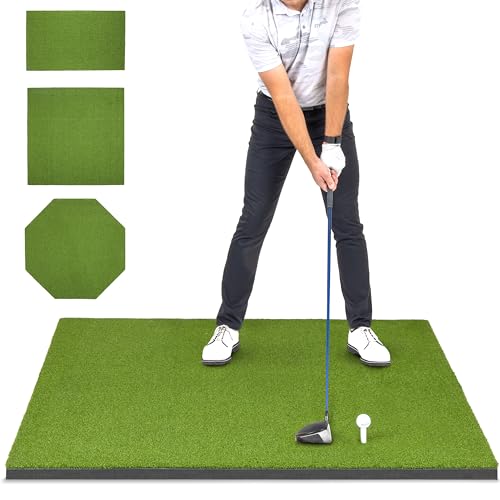
- Commercial-grade turf with EVA shock absorption
- Six tee holes and three tees included
- Built for indoor or outdoor repeated practice
Best For: Golfers who want a spacious, durable practice mat
Smallest Footprint
Ponsonbay Ball-Tray Practice Mat

- Compact 17.7 x 15.7-inch foldable design
- Integrated tray holds 32+ golf balls
- Rubber base grips multiple indoor surfaces
Best For: Tight rooms, offices, and apartment practice
Dual-Turf Pick
SAPLIZE Foldable 23" x 16" Mat
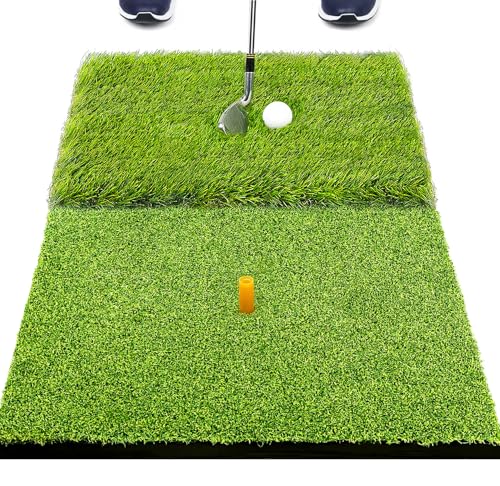
- Dual turf simulates fairway and rough conditions
- 10mm EVA backing absorbs impact
- Foldable and designed to lay flat quickly
Best For: Compact mixed-surface driving and chipping practice
Portable Value
Compact 24" x 16" Practice Mat

- Lightweight 680-gram foldable design
- Compact 16 x 24-inch practice surface
- Includes a tee for indoor or outdoor use
Best For: Beginners and casual golfers needing portable practice
Best Compact Dual-Turf Pick
Premium Foldable Golf Hitting Mat

- Compact 16-by-17-inch footprint
- Dual rough and fairway turf
- EAV cushioning with included tees
Best For: Small-space golfers who prioritize portability and versatile practice
Best Stable Small-Space Mat
JAYA Heavy-Base Golf Hitting Mat

- Heavy rubber base improves stability
- Dual turf for chipping and driving
- Built-in tray holds up to 12 balls
Best For: Golfers needing a stable, organized mat for compact practice areas
Best Ultra-Compact Option
CHAMPKEY Dual-Turf Golf Hitting Mat

- Very compact 17-by-13-inch size
- 16mm synthetic turf surface
- Heavy rubber backing and nine tees
Best For: Golfers with minimal floor space and basic practice needs
Compact Fairway-to-Rough Pick
COSPORTIC Foldable Golf Hitting Mat

- Two turf surfaces for fairway and rough practice
- 10mm EVA padding absorbs swing impact
- 24-by-16-inch surface folds for compact storage
Best For: Golfers wanting extra practice room in a foldable, space-conscious mat
Most Stable Small-Space Mat
SAPLIZE 17 x 13-Inch Hitting Mat

- Weighted 3.5-pound rubber base improves stability
- Interchangeable fairway and rough turf surfaces
- Built-in ball tray and carrying handle add convenience
Best For: Compact indoor or garage practice where a non-slip base is important
Best Multi-Turf Training Option

- Three turf types cover fairway, rough, and tee practice
- Rubber backing helps keep the mat stable
- Includes rubber tee and six golf tees
Best For: Golfers wanting varied shot practice from one portable mat
Editor's Choice – GoSports Elite 5' x 4' Hitting Mat
For golfers comparing golf hitting mats for small spaces, the GoSports Elite is a durable option that still provides room for a full range of clubs. Its 5′ x 4′ footprint works well in a garage, basement, backyard, or simulator setup, while the commercial-grade turf and EVA base offer realistic feedback and impact cushioning.
Best For: Golfers who want a more spacious, heavy-duty mat for indoor or outdoor practice.
Pros:
- Commercial-grade turf is designed to replicate fairway grass and withstand repeated use.
- EVA foam helps absorb shock and reduce strain from fat shots.
- Six tee holes and three included tees support varied setups for right- and left-handed golfers.
- Non-slip backing helps keep the mat stable on concrete and turf.
Cons:
- Its 5′ x 4′ size requires more floor space than the compact mats in this roundup.
- At about 11.48 kg, it is less portable than the smaller foldable options.
The GoSports Elite is the strongest choice when durability, club versatility, and a realistic practice surface matter more than having the smallest possible footprint.
Smallest Footprint – Ponsonbay Ball-Tray Practice Mat
If floor space is especially limited, this compact mat stands out among golf hitting mats for small spaces. Measuring 17.7 x 15.7 inches and weighing 3 pounds, it fits in offices, living rooms, garages, and basements, while its integrated tray stores more than 32 golf balls for convenient practice.
Best For: Apartment, office, or room-limited golfers who prioritize compact storage and easy ball access.
Pros:
- Very compact 17.7 x 15.7-inch design fits into tight practice areas.
- Built-in tray holds 32 or more balls, reducing interruptions and bending.
- Non-slip rubber backing grips hardwood, concrete, carpet, and garage floors.
- Foldable design, included rubber tee, and 24-month warranty add convenience.
Cons:
- The small hitting area offers less room than larger mats for stance and movement.
- It has one tee hole, limiting tee-position options.
This is the most space-conscious pick here, especially for short practice sessions where a built-in ball supply is more useful than a large stance area.
Dual-Turf Pick – SAPLIZE Foldable 23" x 16" Mat
The SAPLIZE offers a useful balance for shoppers seeking golf hitting mats for small spaces without giving up varied practice. Its 23 x 16-inch foldable format is manageable indoors, while the dual-turf surface lets you work on both fairway-style and rough-condition shots.
Best For: Golfers who want compact driving, chipping, and mixed-surface practice.
Pros:
- Dual-turf design supports fairway and rough-style practice.
- 10mm EVA backing provides impact absorption for repeated shots.
- Foldable construction is designed to lay flat quickly and simplify storage.
- Reinforced glue layer is intended to improve turf durability.
Cons:
- The 23 x 16-inch surface is compact but provides less room than a full-size mat.
- Only one rubber tee is included and there is one tee hole.
- The 1.3-inch listed thickness may require more storage clearance when folded.
Choose the SAPLIZE when practice variety matters: it occupies modest floor space while offering more surface versatility than a single-turf compact mat.
Portable Value – Compact 24" x 16" Practice Mat
This 24 x 16-inch mat is a straightforward option for golfers comparing golf hitting mats for small spaces. Its lightweight, foldable construction makes it easy to place on a flat indoor or outdoor surface, and the included tee supports both swing and chipping practice.
Best For: Beginners and casual golfers who want a simple, portable mat for basic practice.
Pros:
- Compact 16 x 24-inch footprint suits limited practice areas.
- Lightweight design weighs about 680 grams and folds for carrying.
- Suitable for indoor and outdoor use with multiple club types.
- Includes a tee for immediate practice on a flat surface.
Cons:
- The compact surface leaves less room for a full stance than larger mats.
- It has fewer specified features than the mats with ball trays or dual turf.
- The supplied details do not list a warranty.
This mat makes sense when portability and basic functionality are the priorities. It is a practical low-profile choice for occasional swings, chipping, or taking practice on the go.
Best Compact Dual-Turf Pick – Premium Foldable Golf Hitting Mat
For golfers comparing golf hitting mats for small spaces, this 16-by-17-inch foldable model offers a compact setup for indoor or outdoor practice. Its dual-turf surface provides both rough and fairway areas, while the 10mm foam padding and rubber backing help make practice more comfortable.
Best For: Small-space golfers who want a lightweight, portable mat with multiple turf options.
Pros:
- Compact 16-by-17-inch foldable design is easy to store and carry.
- Dual-turf surface supports rough and fairway practice.
- EAV cushioning helps absorb impact and reduce pressure on wrists, elbows, and joints.
- Includes nine plastic tees in three sizes plus a rubber tee.
Cons:
- Its lightweight 0.71 kg construction may provide less stability than heavier mats.
- The 90-day warranty is relatively limited.
This is a practical choice when storage space matters most. The compact footprint and included tee selection make it convenient for casual swing practice, though golfers seeking maximum stability may prefer a heavier design.
Best Stable Small-Space Mat – JAYA Heavy-Base Golf Hitting Mat
Among golf hitting mats for small spaces, the JAYA stands out for its compact 25-by-17-inch footprint and heavy rubber base. The foldable mat combines rough and fairway turf with a built-in ball tray, making it useful for organized practice in a garage, patio, backyard, or home training area.
Best For: Golfers who want a compact but more stable mat for repeated swing, chipping, and driving practice.
Pros:
- Weighted three-layer rubber base and textured bottom help prevent slipping.
- Dual turf supports chipping from long rough and swings or drives from short turf.
- Integrated tray holds up to 12 golf balls.
- Durable construction is designed to resist tearing, fading, wear, and turf separation.
Cons:
- At 2.09 kg, it is less lightweight than smaller portable mats.
- Its 25-by-17-inch size needs more floor space than the most compact options.
The JAYA offers a strong balance of small-footprint convenience and stability. Choose it if you have room for a slightly larger mat and value a secure base and integrated ball organization.
Best Ultra-Compact Option – CHAMPKEY Dual-Turf Golf Hitting Mat
For very limited practice areas, the CHAMPKEY is one of the most compact golf hitting mats for small spaces, measuring just 17 by 13 inches. It uses a 16mm synthetic turf surface with heavy-duty rubber backing to provide a realistic-feeling practice surface for indoor or outdoor use.
Best For: Golfers with minimal floor space who want a simple, portable mat for basic hitting practice.
Pros:
- Small 17-by-13-inch footprint fits tight indoor practice areas.
- 16mm synthetic turf is designed to simulate a fairway or tee box.
- Rubber backing provides shock absorption and non-slip support.
- Includes a rubber tee holder and nine plastic tees in three sizes.
Cons:
- The narrow footprint offers less room than larger practice mats.
- The notes do not specify separate rough and fairway turf sections.
This CHAMPKEY model is a straightforward space-saving solution. Its compact size and included tees suit quick practice sessions, while the rubber backing adds useful grip and cushioning for a small mat.
Compact Fairway-to-Rough Pick – COSPORTIC Foldable Golf Hitting Mat
For golfers comparing golf hitting mats for small spaces, this COSPORTIC model offers a useful balance of practice area and portability. Its 24-by-16-inch surface provides room for chipping, putting, and swing practice, while the foldable design fits easily in a closet, car trunk, or golf bag.
Best For: Home, office, garage, and backyard practice when compact storage and two turf surfaces matter.
Pros:
- Two-in-one fairway and rough turf supports varied practice.
- 10mm EVA padding helps absorb impact during repeated swings.
- Larger 24-by-16-inch practice area than many compact foldable mats.
- Works on flat indoor or outdoor surfaces and folds for storage.
Cons:
- Its larger surface may take slightly more storage space than smaller mats.
- The product has a one-month warranty.
This is a practical choice if you want a compact mat without giving up as much stance and hitting room. The dual-surface layout also makes it more versatile than a single-turf practice pad.
Most Stable Small-Space Mat – SAPLIZE 17 x 13-Inch Hitting Mat
Among golf hitting mats for small spaces, the SAPLIZE stands out for its compact footprint and weighted rubber base. Measuring 17 by 13 inches, it is easy to place in a garage, indoor practice area, or backyard while still offering interchangeable fairway and rough turf.
Best For: Golfers who prioritize stability, portability, and a small footprint for driving or chipping practice.
Pros:
- 3.5-pound rubber base is designed to stay in place during swings.
- Replaceable fairway and rough surfaces support varied training.
- Built-in ball tray keeps balls within reach.
- Carrying handle makes transport and storage easier.
Cons:
- The 17-by-13-inch surface is smaller than the other mats in this roundup.
- Its weighted base may be less convenient to carry than an ultra-light mat.
The SAPLIZE is a strong fit for tight practice areas where mat movement is a concern. Its smaller surface saves space, while the weighted rubber construction adds confidence during repeated swings.
Best Multi-Turf Training Option – COSPOPTIC Tri-Turf Golf Mat
Golfers looking for golf hitting mats for small spaces may appreciate this COSPOPTIC model’s three practice surfaces in a portable format. The 26-by-16-inch mat includes fairway, rough, and tee grass areas, giving you more shot variety without requiring a full-size training setup.
Best For: Golfers who want one compact mat for fairway shots, rough chipping, and tee practice.
Pros:
- Tri-turf design covers fairway, rough, and tee-grass practice.
- Heavy-duty rubber backing helps reduce movement on flat surfaces.
- Includes a rubber tee and six golf tees.
- Tear-resistant construction and cushioning are designed for repeated use.
Cons:
- At 26 by 16 inches, it is longer than the most compact option here.
- The product has a one-month warranty.
This mat is the most versatile choice of the three if varied shot practice matters more than the smallest possible footprint. Its three turf types and included tees create a more complete practice station for a home office, garage, or yard.
How We Picked the Best Golf Hitting Mats for Small Spaces
We focused on mats that suit apartments, spare rooms, compact garages, patios, and other areas where floor space and storage matter. The selection includes foldable models, smaller rectangular mats, and designs with practical extras such as integrated ball trays, replaceable hitting surfaces, multiple turf types, and included tees.
We also considered the features that affect real-world practice: base stability, cushioning, turf durability, portability, hitting-area size, and whether a mat works indoors, outdoors, or both. A compact mat should be easy to put down and store, but it still needs enough traction and padding to support consistent swings.
Quick Comparison
For the most durable all-around setup, look for a heavy-duty mat with a substantial rubber backing. Foldable models are generally the easiest to store, while smaller 17-by-13-inch or 24-by-16-inch mats work well when space is especially restricted. Dual-turf designs are useful for practicing both fairway and rough lies, and mats with ball trays or swing-path feedback can make short sessions more efficient.
Key Buying Factors for Golf Hitting Mats for Small Spaces
Dimensions and Storage
Measure the area where you will swing, not just the spot where the mat will sit. Leave enough room for your stance, club movement, and follow-through. Foldable mats are convenient for closets or under-bed storage, while compact fixed mats may be quicker to deploy.
Base Stability and Slip Resistance
A rubber or anti-slip base helps keep the mat from shifting during the downswing. This matters especially on smooth flooring such as tile, laminate, or concrete. A heavier base usually offers better stability, although it can make the mat less portable.
Padding and Joint Comfort
Foam backing helps reduce impact and protects wrists, elbows, and knees during repeated practice. Thicker padding is useful on hard floors, but confirm that the mat remains level and does not feel excessively soft underfoot.
Turf Style and Durability
Dual-turf surfaces let you practice different lies, while a single dense hitting surface may provide a more consistent feel. If you use real tees, check whether the mat supports them or includes rubber alternatives. Replaceable surfaces can extend the useful life of a frequently used mat.
Who Should Buy Which Golf Hitting Mats for Small Spaces?
Apartment and indoor users: Choose a foldable, anti-slip mat with enough foam padding to protect hard floors and reduce vibration.
Frequent practice users: Prioritize dense turf, a heavy rubber base, and durable construction designed for repeated shots.
Chipping-focused golfers: A smaller mat can be sufficient, especially when it offers both fairway and rough textures.
Golfers working on swing mechanics: Consider a mat with swing-path feedback or clearly defined turf sections.
Outdoor users: Look for weather-tolerant materials, secure backing, and a design that is easy to carry and store after each session.