Looking for a faster, smoother way to practice? The best golf ball launchers for driving range use can cut down on repetitive setup and keep your focus on swing quality.
Whether you’re building a home practice station, outfitting a simulator, or upgrading a busy range, the right launcher should match your capacity, power source, and portability needs.
Best 10 Golf Ball Launchers for Driving Range Picks for 2026
Automatic Range Practice Hub
JJM automatic tee machine with accessory extras

- Auto-feeds balls with a light foot or club press
- Holds up to 100 balls for longer sessions
- Includes club holder, phone bracket, and dual guides
Best For: Golfers who want an automatic teeing setup with built-in accessories
Heavy-Duty Hopper Feeder
Newhai 50-ball steel feeder with adjustable stand

- 50-ball hopper reduces refill interruptions
- Height-adjustable stand works on uneven turf
- Cold-rolled steel build adds durability
Best For: Golfers who want a sturdy, medium-capacity dispenser for frequent practice
Compact Auto Reload Trainer
Automatic launcher with foot pedal and 25-ball capacity

- Foot pedal controls automatic ball feeding
- 25-ball capacity keeps practice moving
- Compact design stores and travels easily
Best For: Golfers who want a compact, portable launcher for shorter practice sessions
Gravity-Fed Range Helper
No-power golf ball dispenser with wide-mouth funnel

- No power needed for simple use
- Wide-mouth funnel makes refilling faster
- Gravity-fed track is designed to minimize jams
Best For: Golfers who want a simple, no-power ball dispenser for steady practice at home or on the range
Mechanical Range Practice Pick
Range Reload Golf Ball Dispenser

- 60-ball capacity supports longer practice sessions
- Pedal feed delivers a ball about every 3 seconds
- All-steel, rainproof build with adjustable legs
Best For: Golfers who want uninterrupted practice with a durable mechanical feeder
Portable Pedal Feed Choice

- Foot pedal release keeps practice hands-free
- Lightweight plastic build is easy to transport
- Ramp reloader supports smooth ball flow
Best For: Golfers who want a lightweight feeder for simple range and home practice
Steel Box Reload Option
Semi-Automatic Golf Ball Dispenser
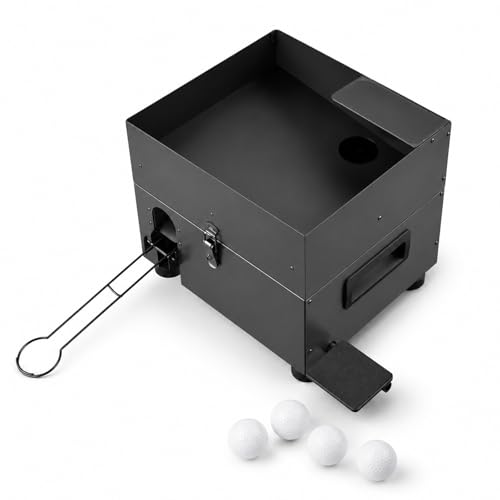
- Pedal-fed rail design supports steady swing rhythm
- About 50-ball capacity reduces refilling
- Cold-rolled steel body adds stability
Best For: Golfers and coaches who want a stable, repeatable ball-feed setup
Compact Gravity-Feed Launcher
Automatic Golf Ball Tee Up Machine
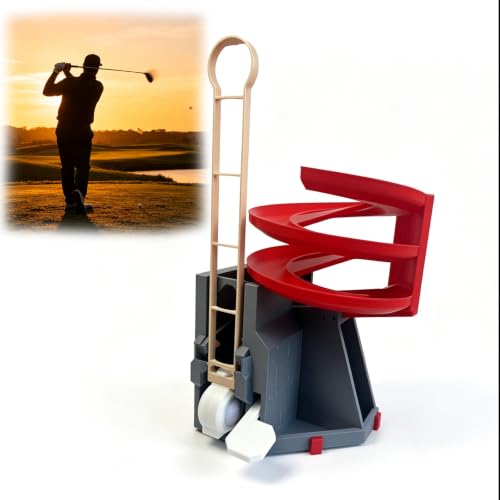
- Automatic gravity-feed ball release
- Tiered trays hold dozens of balls
- Widened anti-slip base for stability
Best For: Home practice and portable range-style drills
Foot-Pedal Tee-Up Launcher

- Gravity-feed release of one ball at a time
- Tiered trays hold dozens of balls
- Removable outlet cover for easier cleaning
Best For: Stable hands-free practice with easy maintenance
Automatic Range Practice Hub – JJM automatic tee machine with accessory extras
If you want golf ball launchers for driving range sessions that cut down on constant ball setting, this automatic tee machine is built for fast, repetitive practice. It feeds balls with a gentle press, supports indoor simulators, outdoor nets, and driving ranges, and adds a few useful extras for training setup.
Best For: Golfers who want an automatic teeing setup with built-in accessories for structured practice.
Pros:
- Automatic ball dispatch with a simple foot or club press
- Large-capacity tee holds up to 100 golf balls
- Includes a 9-hole club holder and phone video bracket
- Two ball guide modes for wood shots and iron shots
Cons:
- Heavier than compact manual options at 16.5 pounds
- Plastic construction may not suit buyers wanting metal equipment
This is a practical choice if your priority is reducing setup time and keeping practice moving. The extra holders and dual guide tracks make it more than a basic feeder, especially for golfers working on repeatable drills.
Heavy-Duty Hopper Feeder – Newhai 50-ball steel feeder with adjustable stand
For golfers comparing golf ball launchers for driving range practice, this semi-automatic feeder stands out for its 50-ball hopper and simple pedal-triggered operation. It is designed for indoor or outdoor use and pairs well with practice nets, simulators, or range setups where steady repetition matters.
Best For: Golfers who want a sturdy, medium-capacity dispenser for frequent practice without constant refills.
Pros:
- Holds up to 50 golf balls for uninterrupted sessions
- Height-adjustable stand with 5 cm of rotation range
- Pedal-triggered semi-automatic ball dispensing
- Cold-rolled steel construction for better durability
Cons:
- Less capacity than larger hopper-style models
- Steel build may be less portable than plastic units
This model is a solid middle-ground option if you want a dependable practice feeder with a tougher frame. The adjustable stand and durable construction make it especially useful when your setup changes between flat surfaces and uneven turf.
Compact Auto Reload Trainer – Automatic launcher with foot pedal and 25-ball capacity
This compact option fits the golf ball launchers for driving range category well if you want a smaller practice aid with automatic feeding and foot pedal control. Its 25-ball capacity is aimed at reducing interruptions, while the portable design makes it easier to move between indoor and outdoor practice spots.
Best For: Golfers who want a compact, portable launcher for shorter practice sessions and easy storage.
Pros:
- Automatic feeder with foot pedal control
- 25-ball capacity helps reduce reloading
- Compact design is easier to store and transport
- Built for indoor and outdoor practice use
Cons:
- Smaller capacity than hopper-style models
- Plastic construction may feel less rugged than steel units
This is a straightforward training aid for golfers who value simplicity and portability over maximum capacity. It keeps practice flowing without a lot of setup complexity, which makes it a practical fit for personal drills.
Gravity-Fed Range Helper – No-power golf ball dispenser with wide-mouth funnel
Among golf ball launchers for driving range practice, this no-power dispenser focuses on simple gravity-fed ball delivery and quick refills through its wide-mouth funnel. It is made for golfers who want a low-fuss practice tool that works in backyard setups, home practice areas, or range sessions.
Best For: Golfers who want a simple, no-power ball dispenser for steady practice at home or on the range.
Pros:
- No power needed for operation
- Wide-mouth funnel speeds up loading and reduces spills
- Gravity-fed internal track is designed to limit jams
- Impact-resistant polymer build for indoor and outdoor use
Cons:
- Assembly is required out of the box
- May need an occasional tap if balls stop feeding smoothly
This dispenser is a smart pick if you want a durable, simple solution without electrical parts or pedal-driven mechanisms. Its main appeal is convenience: fast loading, easy use, and a rugged body suited to regular practice.
Mechanical Range Practice Pick – Range Reload Golf Ball Dispenser
If you want golf ball launchers for driving range sessions that keep practice moving, this range reload dispenser is built around simple, repeatable ball feeding. The pedal-activated design delivers the next ball about every 3 seconds, so you can stay in rhythm without bending down after each shot. Its 60-ball capacity and steel construction make it a practical choice for longer sessions and frequent use.
Best For: Golfers who want uninterrupted practice with a durable, mechanical ball feed.
Pros:
- Pedal-activated feed keeps balls coming without constant resetting
- Holds 60 balls for 30+ minutes of continuous practice
- Adjustable legs help level the unit on uneven ground or mats
- All-steel, rainproof build with no electronics to fail
Cons:
- Mechanical design means no powered automation
- Heavier steel build may be less convenient than plastic options
- Works best for golfers who want a manual, repeatable routine
Overall, this is a solid pick if durability and uninterrupted rhythm matter more than automation. It suits range work, simulator setups, and home practice where a dependable ball feed is the priority.
Portable Pedal Feed Choice – Automatic Golf Ball Dispenser
Among golf ball launchers for driving range use, this portable foot-pedal dispenser keeps the setup simple and compact. It uses a manual pedal release for hands-free ball delivery, helping you maintain practice rhythm without bending down between swings. The lightweight plastic build makes it easy to move between the range, home, and training spots.
Best For: Golfers who want a lightweight, easy-to-carry feeder for basic range and home practice.
Pros:
- Foot pedal activation keeps practice hands-free
- Lightweight and portable for easy transport
- Ramp reloader system supports smooth ball flow
- Designed for driving range and home training use
Cons:
- Plastic construction may feel less rugged than steel models
- Smaller, simpler design is more basic than heavier-duty options
- Manual operation means no powered automatic feed
This is a straightforward option if you want a portable feeder that keeps drills moving without complicated setup. It fits golfers who value convenience and a simple foot-pedal routine over extra features.
Steel Box Reload Option – Semi-Automatic Golf Ball Dispenser
If you need golf ball launchers for driving range sessions that emphasize steady rhythm, this semi-automatic dispenser is designed to reduce interruptions. The pedal-fed rail system positions one ball at a time beside your mat, net, simulator, or range setup. With room for about 50 balls and a steel body, it aims to support repeated practice without frequent refills.
Best For: Golfers, coaches, and practice setups that need a stable, repeatable ball-feed routine.
Pros:
- Pedal-fed rail design helps maintain swing tempo
- Holds about 50 balls for fewer refills
- Cold-rolled steel body adds stability for repeated use
- Simple manual setup avoids cords, apps, and complex controls
Cons:
- Semi-automatic design is less advanced than powered units
- Heavier 5 kg structure is less portable than lighter options
- Built for straightforward feeding rather than high-tech features
This model makes sense if you want a sturdy, no-fuss practice aid that keeps balls organized and ready. It is especially practical for golfers who want a compact steel dispenser for repeat drills indoors or outdoors.
Compact Gravity-Feed Launcher – Automatic Golf Ball Tee Up Machine
If you want golf ball launchers for driving range practice that keep sessions moving, this portable tee-up machine is built for simple reloads and steady ball feeding. Its gravity-feed design automatically releases one ball at a time, helping you spend less time fetching balls and more time swinging.
Best For: Home practice, backyard setups, and golfers who want a compact no-electricity launcher for repeated range reps.
Pros:
- Automatic gravity-feed release helps speed up practice.
- Tiered trays hold dozens of golf balls for organized storage.
- Widened anti-slip base adds stability during use.
- Detachable outlet cover makes cleaning easier and can help reduce jams.
Cons:
- Requires manual ball loading rather than powered operation.
- Compact size may not suit golfers wanting a larger-capacity range unit.
This is a practical pick if you want a lightweight, portable feeder that works indoors or outdoors and fits a variety of practice spaces. It focuses on straightforward function, stable setup, and easy carry-and-store convenience.
Cordless Portable Feeder – Automatic Golf Ball Dispenser & Tee Up Machine
For golfers comparing golf ball launchers for driving range use, this cordless dispenser is aimed at simple, hands-free repetition. It frees you from frequent manual reloading and works without power, making it easy to move between practice areas.
Best For: Beginners, casual players, and anyone who wants a lightweight cordless tee-up aid for indoor or outdoor practice.
Pros:
- Automatic tee-up function helps keep training uninterrupted.
- No electricity needed, so it can be used in many locations.
- Simple operation is easy for different skill levels.
- Compact and lightweight design supports portability.
Cons:
- Plastic construction may feel less rugged than heavier-duty setups.
- Not designed as a high-tech or powered range machine.
This model is a straightforward choice if portability and ease of use matter more than advanced features. Its cordless design and uncomplicated setup make it a flexible practice aid for home, balcony, courtyard, or range sessions.
Foot-Pedal Tee-Up Launcher – Automatic Golf Ball Dispenser
If you prefer golf ball launchers for driving range practice with a little more control, this foot-pedal tee-up machine is built for efficient repetition. Its gravity-feed system automatically releases one ball at a time, while the pedal-style setup adds a hands-free feel to your routine.
Best For: Golfers who want a stable, easy-to-clean launcher with foot-pedal convenience for backyard or range practice.
Pros:
- Gravity-feed design automatically releases one ball per use.
- Tiered trays store dozens of balls for neat organization.
- Widened anti-slip base supports better stability.
- Removable outlet cover makes cleaning and maintenance easier.
Cons:
- Foot-pedal style still relies on manual setup and loading.
- Compact format may not suit users needing a larger station.
This is a solid practical option if you want repeatable ball delivery without electricity and prefer a stable base during practice. The easy-clean design is a nice plus for keeping the feeding track clear over time.
How We Picked These Golf Ball Launchers for Driving Range Use
We focused on the features that matter most in real practice environments: ball capacity, tee-up consistency, power requirements, footprint, portability, and whether the unit is better suited to indoor simulators or outdoor range use. We also prioritized models that support repeated practice without constant resets.
Quick Comparison
In general, higher-capacity automatic units are better for longer sessions and commercial-style practice, while compact foot-pedal or semi-automatic models are better for portability and simpler home setups. No-power machines can be a strong choice when you want fewer electrical concerns and a straightforward workflow.
Key Buying Factors for Golf Ball Launchers for Driving Range
Ball Capacity
Capacity affects how often you stop to reload. Smaller hoppers are easier to move and store, while larger-capacity launchers are better for uninterrupted practice and group sessions.
Automation Level
Automatic tee-up machines reduce effort the most, but semi-automatic and foot-pedal designs can offer better control and lower complexity. Choose the level of automation that fits your training pace.
Power and Setup
Some Golf Ball Launchers for Driving Range use require power, while others are manual or no-power. If you practice in different locations, portability and power independence may matter more than advanced features.
Indoor Vs. Outdoor Use
Check whether the launcher is designed for simulators, indoor training, or open-air range conditions. Stability, weather exposure, and space requirements can change how well a model performs in your setup.
Durability and Materials
For frequent use, look for sturdy construction and reliable feeding components. A launcher that handles repeated cycles smoothly will save time and frustration over the long run.
Who Should Buy Which Golf Ball Launchers for Driving Range?
If you want maximum convenience for repeated practice, choose a larger automatic model with a high ball count. If you need something easier to move or store, a compact foot-pedal or portable feeder is a better fit. Players setting up a simulator or home bay may prefer a controlled, space-saving design, while driving range operators may benefit from higher-capacity equipment built for longer sessions.
For most buyers, the best choice is the unit that matches your practice volume first, then your space, then your power and portability needs.