Choosing the right pitching machine can make beginner batting practice safer, easier, and far more productive. The best options help new hitters build timing, confidence, and hand-eye coordination without overwhelming speed or complexity.
In this roundup, we focused on beginner-friendly models that balance ease of use, adjustability, portability, and age-appropriate training value.
Best 10 Baseball Pitching Machines for Beginners Picks for 2026
Kids Backyard Starter
Franklin MLB Electronic Pitching Machine

- Pitches every 7 seconds for easy timing practice.
- Adjustable angle supports multiple batting angles.
- Includes 6 plastic baseballs and holds up to 9.
Best For: Young beginners needing simple backyard batting practice
Manual Toss Trainer
Furlihong 898BH Soft Toss Machine

- No power supply needed for flexible use.
- Three adjustable angles suit different training levels.
- Works with regulation baseballs for realistic practice.
Best For: Players and coaches wanting manual soft toss practice
Beginner Batting Aid
Franklin Pop Rocket Training Set

- Automatic pop-up pitches every 7 seconds.
- Includes 5 baseballs and a 24-inch plastic bat.
- Built to improve hand-eye coordination for beginners.
Best For: First-time youth hitters ages 9 to 12
Versatile Manual Thrower
Louisville Slugger Blue Flame Pitching Machine

- Throws baseballs, softballs, plastic balls, and more.
- Manual design needs no electricity or batteries.
- Adjustable speed and accurate throws aid drills.
Best For: Coaches and beginners needing a portable all-purpose trainer
Beginner-Friendly Portable Trainer
Furlihong 388BH Baseball Pitching Machine

- Includes 9 training balls for immediate practice
- Expandable ball track holds up to 9 balls
- Works with batteries, power bank, or AC adapter
Best For: New players who want a portable, easy-to-start machine
Multi-Use Youth Practice Pick
Franklin MLB Superstar 4 in 1 Pitching Machine
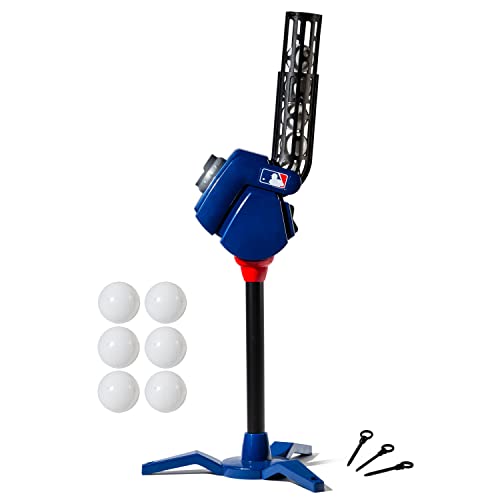
- Adjustable angle for soft toss, ground balls, and pop flies
- Includes 6 plastic baseballs; feeder holds up to 9
- Designed for young beginner players
Best For: Kids who want one beginner machine for both hitting and fielding drills
Most Adjustable Backyard Trainer
Heater Sports Junior Baseball Pitching Machine

- Variable speed ranges from 15 to 48 MPH
- 12-ball feeder supports hands-free practice
- Comes with a heavy-duty tripod stand for stability
Best For: Beginners who want a more adjustable machine for steady batting practice
Beginner-Friendly Control
Furlihong Upgraded Electronic Pitching Machine
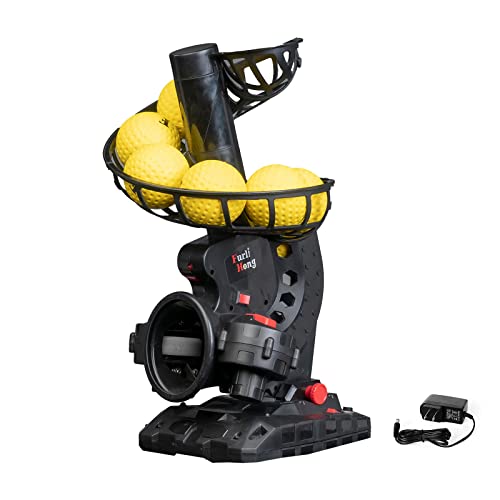
- Adjustable wheels for speed and angle
- 30 MPH max with beginner training balls
- Runs on batteries or included AC adapter
Best For: Beginners who want adjustable pitch practice with included training balls
Kid-Friendly Starter Pick
Franklin Sports MLB Power Pitcher
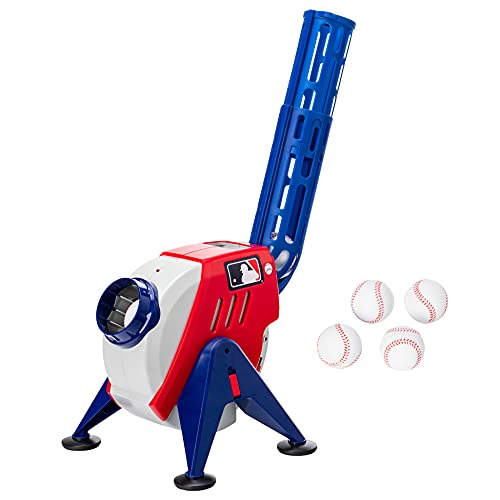
- 10, 15, or 20 mph speed settings
- 3-position angle adjustment
- Includes foam balls and a 9-ball feeder
Best For: Young beginners and casual backyard batting practice
More Serious Practice
Heater Sports Base Hit Adjustable Pitching Machine

- Up to 45 MPH real baseball pitches
- 12-ball automatic feeder included
- Adjustable for ground balls and pop flies
Best For: Beginners who want a training machine that can grow with them
Kids Backyard Starter – Franklin MLB Electronic Pitching Machine
For families looking at baseball pitching machines for beginners, this Franklin Sports model keeps practice simple and predictable. It pitches every 7 seconds, includes six plastic baseballs, and uses a flashing red indicator light so young hitters can get set before each throw.
Best For: Young beginners who need a straightforward, backyard-friendly pitching machine for basic batting practice.
Pros:
- Automatic pitch release every 7 seconds gives beginners a steady practice rhythm.
- Adjustable pitch angle helps kids work on different swing paths and batting angles.
- Includes 6 plastic baseballs and can hold up to 9 balls in the chute.
- Compact size makes it easy to set up for backyard use.
Cons:
- Only use the included balls; regulation baseballs and tee balls are not recommended.
- Works best with a plastic baseball bat, which may limit realism for some users.
- Designed specifically for youth practice, not advanced training.
This is a practical starter option if you want a simple machine that helps a child build confidence and timing without a complicated setup.
Manual Toss Trainer – Furlihong 898BH Soft Toss Machine
If you want baseball pitching machines for beginners without worrying about power or batteries, this Furlihong soft toss machine is a practical pick. It uses a step-on-and-release mechanism, waits about 6 seconds between tosses, and offers three angle settings for different training needs.
Best For: Coaches or players who want a manual, regulation-ball-compatible training machine for repeatable soft toss practice.
Pros:
- No power supply needed, so it can be used anywhere.
- Three adjustable angles make it easier to match different ages and skill levels.
- Works with regulation baseballs, which adds flexibility for real-game practice.
- Mechanical design is described as more durable with no circuit system.
Cons:
- Requires the user to step on the paddle for each toss, so it is not fully automatic.
- Less beginner-friendly than a simple button-operated machine.
- Best suited to soft toss training rather than true pitch simulation.
This model makes sense if you want a durable, low-maintenance option that can grow with a player and handle more serious practice sessions.
Beginner Batting Aid – Franklin Pop Rocket Training Set
For young hitters moving up from teeball, this Franklin Sports Pop Rocket is one of the more beginner-focused baseball pitching machines for beginners. It automatically pops up a ball every 7 seconds, includes five plastic baseballs and a collapsible plastic bat, and is built to help develop hand-eye coordination.
Best For: First-time players ages 9 to 12 who need an all-in-one hitting starter set.
Pros:
- Automatic release every 7 seconds gives kids time to reset between swings.
- Includes 5 plastic baseballs and a 24-inch collapsible plastic bat.
- Designed to help improve hand-eye coordination and the move from teeball to moving pitches.
- Battery-powered operation makes it easy to set up for home use.
Cons:
- Requires 4 AA batteries, which are not included.
- Uses plastic balls and bat, so it is geared more toward early practice than full game realism.
- Best fit is limited to a specific age range of 9 to 12 years.
This is a convenient all-in-one option for introducing a child to moving-ball contact work without needing extra gear.
Versatile Manual Thrower – Louisville Slugger Blue Flame Pitching Machine
Among baseball pitching machines for beginners, the Louisville Slugger Blue Flame stands out for its versatility and simple manual design. It throws a wide range of balls, needs no electricity or batteries, and is accurate enough for strikes, fly balls, and grounders.
Best For: Players, coaches, and leagues that want a lightweight manual machine for varied drill work.
Pros:
- Throws many ball types, including baseballs, softballs, plastic balls, and even soccer and volleyballs.
- Adjustable speed controls let it throw hard balls from 18 to 45 mph and light balls up to 60 mph.
- Can throw level pitches to help teach proper swing mechanics.
- Lightweight and manual, so it is easy to move between fields.
Cons:
- No electricity or batteries means every pitch depends on manual operation.
- Not a simple automatic beginner machine like some youth models.
- May be more machine than a very young first-time hitter needs.
This is a strong choice if you want one portable trainer that can handle many drills and ball types while staying fully manual.
Beginner-Friendly Portable Trainer – Furlihong 388BH Baseball Pitching Machine
If you’re comparing baseball pitching machines for beginners, the Furlihong 388BH is built to make practice simple from the start. It comes with 9 training balls, offers 4 adjustable angles with 3 pitch angles, and gives you multiple power options so you can practice in more places without much setup.
Best For: New players who want a portable, easy-to-start machine with flexible power options.
Pros:
- Includes 9 training balls, so beginners can start practicing right away
- Expandable ball track supports up to 9 balls for longer sessions
- Three power options: D-batteries, power bank, or AC adapter
- Lightweight and portable for field or backyard use
Cons:
- AC adapter must be 6V 1.5/2A
- Tripod stand is compatible, but not included in the notes
Overall, the 388BH focuses on convenience and beginner practice rather than advanced training features. Its portability and included balls make it a practical first machine for casual hitters.
Multi-Use Youth Practice Pick – Franklin MLB Superstar 4 in 1 Pitching Machine
The Franklin MLB Superstar 4 in 1 is a straightforward option to consider when shopping for baseball pitching machines for beginners. It is designed for young players, includes 6 plastic baseballs, and lets you adjust the angle for soft toss, fast pitch, ground balls, or pop flies in one compact unit.
Best For: Kids who want one beginner machine for both hitting and fielding drills.
Pros:
- Adjustable launch angle for multiple practice types
- Supports hitting and fielding drills in one machine
- Includes 6 compatible plastic baseballs
- Ball feeder holds up to 9 balls and pitches every 7 seconds
Cons:
- Requires 4 C batteries, which are not included
- Plastic construction may feel more toy-like than heavier training machines
This is a solid starter machine for young players who need variety without complicated setup. Its beginner focus and multi-angle design make it useful for short, repeatable practice sessions.
Most Adjustable Backyard Trainer – Heater Sports Junior Baseball Pitching Machine
Among baseball pitching machines for beginners, the Heater Sports Junior stands out if you want more control over speed and repetition. It uses a 1/4 horsepower DC motor, has a 12-ball automatic feeder, and lets you adjust pitching speed from 15 to 48 MPH for structured backyard batting practice.
Best For: Beginners who want a more adjustable machine for steady batting practice.
Pros:
- Variable speed control from 15 to 48 MPH
- 12-ball automatic feeder delivers a ball every 10 seconds
- Heavy-duty tripod stand adds stability
- Enclosed air-filled tires are designed for safer use
Cons:
- More feature-heavy than basic starter machines
- Best suited to users who want a dedicated practice setup
This machine is a strong pick if you want beginner-friendly use but also room to grow. Its speed range and feeder setup make it better for repeat practice than casual toy-style play.
Beginner-Friendly Control – Furlihong Upgraded Electronic Pitching Machine
If you’re comparing baseball pitching machines for beginners, this Furlihong model is built to keep training simple while still giving room to grow. Its adjustable side wheels let you set speed and angle for different pitch types, and the 30 MPH top speed is a manageable starting point for newer players using the included dimpled training balls.
Best For: Beginners who want a compact machine with adjustable pitch types and included training balls.
Pros:
- Adjustable wheels let you dial in speed and angle for fastballs, curves, and sliders.
- Runs on 4 D batteries or the included 6V AC adapter for flexible setup.
- Includes 8 polyurethane dimpled training balls designed for pitching machines.
- Compact design and 180-day warranty add practical value for new users.
Cons:
- Does not accept regulation baseballs.
- Batteries are not included if you want cordless use.
This is a solid entry-level option if you want a beginner-focused machine that’s portable and adjustable without adding much complexity. Just make sure you’re using the compatible dimpled balls for the best results.
Kid-Friendly Starter Pick – Franklin Sports MLB Power Pitcher
For families shopping baseball pitching machines for beginners, this Franklin Sports option keeps things easy and approachable. It offers 10, 15, or 20 mph settings, a 3-position angle adjustment, and a pitch every 7 seconds, which makes it straightforward for young players to get into a rhythm.
Best For: Young beginners who want a simple, toy-like pitching machine for casual batting practice.
Pros:
- Three speed settings make it easy to match a child’s comfort level.
- 3-angle adjustment helps vary pitch setup during practice.
- Comes with 4 foam baseballs and a feeder that holds up to 9 balls.
- Red light pitch indicator helps kids prepare for each throw.
Cons:
- Requires 4 C batteries, which are not included.
- Uses foam balls rather than real baseballs.
This is a friendly starter machine for younger players who mainly need repetition, timing, and confidence at the plate. It’s more of a fun practice toy than a heavy-duty training tool.
More Serious Practice – Heater Sports Base Hit Adjustable Pitching Machine
Among baseball pitching machines for beginners, this Heater Sports model is the one to consider if you want room to progress beyond the basics. It throws real baseball pitches up to 45 MPH, includes an automatic feeder, and can also be adjusted for ground balls and high pop flies, so it supports a broader range of practice sessions.
Best For: Beginners who want a more advanced machine that can grow with their training.
Pros:
- Throws real baseball pitches up to 45 MPH.
- Includes a 12-ball automatic feeder that releases a ball every 8 seconds.
- Adjustable head can produce ground balls and high pop flies up to 200 feet.
- Lightweight 15 lb design makes it easier to move between practice spots.
Cons:
- Works best with Heater Sports dimpled baseballs for consistent performance.
- Real-pitch speed may be more than some true first-time beginners need.
This is the strongest training-focused pick in the group if you want a machine that starts accessible but still has useful range. It’s a better fit when you expect skills to improve and want a machine that can keep up.
How We Picked the Best Baseball Pitching Machines for Beginners
We prioritized Baseball Pitching Machines for Beginners that are simple to set up, forgiving at lower speeds, and practical for home use. We also looked for models with useful angle or speed adjustments, dependable feeding systems, and designs suited to youth and entry-level hitters.
Quick Comparison
For the fastest setup, look for compact electronic or soft-toss machines. For more realistic live-hit practice, choose adjustable pitching machines with variable speed and angle. If you want the most budget-conscious training aid, manual or no-power options can still be very effective for developing swing mechanics.
Key Buying Factors for Baseball Pitching Machines for Beginners
Speed Range
Beginners usually do best with lower, controllable speeds. A machine that starts slowly and scales upward lets hitters build confidence before moving to harder pitches.
Pitch Type and Adjustability
Some machines throw consistent straight pitches, while others allow angle changes or multiple pitch styles. More adjustability can be helpful, but simple controls are often better for newer players.
Ball Compatibility
Check whether the machine works with plastic training balls, soft practice balls, or real baseballs. Softer balls are typically better for younger players and indoor or backyard use.
Power and Portability
Battery, power bank, and plug-in options can affect where you can use the machine. Lighter models are easier to move and store, which matters for families and coaches.
Feeding and Consistency
Reliable ball feeding reduces frustration and keeps practice moving. Consistent delivery is especially important for beginners who are learning timing.
Who Should Buy Which Baseball Pitching Machines for Beginners?
Younger players and first-time hitters should look for low-speed, easy-to-use options with soft balls or automatic feeding. Families practicing at home may prefer compact, portable machines that store easily. Coaches or more advanced beginners may want adjustable models that can grow with the player and support longer-term training. If you want a simple, confidence-building setup, focus on ease of use first, then speed and features second.
Overall, the best Baseball Pitching Machines for Beginners are the ones that match the hitter’s age, skill level, and practice space. A machine that is easy to control and repeat with will usually deliver better results than one packed with features the player does not yet need.