Building upper-body strength at home does not require a dedicated gym room. The best pull-up bars for small spaces use doorframes, foldable frames, or compact freestanding designs to deliver effective training without taking over your living area.
We selected 10 options covering no-drill doorway bars, multi-grip models, resistance-band systems, and power towers. Use the guide below to match capacity, fit, storage, and exercise versatility to your space and routine.
Best 10 Pull Up Bars for Small Spaces Picks for 2026
Best Heavy-Duty Doorway Pick
Ally Peaks Multi-Grip Pull-Up Bar

- 440-pound maximum weight recommendation
- Multi-grip bar for varied exercises
- No-screw design with silicone frame protection
Best For: Sturdy doorway workouts with multiple exercise options
Best Freestanding Option
Sportsroyals Adjustable Power Tower

- 360-pound load capacity
- Eight height settings for family use
- Combines pull-ups, dips, rows, and leg raises
Best For: Versatile full-body training in a dedicated corner
Best Foldaway Design
New Upgrade Foldable Doorway Pull-Up Bar

- Folds away for compact storage
- 440-pound maximum weight recommendation
- Fits wider doorways up to 36.22 inches
Best For: Space-conscious users with wide door frames
Best Accessory Bundle
6-Piece Doorway and Hallway Pull-Up Set

- Includes bands, handles, and manuals
- Multiple width options for doorways or hallways
- 680-pound maximum weight recommendation
Best For: Accessory-rich training on suitable solid mounting surfaces
Best Space-Saving Doorway Bar
Multi-Grip Foldable Pull-Up Bar

- Folds for quick storage
- Multiple ergonomic grip positions
- 440-pound capacity with 24-month warranty
Best For: Small-space doorway workouts with versatile grip options
Best No-Drill Adjustable Bar
Level-Lock Doorway Pull-Up Bar
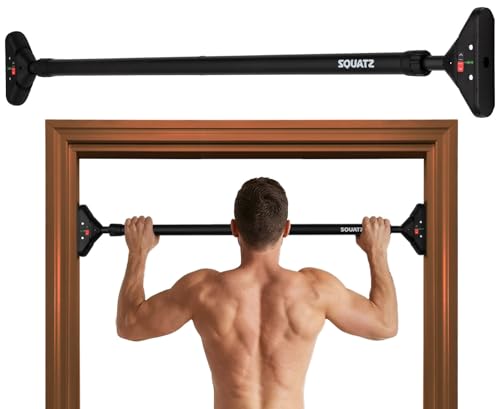
- Installs without drilling
- Built-in level meter aids alignment
- Triple-lock design supports up to 440 pounds
Best For: Renters needing a portable doorway trainer
Best Foldable Power Tower
Multi-Function Pull-Up and Dip Station

- Folds for storage after workouts
- Supports pull-ups, dips, and leg raises
- 11 height settings with 350-pound capacity
Best For: Home gyms with floor space for a versatile freestanding station
Best No-Drill Doorway Bar
Sportneer Adjustable Pull-Up Bar

- No-drill design for compatible solid wood doorways
- Adjusts from 29.5 to 37 inches
- Dual-gear lock and anti-slip PVC pads
Best For: Renters needing a removable doorway pull-up bar
Best Heavy-Duty Pick
SERTT Multi-Function Pull-Up Station
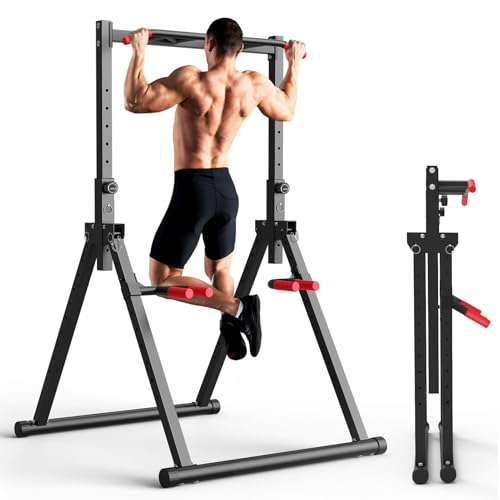
- Folds flat with a triangular base
- Ten height and ten handle-position settings
- Supports pull-ups, dips, push-ups, and more
Best For: Users wanting a versatile free-standing home gym station
Best Wide-Fit Doorway Bar
Ally Peaks Adjustable Pull-Up Bar

- Five width and two thickness adjustment levels
- Fits doorways from 21.65 to 39.37 inches
- Silicone protection helps reduce frame contact damage
Best For: Users needing a precisely adjustable removable doorway bar
Best Heavy-Duty Doorway Pick – Ally Peaks Multi-Grip Pull-Up Bar
For shoppers comparing pull up bars for small spaces, the Ally Peaks is a practical doorway option that stores easily and does not require screws. Its heavy steel construction, multi-grip layout, and 440-pound maximum weight recommendation make it a substantial choice for home workouts.
Best For: Users who want a sturdy, removable doorway bar for pull-ups, dips, push-ups, and hanging crunches.
Pros:
- Thickened steel construction with a stated 440-pound maximum weight recommendation.
- Multi-grip design supports several upper-body and core exercises.
- Silicone door-frame protection and no-screw installation help limit marks and simplify setup.
- Fits standard 24- to 32-inch doorways within the listed depth and trim specifications.
Cons:
- Compatibility depends on precise doorway width, depth, trim height, and trim thickness.
- Its 37-inch width and 20.2-inch height may require dedicated storage when removed.
The Ally Peaks stands out when durability and exercise variety matter more than the smallest possible form factor. Measure your doorway carefully and test the bar before exercising, as recommended by the manufacturer.
Best Freestanding Option – Sportsroyals Adjustable Power Tower
Among pull up bars for small spaces, the Sportsroyals power tower offers a freestanding alternative to doorway mounting. It combines pull-ups, dips, leg raises, inverted rows, and push-ups in an adjustable station designed for shared home use.
Best For: Households wanting a versatile, height-adjustable full-body station that can be moved between areas such as a living-room corner and balcony.
Pros:
- Supports a broad range of strength exercises in one freestanding unit.
- Eight height levels from 57.09 to 83.07 inches accommodate different users.
- Commercial-steel construction has a stated 360-pound load capacity.
- Non-slip grips, padded supports, adjustable feet, and a widened base are designed for comfort and stability.
Cons:
- Despite its space-saving design, it needs substantially more floor space than a removable doorway bar.
- Assembly is required, even though installation tools and instructions are included.
- Its tall adjustable frame may not suit rooms with low ceilings.
This is the strongest fit for buyers who prefer a dedicated, multi-exercise tower over a bar that must be attached to a doorway. Confirm available floor and ceiling clearance before ordering.
Best Foldaway Design – New Upgrade Foldable Doorway Pull-Up Bar
If storage is your main concern when choosing pull up bars for small spaces, this foldable doorway model is built to hook into the frame and fold away afterward. It requires no screws or assembly and adds suspension straps for more workout flexibility.
Best For: Tall users and renters who want a removable, space-saving doorway bar for wider door frames.
Pros:
- Foldable design makes storage easier in compact homes.
- Fits wider 27.56- to 36.22-inch doorways and accommodates frames up to 8.27 inches deep.
- Large hooks, cushioned pads, and a stated 440-pound maximum weight recommendation emphasize stability and frame protection.
- Raised bar, padded grip, and included suspension straps broaden its use.
Cons:
- It does not fit doorways narrower than the listed 27.56-inch minimum.
- At 4.65 kg, it is heavier than some simpler doorway bars.
- Door-frame dimensions must be checked carefully before purchase.
The foldaway construction gives this bar a clear advantage for limited storage, while its wider fit makes it especially relevant for larger door frames. Verify the opening measurements and frame condition before installation.
Best Accessory Bundle – 6-Piece Doorway and Hallway Pull-Up Set
This six-piece set gives shoppers considering pull up bars for small spaces more than a bar alone. It includes resistance bands, handles, and training manuals, with width choices for standard doorways and wider hallways.
Best For: Buyers who want a doorway or stud-mounted bar plus resistance-band accessories for a broader home training setup.
Pros:
- Includes two resistance bands, two handles, and exercise manuals.
- Width options cover 27-37 inches, 37-47 inches, and 46-53 inches.
- Plastic-coated pads are designed to help prevent chipped paint or marks.
- Offers a stated 680-pound maximum weight recommendation when correctly installed on a suitable solid frame or wooden studs.
Cons:
- Installation requires careful compatibility checks; hollow-gap door frames are not suitable.
- The 46-53-inch version is intended for extra-wide hallways and may not fit standard doorways.
- Hallway installation requires positioning over wooden studs behind drywall.
This set is appealing for accessory value and flexible sizing, but it demands more installation planning than a simple hook-on bar. Measure first and confirm that the frame or hallway has the required solid support.
Best Space-Saving Doorway Bar – Multi-Grip Foldable Pull-Up Bar
If you need pull up bars for small spaces, this foldable doorway model is designed to store quickly after use and fit many narrower doorways. It accommodates frames 21.65 to 36.22 inches wide, with silicone door protectors intended to help prevent marks.
Best For: Apartment or home-gym users who want multiple grip options and a doorway bar that folds away.
Pros:
- Foldable design supports compact storage.
- Multiple angled and close-grip positions offer varied training options.
- Includes suspension straps and soft, nonslip foam grips.
- Rated for up to 440 pounds and backed by a 24-month warranty.
Cons:
- Requires a suitable, sturdy doorframe and is not intended for hollow plasterboard walls.
- Its doorway fit still requires measuring width, depth, and trim height before purchase.
Among pull up bars for small spaces, this is a versatile choice when you want more than a basic straight bar. Its compact folding design and broad grip selection are useful, but careful doorway measurements are essential.
Best No-Drill Adjustable Bar – Level-Lock Doorway Pull-Up Bar
For pull up bars for small spaces that can move between rooms, this no-drill doorway bar uses a twist-lock extension and safety features rather than permanent installation. It expands from 29.5 to 37 inches and includes a built-in level meter for alignment.
Best For: Renters and apartment users who want a portable, no-tools doorway setup for pull-ups, hangs, and chin-ups.
Pros:
- No drilling or screws are required for installation.
- Triple-lock system combines twist-lock extension, safety pin, and threaded center support.
- Built-in level helps with balanced positioning.
- Tear-resistant, sweat-resistant foam grips provide comfortable handling.
Cons:
- Fits frames from 29.5 to 37 inches, so narrower doorways may not be compatible.
- Not intended for glass or hollow doorframes.
This model prioritizes portability and straightforward setup, making it practical where drilling is not an option. Confirm your frame dimensions and construction before relying on the bar for training.
Best Foldable Power Tower – Multi-Function Pull-Up and Dip Station
Among pull up bars for small spaces, this freestanding power tower is a larger option that folds after training rather than mounting in a doorway. Its folded footprint is listed as 33.46 by 6.3 by 75.2 inches, while its adjustable height supports different users and exercises.
Best For: Home gyms that have floor space for a freestanding station and need pull-ups, dips, leg raises, and other bodyweight exercises.
Pros:
- Foldable triangular design is intended to improve stability and storage.
- Combines pull-up, dip, leg-raise, abdominal, and other bodyweight exercises.
- Offers 11 height adjustments from 68.9 to 82.68 inches.
- Heavy-duty steel construction supports up to 350 pounds.
Cons:
- It needs substantially more floor and vertical space than a doorway bar.
- Listed folded height is 75.2 inches, so storage clearance should be checked.
- Minimal assembly is required.
This station is best for users who want a broader home workout setup rather than the smallest possible pull-up solution. Its folding frame helps with storage, but measure both the exercise area and folded storage location carefully.
Best No-Drill Doorway Bar – Sportneer Adjustable Pull-Up Bar
For shoppers comparing pull up bars for small spaces, the Sportneer is a compact doorway option that installs without drilling and adjusts from 29.5 to 37 inches. It is designed for solid wood door frames, so carefully measure the opening and check the installation surface before buying.
Best For: Renters and home-gym users who want a removable, adjustable bar for a compatible solid wood doorway.
Pros:
- No-drill installation with large PVC anti-slip pads and a dual-gear locking system.
- Adjustable 29.5-to-37-inch width accommodates a range of compatible doorways.
- Integrated, sweat-resistant cotton handle supports multiple grip positions and exercises.
- Includes installation guidance, arrow markers, and spirit levels for setup.
Cons:
- Only suitable for solid wood door frames and should not be used on glass, ceramic tile, or non-solid surfaces.
- The doorway must measure 29.5 to 37 inches, with the frame wider than the anti-slip pads.
- The manual specifies a 297-pound maximum load despite a higher advertised and tested capacity.
This bar makes efficient use of a doorway, but fit and surface compatibility are essential. Follow the manual’s 297-pound limit and verify the frame before installation.
Best Heavy-Duty Pick – SERTT Multi-Function Pull-Up Station
Among pull up bars for small spaces, this SERTT power tower stands out for combining pull-ups, dips, push-ups, knee raises, and inverted rows in one foldable unit. Its triangular base folds flat in seconds, although the 39.4-inch width means it needs more floor clearance than a doorway bar.
Best For: Home users who want multiple bodyweight exercises and need a free-standing station that can be folded away after workouts.
Pros:
- Triangular design folds flat for easier storage.
- Ten pull-up height settings and ten dip/push-up handle positions support different users.
- Five pull-up grips and three dip/push-up width options expand exercise variety.
- Supports up to 440 pounds and includes a 24-month replacement warranty.
Cons:
- Its 39.4-inch width requires more floor space than a doorway-mounted bar.
- Assembly is required, though the manufacturer estimates about 20 minutes with included tools.
- As a free-standing station, it is less suitable for very tight spaces than a removable doorway bar.
This is the most versatile choice of the three, especially for users who want dips and other exercises beyond pull-ups. Measure your available floor area to ensure the folded and workout configurations fit comfortably.
Best Wide-Fit Doorway Bar – Ally Peaks Adjustable Pull-Up Bar
The Ally Peaks is a strong contender among pull up bars for small spaces because its width and thickness adjustments are designed to match a broad range of doorways. It fits openings from 21.65 to 39.37 inches, but you should also verify the listed depth and trim-height requirements before purchasing.
Best For: Users who need a removable doorway bar with multiple adjustment levels for unusually wide, narrow, or corner-mounted door frames.
Pros:
- Five width settings and two thickness settings provide precise doorway fitting.
- Fits standard doorways 21.65 to 39.37 inches wide, with listed depth and trim limits.
- Double silicone protection helps shield the frame, including removable no-trace pads.
- Supports pull-ups, push-ups, dips, and hanging crunches.
Cons:
- Requires careful measurement of doorway width, depth, and trim height.
- Users should tug down on the grips to confirm secure installation before exercising.
- Doorway mounting may not suit shoppers seeking a free-standing station or a bar for non-compatible frames.
With its broad adjustment range and silicone frame protection, this bar is a practical option when doorway dimensions vary. Its removable design also helps users store it when floor and wall space are limited.
How We Picked the Best Pull Up Bars for Small Spaces
We focused on products designed for apartments, bedrooms, hallways, and compact home gyms. Our comparison considered installation style, claimed weight capacity, adjustability, grip variety, portability, storage convenience, and whether each bar supports more than standard pull-ups. We also included both doorway-mounted bars and freestanding towers because space constraints vary: some buyers have a suitable doorframe, while others need a self-supporting station.
Weight ratings are manufacturer claims and should not be treated as a substitute for inspecting your equipment. Always verify that the bar is compatible with your doorway or floor surface and follow the included installation and use instructions.
Quick Comparison
| Type | Best For | Main Advantage | Potential Trade-Off |
|---|---|---|---|
| No-drill doorway bar | Renters and beginners | Fast setup and easy removal | Requires a compatible, sturdy frame |
| Multi-grip doorway bar | Varied upper-body workouts | Multiple hand positions | May need more clearance |
| Foldable doorway bar | Very limited storage | Compact when stored | More moving parts to check |
| Freestanding power tower | Pull-ups, dips, and push-ups | Greater exercise versatility | Needs floor space and stability |
| Band-equipped set | Assisted training | Useful progression options | Accessories require additional storage |
Key Buying Factors for Pull-Up Bars for Small Spaces
Measure Before You Buy
For doorway bars, measure the frame width, trim depth, and available clearance above and around the opening. Confirm that the design is intended for your frame style. Freestanding towers need enough floor area for the base, plus room to move safely without contacting walls, furniture, or ceilings.
Choose the Right Installation Type
No-drill models are convenient for renters, but they depend on correct contact with a suitable doorframe. A freestanding station avoids frame compatibility issues and can support dips or other movements, although it is less discreet. If maximum stability is your priority, consider whether a permanently mounted solution is more appropriate than a removable bar.
Check Capacity and Stability
Compare the listed user-weight limit with your body weight and any dynamic force created during movement. Avoid kipping or swinging unless the manufacturer specifically supports it. Look for secure locking features, broad supports, strong hooks, and non-slip contact points, then recheck all connections regularly.
Consider Grip and Progression
Multi-grip handles can make neutral, wide, and close-grip variations possible, while foam padding may improve comfort during longer sessions. Beginners may benefit from resistance bands or a bar that supports assisted progressions. Advanced users should prioritize rigidity, clearance, and a capacity margin rather than simply choosing the most feature-rich design.
Who Should Buy Which Pull Up Bars for Small Spaces?
- Renters and occasional users: Choose a removable, no-drill doorway bar that fits your frame securely and stores easily.
- Small-space strength trainees: Look for a compact multi-grip or foldable doorway model with several hand positions.
- Beginners: A set with resistance bands and handles can make assisted repetitions and gradual progression easier.
- Users without a suitable doorway: Choose a freestanding power tower, provided you have adequate floor clearance.
- Full-body home-gym users: A foldable tower or dip station offers more exercise options than a basic chin-up bar.
Before ordering, prioritize a verified fit over extra features. The best choice is the model that remains stable, can be stored or left assembled conveniently, and supports the exercises you will perform consistently.